
D01–02 · CBD
Boat Quay shophouses
The conserved riverfront terrace along Boat Quay — tourism-linked F&B, Circular Road behind, and cyclical footfall you must underwrite.
Parent district: District 01–02 CBD. This page is the neighbourhood layer — street character and use mix for Boat Quay, not a live price list.
Street character
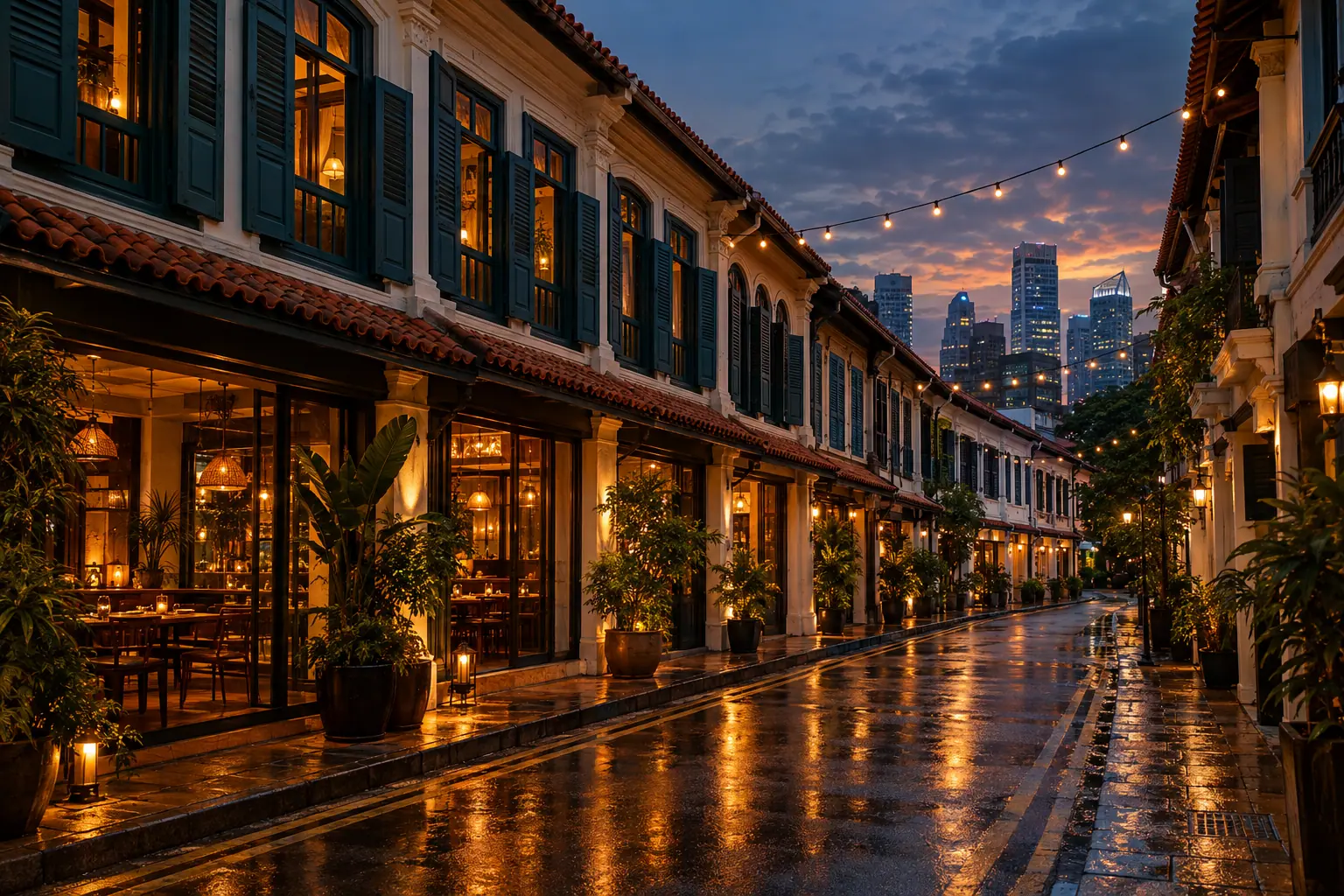
Boat Quay is the conserved shophouse wall along the south bank of the Singapore River, a short walk from Raffles Place. The Boat Quay Conservation Area covers the riverfront terrace and the streets immediately behind, including Circular Road. Historically this was the lighterage and trading quay; today the frontage is almost entirely F&B aimed at tourists, office workers and river-cruise traffic.
The architecture is a continuous two- and three-storey shophouse run with rear access that is tighter than a typical inland terrace. The river promenade is the shopfront. That makes Boat Quay more exposed to tourism cycles and riverside event calendars than Telok Ayer or inland Tanjong Pagar. Circular Road units can feel like a different product — less view, different servicing, sometimes more office or mid-market F&B.
Typical use mix
Restaurants, pubs and tourist-facing F&B dominate the river lots. Upper floors are often dining overflow or operator offices. Commercial zoning is typical on the quay itself, but confirm each lot. Operators should treat change of use and F&B licensing as critical path, including outdoor dining and river-edge constraints that inland streets do not have.
Tenure and conservation notes
Tenure is mixed; do not import the Telok Ayer 999-year narrative. Conservation controls protect the riverfront streetscape — façade, roof form and the continuous quay character. Works that affect the promenade elevation need extra care. Read the URA conservation buyer manual and expect coordination with river-edge public realm rules as well as lot-level conservation.
Stamp duty follows zoning. If the lot is fully commercial, ABSD generally does not apply; if mixed or residential remnants appear in the wider precinct, model accordingly via the ABSD guide.
Who buys or leases here
F&B groups that understand tourist and after-work river trade, and investors who can tolerate occupancy swings. The buyer pool is real but more specialised than Club Street. Compare with Beach Road if you want city-fringe commercial character without the quay.
Caveats
Tourism cyclicality, outdoor-dining policy, flooding or promenade works, and a tenant mix that can look interchangeable to visitors. Maintenance of conserved river-facing fabric is not cheap. Parent playbook: District 01–02 CBD. No invented asking prices on this page.
Sibling neighbourhoods
Stay inside District 01–02 CBD or step sideways to a comparable street: Telok Ayer, Chinatown (Kreta Ayer), Beach Road. Full index: all neighbourhoods.
Frequently Asked Questions
Is Boat Quay more tourist-driven than Club Street?+
Generally yes. Boat Quay depends more on river tourism and promenade footfall. Club Street is more resident-and-office evening dining. Underwrite the catchment you actually have.
Are Circular Road lots the same as riverfront lots?+
No. Circular Road sits behind the quay: less river frontage, different servicing and often a different tenant quality. Price and lease them as a distinct micro-location.
What extra approvals should F&B operators expect?+
Standard URA, SCDF, NEA and SFA pathways, plus any outdoor dining or river-edge conditions that do not exist on inland streets. Confirm current rules before designing al fresco.
Is Boat Quay suitable for boutique offices?+
Some upper floors and rear streets work for offices, but the riverfront product is F&B-led. An office thesis should not assume quay rents or quay liquidity.