
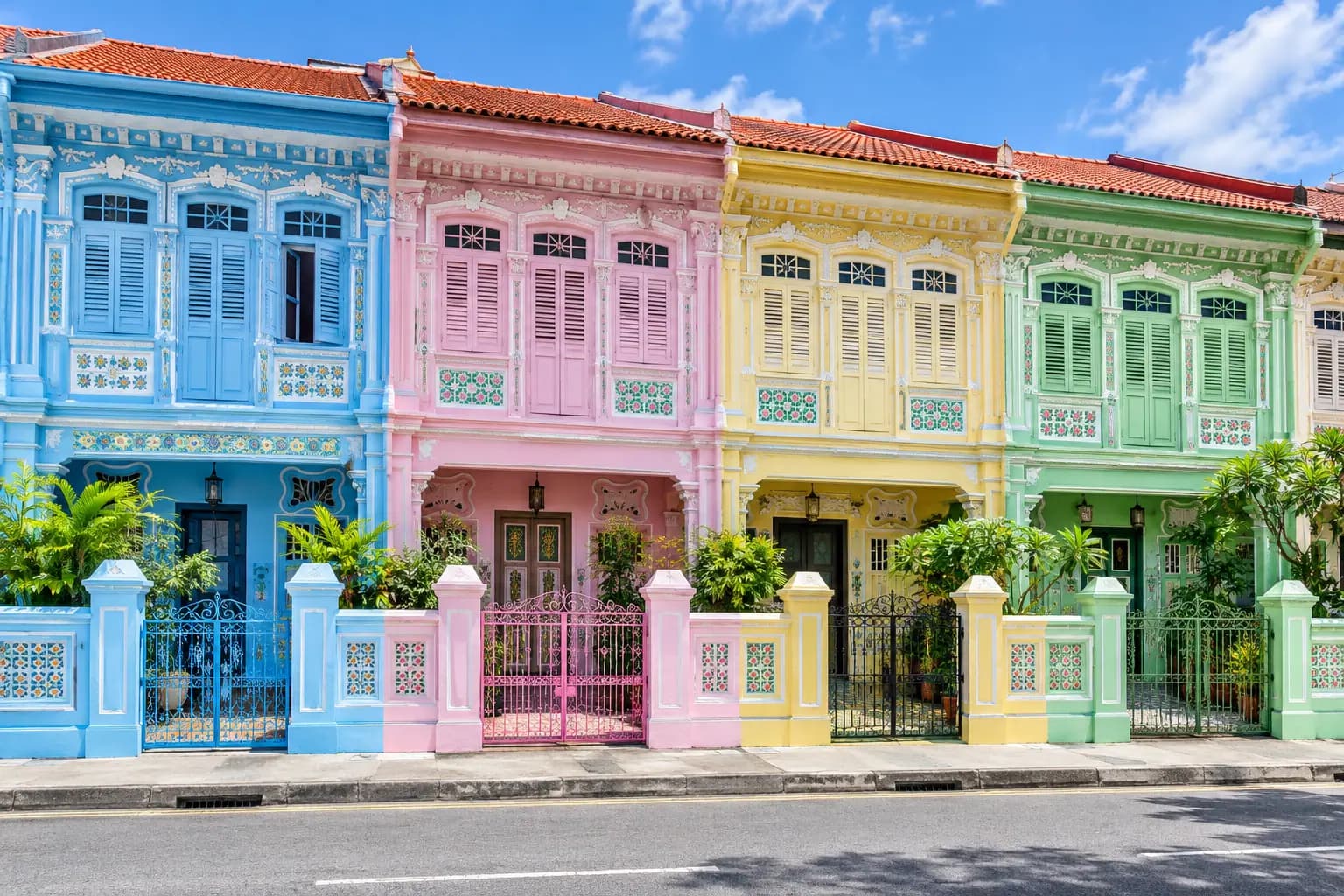
“Joo Chiat shophouse overcrowding” is a search that mixes three different worries: the Saturday crush on a successful conservation high street, the fear that a beautiful terrace is housing more people than it is approved for, and the suspicion that a food or lodging use is running ahead of its licences. Those are not the same problem. Treating them as one headline is how buyers overpay for the wrong lot — or walk away from a street that still works for a disciplined brief.
This insight is written as market-context editorial for Joo Chiat and the wider District 14–15 East belt. It does not invent incident counts, enforcement statistics, or news claims. If you need a named-lot view, bring the address to the desk. If you need the street thesis, stay with the neighbourhood page and this checklist.
1. Why the question comes up on this street
Joo Chiat photographs as a continuous Peranakan theatre: Joo Chiat Road as the mixed commercial high street, Joo Chiat Place and Koon Seng Road as the postcard terrace rows, side lanes as a blend of residences and small F&B. The Joo Chiat Conservation Area protects that façade culture. Weekend visitor interest and local catchment spend are part of why operators want the frontage — and part of why residents talk about crowds.
Intensity is not evenly distributed. A lot on Joo Chiat Road does not underwrite like a residential conservation terrace a few turns away. Katong and East Coast Road overlap the walking catchment but are a softer village story. Geylang is a different mix again. If your overcrowding concern is “too many people on Saturday,” you are describing a high-street amenity and a neighbour-relations issue. If your concern is “too many people sleeping in this house,” you are describing occupancy and licensing. Keep the two files separate.
2. Three meanings of “overcrowding”
| What people often mean | What to verify | Where it usually sits |
|---|---|---|
| Weekend / evening street crush | Trade mix on the lane, loading, parking, neighbour sensitivity, whether your use adds late-night intensity | Joo Chiat Road and the busiest café stretches — see the area playbook |
| Too many occupants in the building | Approved use, residential permissions, tenancy schedule, physical fit-out versus paperwork | Mixed lots and upper floors; also compare HDB living-quarters rules if the product is not private title |
| Use running ahead of licences | URA change of use, SCDF, NEA, Singapore Food Agency, and any lodging or public-entertainment permissions | F&B licensing guide |
3. Street mix — do not buy the postcard
Conservation character is the amenity. It is also the constraint. Façade rules, rear-lane loading, and a residential neighbour one party wall away all limit how hard you can trade. The URA conservation buyer manual is the right next document if you are paying a heritage premium.
Practical street notes we already use on the area page, restated here because overcrowding searches skip them:
- Joo Chiat Road carries more commercial and mixed energy; Koon Seng and some side streets are more residential conservation
- Parking and loading are tight on the best-looking lanes — a problem whether you fear crowds or you are the crowd
- Freehold is commonly discussed on better lots; still verify tenure on title, then read freehold shophouses for sale in Singapore if tenure is the reason you are here
- Mixed zoning can trigger residential stamp duty or ABSD — do not import Telok Ayer’s commercial no-ABSD story. Use the ABSD breakdown
4. Occupancy diligence — buyers and incoming tenants
If overcrowding means “who sleeps here,” treat the upper floors as a compliance file, not a bonus yield. Ask for:
- Current approved use and any written residential permission
- A tenancy schedule that names occupants and uses floor by floor
- Whether partitions, extra kitchens, or bunk-style furniture appeared after the last approved drawings
- Who is responsible for unauthorised works or unauthorised occupancy if completion or lease commencement is next month
Incoming tenants should not assume the outgoing operator’s sleeping arrangements transfer. Landlords should not assume a “flexible live-work” listing copy will survive a neighbour complaint or a licensing inspection. Where the product is actually an HDB commercial shop with living quarters, leave this private conservation note and use the HDB shophouses hub.
5. Licensing diligence — operators and landlords
Food, drink, and any form of paid lodging sit on licences that attach to operators and premises conditions. A crowded dining room on a Saturday is not proof that seating load, extraction, and fire safety were approved for your concept. Sequence change of use and F&B licensing before you sign a lease that only works if the café is already legal.
Landlords who want stronger covenants should prefer a file that shows approved use, a realistic plant zone, and a tenant who can name their licensing path. Tenants should walk at 2pm on a weekday and again on a weekend evening: the street you loved on a Tuesday morning may be the neighbour objection you inherit on a Saturday night.
6. How this sits in District 14–15
Overcrowding-as-street-intensity is a Joo Chiat Road and Katong village question more than a Siglap question. District 14–15 East still holds the parent playbook: Peranakan conservation, lifestyle F&B, and slightly different yield-versus-volatility trade-offs than District 01–02 CBD. Pair this insight with yields and capital appreciation context if you are underwriting running income — and with shophouse for rent in Singapore if you are comparing private leases, including the sample Joo Chiat conservation lease.
We do not quote invented asking prices on any of those pages. The sample listing is illustrative of coverage, not a promise of availability or a precinct-wide rent.
7. A short verification sequence
- Name the street, not only “Joo Chiat”
- Pull approved use, conservation status, and tenure
- Match occupants and fit-out to the papers
- Map licensing if food, drink, or lodging is in the brief
- Walk weekday and weekend before you romanticise the crowd
If that sequence is the work you want this desk to do on a named lot, say so on the form with Joo Chiat preselected. If you only needed the neighbourhood thesis, the Joo Chiat shophouses page is the lasting playbook; this insight is the overcrowding footnote written at publication length so the search is answered honestly.