

Short answer
Under BCA's Periodic Structural Inspection (PSI) regime, non-residential buildings must be inspected once every 5 years and residential buildings once every 10 years, excluding detached, semi-detached, terraced and linked houses used exclusively for residence and temporary buildings. Owners appoint a Structural Engineer after receiving a PSI notice, give access, ensure the report reaches BCA on time, and carry out any rectification required. Conserved shophouses are additionally subject to URA's conservation guidelines for works.
Shophouses Singapore is an independent property resource. This page summarises public sources and is not affiliated with any company, owner or authority named. This page is general information, not legal, engineering or financial advice. Facts are as of the date shown and sourced from the links below. Speak to a qualified lawyer or professional engineer about your situation.
Key facts
- Non-residential buildings
- Inspection once every 5 years (BCA, page updated 15 July 2026)
- Residential buildings
- Once every 10 years
- Who acts
- Building owner appoints a Structural Engineer within the stipulated time after a PSI notice
- Report
- The engineer submits the inspection report to BCA; owners implement rectifications within the given timeframe
- Conserved buildings
- Works must comply with URA Conservation Guidelines
How PSI works
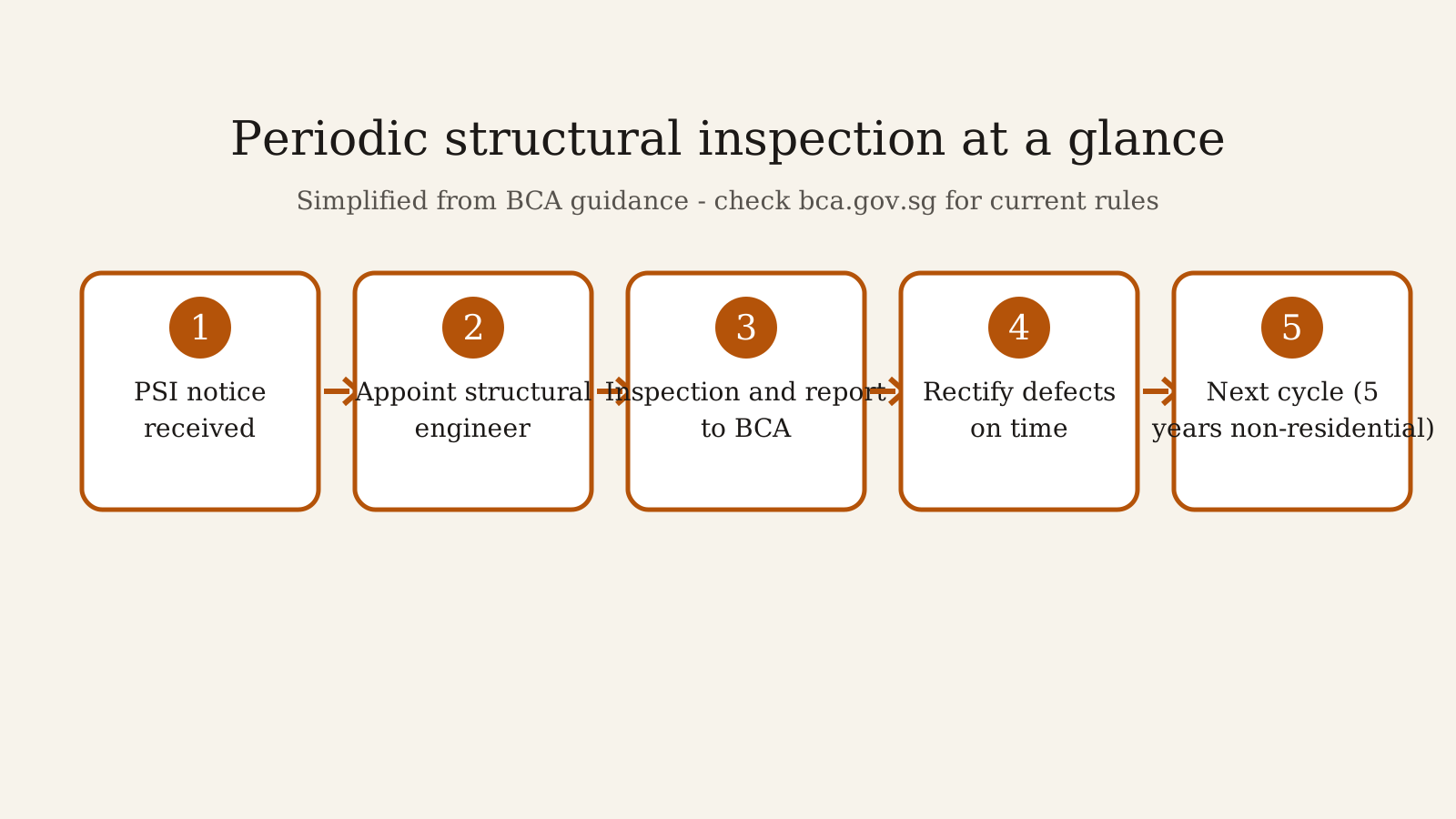
- 1
Receive a PSI notice
BCA notifies the owner that an inspection is due.
- 2
Appoint a Structural Engineer
Within the stipulated timeframe.
- 3
Provide access
The engineer needs site access to assess the structure.
- 4
Report to BCA
The engineer submits the report on time; owners should check that this happens.
- 5
Rectify
Implement any recommended repairs within the given timeframe.
Frequency at a glance
| Building type | Frequency |
|---|---|
| Non-residential (for example commercial shophouses) | Every 5 years |
| Residential | Every 10 years |
| Exclusively residential detached, semi-detached, terraced or linked houses | Excluded from these frequencies |
Conservation shophouses: maintenance and works
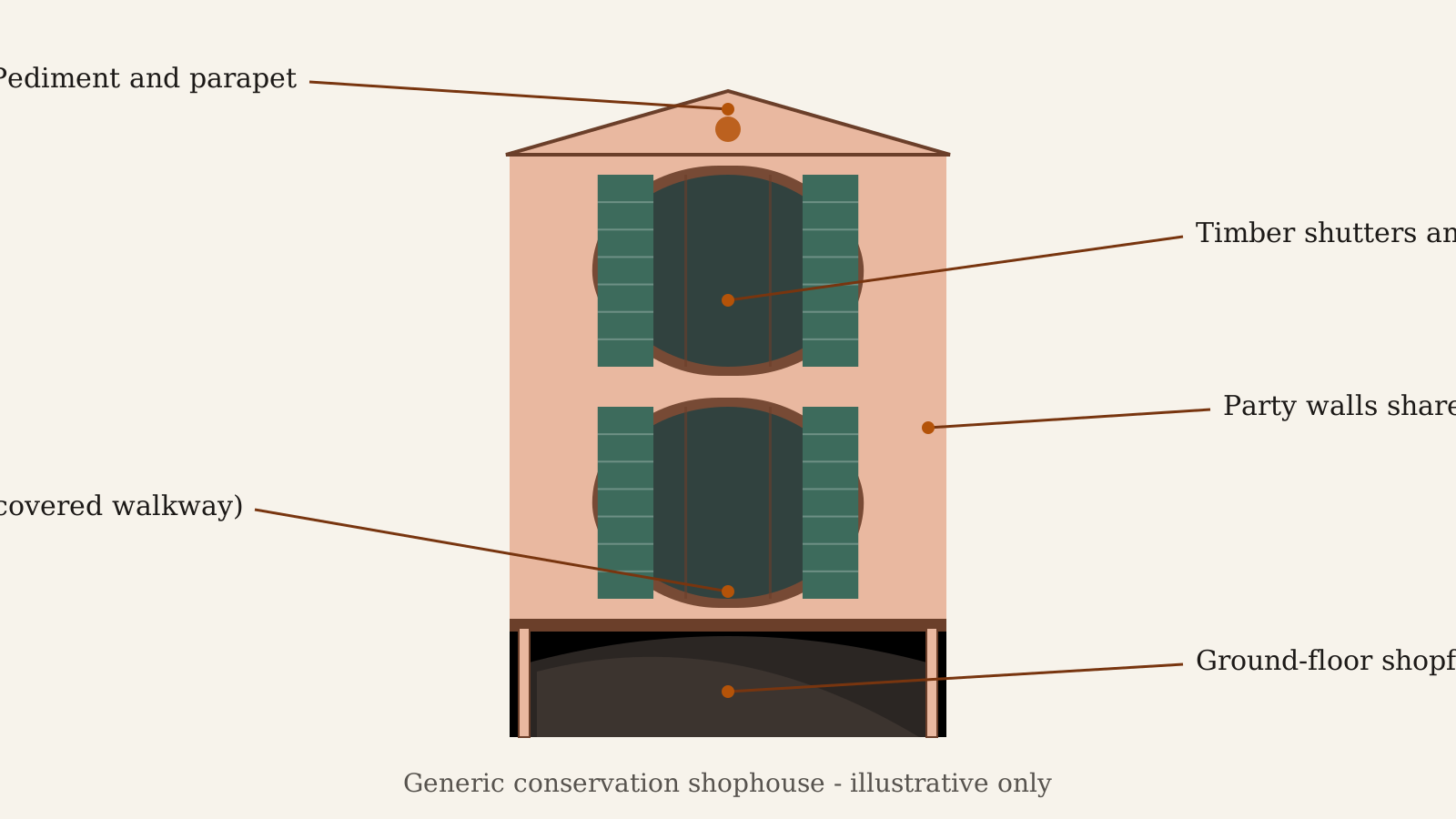
URA says all works on conserved buildings must comply with its Conservation Guidelines, and its Conservation Portal helps owners determine status, applicable guidelines and allowable uses. URA's Do-It-Right Guide helps owners avoid unauthorised alterations. A structural repair on a conserved facade may therefore need approvals as well as an engineer's input.
Signs worth showing an engineer
- New or widening cracks, especially diagonal ones near openings.
- Sagging or bouncy floors, or doors and windows that suddenly jam.
- Persistent damp, spalling plaster or exposed corroded steel.
- Rotting timber joists, rafters or roof members.
- Unapproved structural alterations such as removed walls.
People also ask
How often must a shophouse be structurally inspected?+
BCA says non-residential buildings are inspected once every 5 years and residential buildings once every 10 years, with some exclusions for exclusively residential landed houses.
Who arranges the inspection?+
The building owner appoints a Structural Engineer after receiving a PSI notice and must ensure the report is submitted to BCA on time.
Who pays for repairs?+
Owners are responsible for implementing rectifications. Whether a tenant shares costs depends on the lease.
Do conservation rules affect repairs?+
Yes. URA says works on conserved buildings must comply with its Conservation Guidelines.
Can I ask for a past PSI report before buying?+
You can ask the seller for records. See our condition-check guide.
Sources
Facts as of 5 November 2026. Pages we link to may have changed since.
- Periodic Structural Inspection (PSI), Building and Construction Authority. Accessed 2026-11-05.
- Conservation Guidelines, Urban Redevelopment Authority. Accessed 2026-11-05.
- Updated and new Do-It-Right Guides for conserved buildings, Urban Redevelopment Authority. Accessed 2026-11-05.
Next step
Need a condition-aware shophouse purchase?
We help buyers line up engineers, approvals and tenancy checks.
Browse conservation shophousesLast reviewed 5 November 2026. See all shophouse explainers.