

Short answer
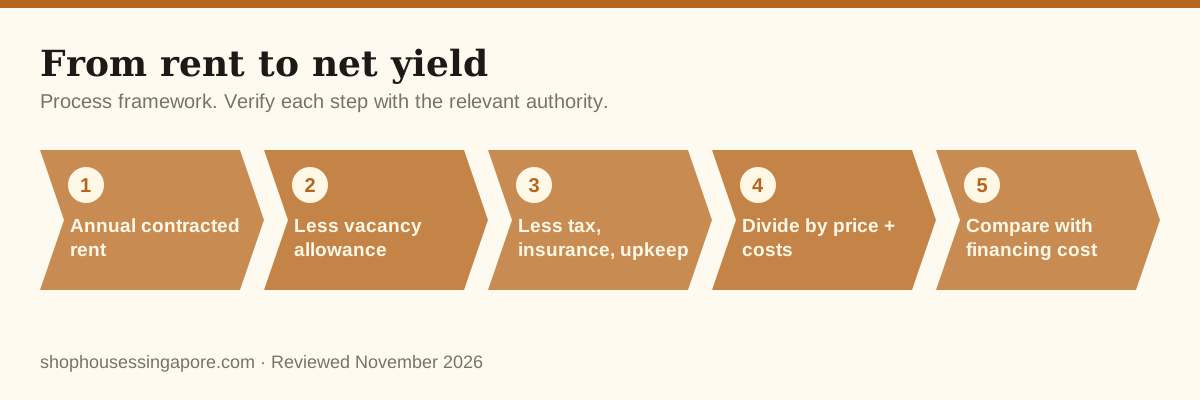
Rental yield is annual rent divided by purchase price. Gross yield ignores costs; net yield deducts vacancy, property tax, maintenance, insurance and management. Shophouse yields in Singapore are typically moderate because buyers pay for scarcity and capital growth, so always calculate net yield from actual lease terms.
- Gross yield
- Rent ÷ price
- Net yield
- After costs and vacancy
- Highest rent
- Typically ground-floor F&B
- Source
- Leases, listings, URA rental data
Reviewed November 2026.
Gross vs net yield formulas
| Measure | Formula | Notes |
|---|---|---|
| Gross yield | Annual contracted rent ÷ purchase price | Excludes all costs and vacancy |
| Net yield | (Annual rent − operating costs) ÷ (price + acquisition costs) | Include stamp duty and legal fees in the denominator |
| Yield on cost | Net operating income ÷ total cost incl. restoration | Best for value-add deals |
Costs to deduct
- Property tax (check IRAS for the current rate for your use class)
- Insurance, including public liability
- Façade and structural maintenance, which can be higher on conservation buildings
- Vacancy and leasing downtime between tenants
- Agent and management fees
- Financing costs if leveraged (not part of property yield, but part of equity return)
What shapes income
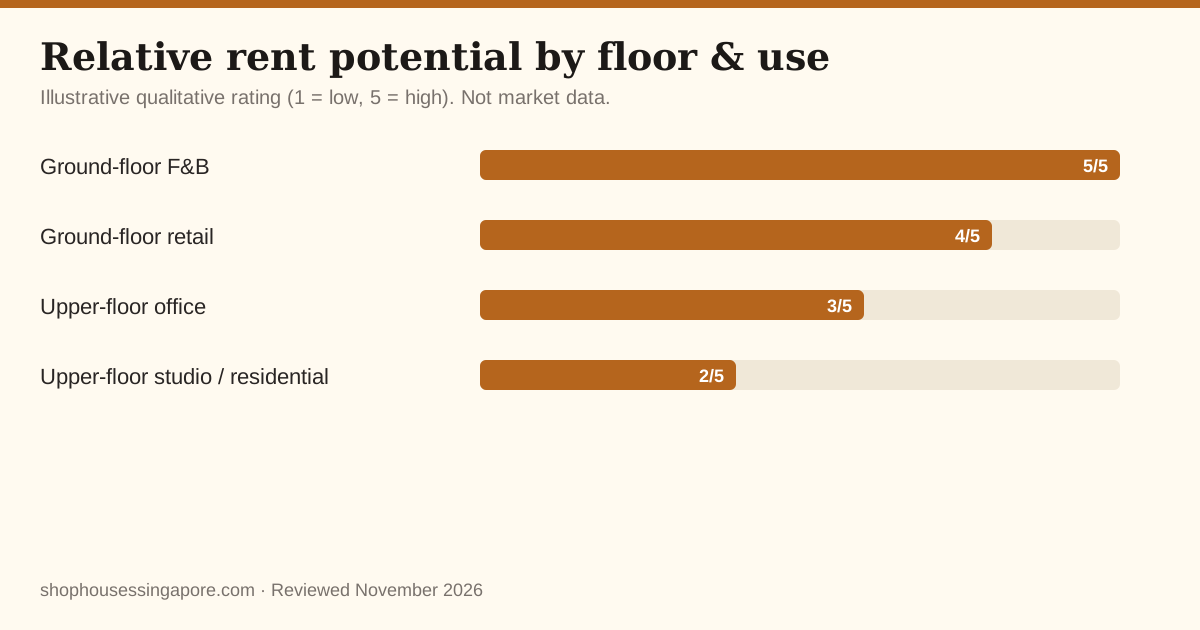
Rent depends on location and footfall, floor level, permitted use (F&B, retail, office), lease length, rent-review terms and tenant covenant. Ground-floor F&B generally earns more per sq ft than upper-floor office. See our indicative yield bands on the historical yields insight page, and verify any figure against current rental listings.
Sources and further reading
- IRAS – Inland Revenue Authority of Singapore — Stamp duties, property tax, GST on property
- URA – Urban Redevelopment Authority — REALIS, property market statistics, conservation guidelines
- EdgeProp Singapore — Transaction reports and commercial market commentary
Figures and rules change; confirm current details with the source before transacting. See also all investment and market pages.