
East Coast neighbourhood guide
Katong Shophouses: Old Katong Peranakan Shophouses for Sale and Rent
Old Katong's Peranakan and Eurasian shophouse heritage, what is conserved, how the streets are used today, and how to approach buying or leasing.
Quick answer
What are Katong shophouses?
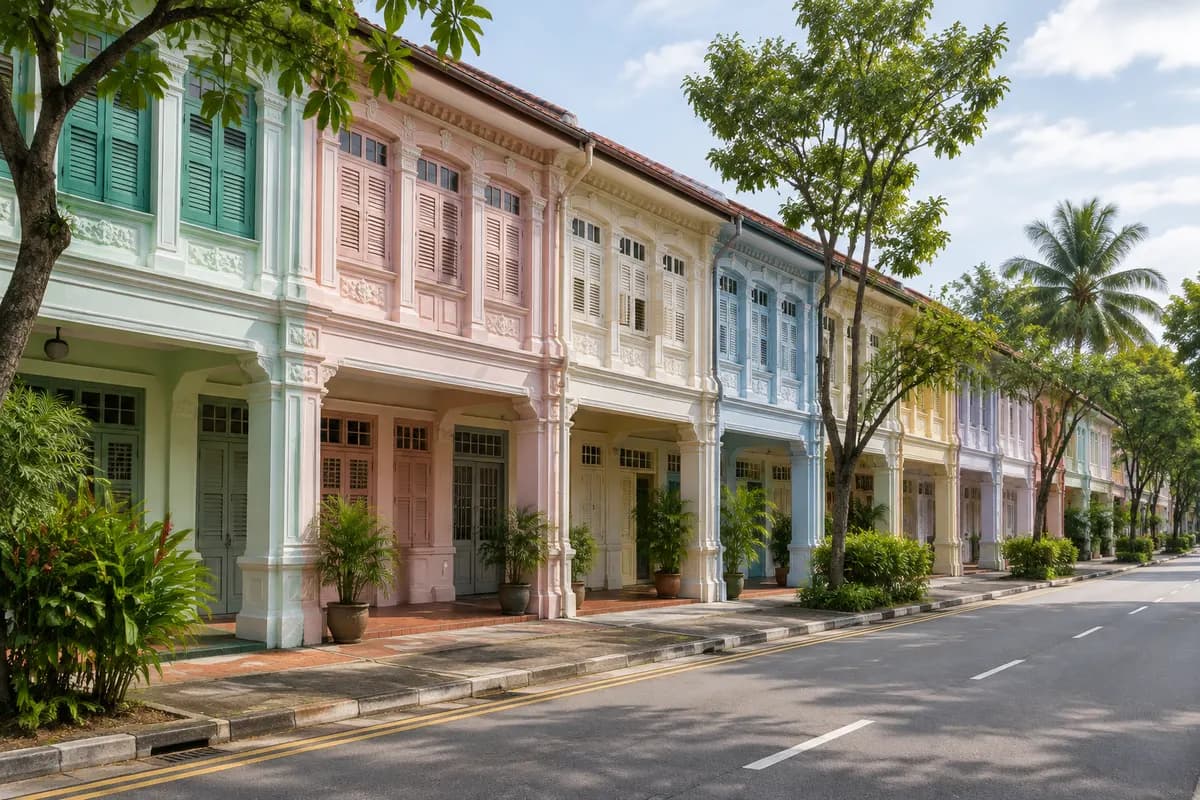
Katong shophouses are the early twentieth-century terraces and shopfronts of old Katong in Singapore's east, closely tied to Peranakan and Eurasian communities. Many sit inside the Joo Chiat Conservation Area, so facade work and change of use need URA permission. The area suits cafés, boutiques and character homes.
Last reviewed 5 November 2026. Market and planning statements are dated and qualitative; verify on the named lot before acting.
Katong at a glance
- Location
- Singapore's east coast, around East Coast Road and Joo Chiat; postal district 15
- Heritage
- Peranakan and Eurasian seaside community; former coconut plantation and seaside retreat area
- Conservation
- Large parts inside the Joo Chiat Conservation Area (gazetted 1993); East Coast Road is covered from Marshall Road to Telok Kurau Road
- Typical uses
- Cafés, restaurants, boutiques, services, homes
- Transport
- Thomson-East Coast Line stations on the east coast since 23 June 2024; buses along East Coast Road
- Anchors
- Katong Shopping Centre, Roxy Square, Parkway Parade, 112 Katong
- Related guides
- Katong area guide, Joo Chiat
- Facts reviewed
- 5 November 2026
Old Katong: where the shophouses sit
Katong is a loose, much-loved name rather than a single legal boundary. Locals use it for the stretch of the east coast around East Coast Road, Joo Chiat Road and the old seaside plots that once ran down to the shore. For shophouse buyers and tenants, old Katong shophouses mostly means the conserved rows along East Coast Road and the connecting streets that blend into Joo Chiat.
Because the boundaries are informal, always search by street and lot rather than by the label Katong. A Katong shophouse for sale advertised by a broker may sit in the Joo Chiat Conservation Area, on a conserved stretch of East Coast Road, or on a plainer commercial row, and the rules and values differ for each. Our Katong area overview gives the short version; this page goes deeper.
History of Katong
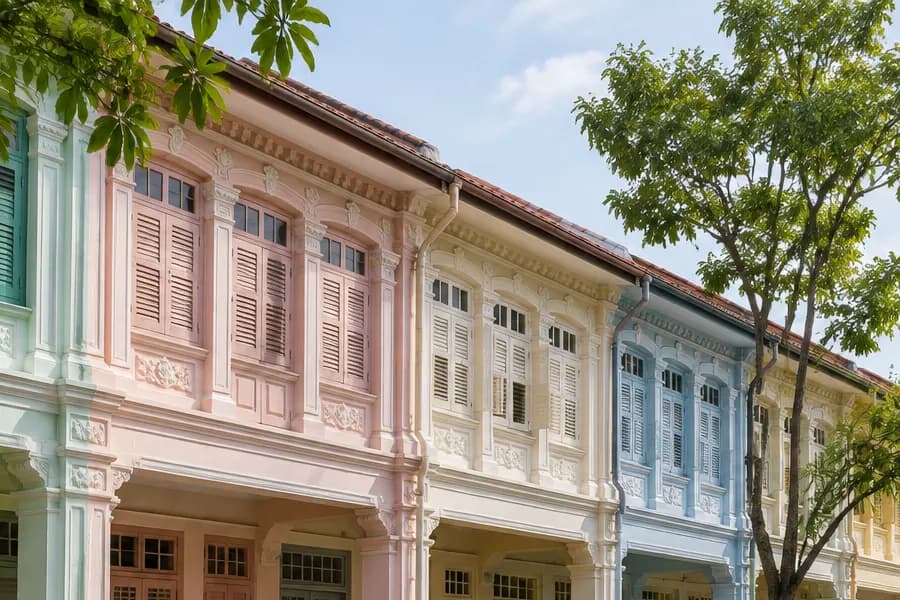
Katong takes its name from a sea turtle species and, in other accounts, from the word for sea mirage. The headland now remembered as Tanjong Katong marked the eastern edge of Raffles' 1819 settlement. In the nineteenth century wealthy families built seaside villas along the coast road, and the neighbourhood became associated with the Peranakan Chinese, Eurasians and other communities who lived and traded here.
Tanjong Katong Road extensions began in 1906, opening more land for terraces and shophouses. East coast reclamation between 1966 and 1985 pushed the sea far from the old shoreline, which is why the Katong of today feels inland even though its identity is coastal. Many landmarks changed in that period, including redevelopments of older hotels and clan sites, while the conserved shophouse rows survived.
1819–1822
Eastern edge of the settlement
Tanjong Katong marks the east boundary of the early colonial town; a marine yard is set aside in 1822.
1906
Road extensions
Tanjong Katong Road extensions open land for new streets and shophouses.
1966–1985
East coast reclamation
New land moves the shoreline away from old Katong.
1993
Conservation Area
The Joo Chiat Conservation Area is gazetted, protecting much of the shophouse stock.
Peranakan and Eurasian heritage
Katong's community heritage is layered. Peranakan families brought their language, cuisine and decorative tastes, while Eurasian families built churches, clubs and homes, and the Eurasian Heritage Gallery now documents that story. Malay and Indian communities, particularly towards Geylang Serai, add further layers.
This matters commercially because many visitors come for the story as much as the product. Operators that respect the neighbourhood's cuisine, craft and community usually fare better than those that treat it as a backdrop. Details in the buildings, such as ornamental tiles and carved timber, are part of that story and are protected.
Katong sells a sense of place; the shophouses are the stage set and the community is the cast.
Streets and shophouse stock in Katong
The conserved stock concentrates on a few corridors. East Coast Road carries a mix of traditional shophouse rows and larger modern retail blocks. Joo Chiat Road and its cross streets offer the densest rows. Tanjong Katong Road, toward the sea, has a more mixed streetscape with some shophouse terraces.
| Corridor | What you find | Best for |
|---|---|---|
| East Coast Road | Shophouse rows beside modern malls and offices | Retail and F&B with passing traffic; see East Coast Road |
| Joo Chiat Road | Dense, intact conserved rows | Destination F&B; see Joo Chiat Road |
| Tanjong Katong Road | Mixed old and newer buildings | Services and neighbourhood retail; see Tanjong Katong |
| Quiet lanes | Terraces, mostly residential | Homes; see Koon Seng Road |
Katong shophouse for sale: practical guidance
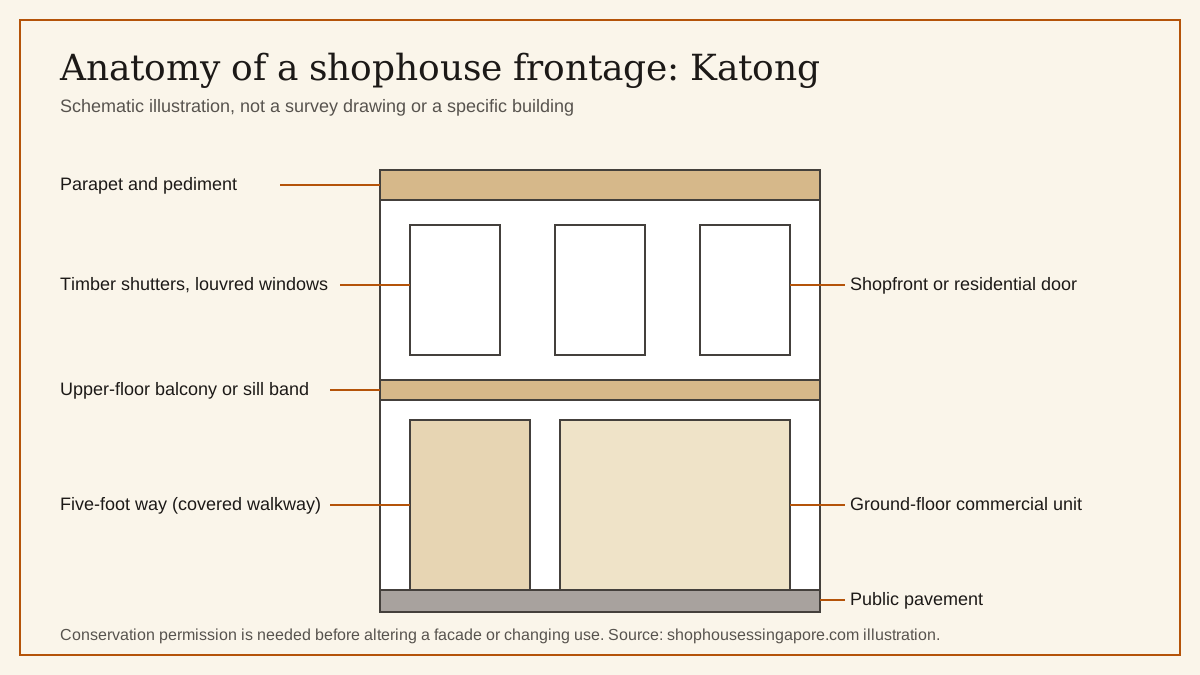
A Katong shophouse for sale will usually be a two-storey unit with a shopfront, a covered five-foot way and living or office space above. Supply is thin and many sales happen privately. Establish four things first: tenure from the title, current approved planning use, the conservation status or restoration guideline for the lot, and any history of unapproved works.
Zoning drives stamp duty exposure. A property with residential-zoned elements may attract ABSD where a purely commercial lot would not; see our commercial vs residential ABSD breakdown. Our guide to investing in conservation shophouses covers financing and restoration budgeting.
Market context as of 5 November 2026: we do not publish unsourced price figures. Check URA REALIS for caveats on comparable lots, note the area basis used, and remember that recent transactions on very different lots can mislead. See the live conservation shophouses for sale page for current opportunities.
Katong shophouse for rent: tenants and uses
Katong suits tenants who want character and a loyal local catchment: cafés, bakeries, restaurants, design studios, clinics, tuition and boutiques. Ground floors command the interest, while upper floors suit studios, offices or storage subject to approved use. Rents move with frontage, approved use, kitchen provisions and location relative to the larger malls, so compare current listings rather than quoting averages.
Check whether the unit is approved for food service before signing. If not, plan for a change-of-use application and allow time for approvals, as set out in our F&B licensing and change of use guide. Browse shophouses for rent and the Joo Chiat rental listing for current examples.
URA conservation status in Katong
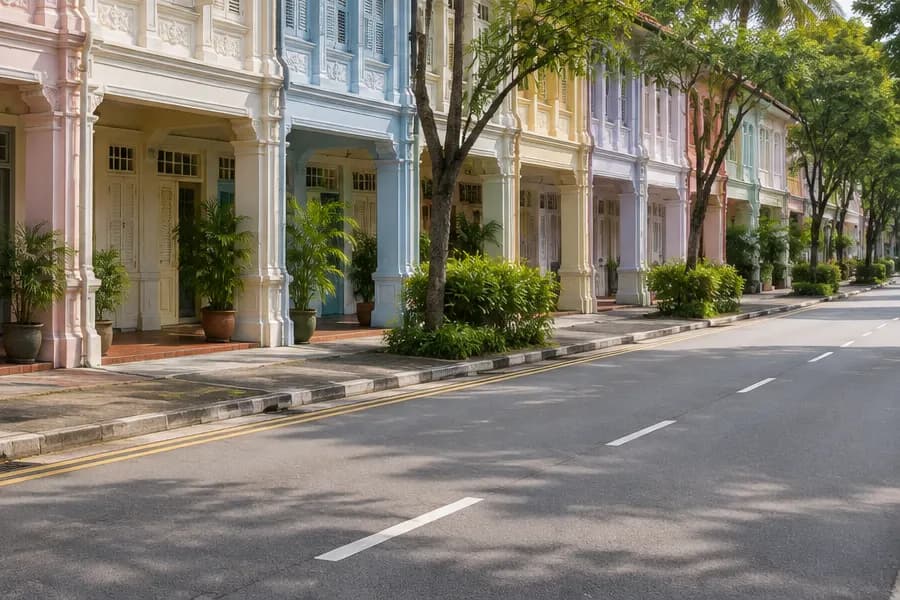
The Joo Chiat Conservation Area was gazetted on 23 July 1993 and includes East Coast Road from Marshall Road to Telok Kurau Road, along with Joo Chiat Road and parts of several side streets. URA manages it under the guidelines for secondary settlements, with Specific Restoration Guidelines for individual buildings. Additional buildings were conserved in several tranches between 2003 and 2009.
Practically, expect that facade features, roof form and the five-foot way are retained, that structural or layout changes need permission and that a change of use needs approval. Policy can change, so verify the current position with URA for any lot as of the date you transact.
MRT, buses and getting to Katong
The Thomson-East Coast Line Stage 4 opened on 23 June 2024 with stations at Tanjong Rhu, Katong Park, Tanjong Katong, Marine Parade, Marine Terrace, Siglap and Bayshore. This changed east coast access, and stations at Katong Park and Tanjong Katong serve the seaward end of old Katong. East-West Line stations at Eunos, Kembangan and Paya Lebar also serve the area by bus connection.
Frequent buses run along East Coast Road and Joo Chiat Road. Parking is tight at weekends, so plan loading and customer access accordingly.
F&B and retail in Katong
Katong is known as a food destination, with long-established Peranakan and local favourites alongside newer cafés and bars. We avoid naming businesses as they open and close, but the pattern is a stable local trade that rewards consistency and a growing visitor trade at weekends.
Katong Shopping Centre, Roxy Square, 112 Katong and Parkway Parade offer large-format retail nearby, which can either compete with or feed footfall to shophouse operators. Study the catchment on the specific street before committing.
Investing in or living in Katong
Katong appeals to investors seeking an established lifestyle location with real heritage appeal, and to owner-occupiers who want a walkable neighbourhood with beaches, parks and food close by. Weigh that against conservation compliance, maintenance of older buildings and the thinner resale market. See historical yields and capital appreciation data for a framework.
Katong also sits close to the wider east shophouse streets: Joo Chiat, Tanjong Katong, East Coast Road and Siglap. Many investors compare several before choosing.
Katong shophouses: frequently asked questions
What are old Katong shophouses?+
They are the conserved early twentieth-century shophouses and terraces in the old Katong area, many within the Joo Chiat Conservation Area, associated with Peranakan and Eurasian communities.
Is there a Katong shophouse for sale right now?+
Listings are infrequent and many sales are private. Check our conservation shophouses for sale page and ask agents about off-market lots.
Can I rent a Katong shophouse for a café?+
Yes, if the unit has approved food use or you obtain a change of use and licences. Confirm with URA and SFA before signing.
Are Katong shophouses conserved?+
Many are, as part of the Joo Chiat Conservation Area and nearby conserved stretches. Status varies by building, so check each lot.
What is the nearest MRT to Katong shophouses?+
Thomson-East Coast Line stations such as Katong Park and Tanjong Katong serve the area since 23 June 2024. Check the walk from the specific address.
What is the difference between Katong and Joo Chiat?+
Katong is an informal name for the wider east coast area; Joo Chiat is the specific road and conservation area at its heart. They overlap and are often used together.
Are Katong shophouses freehold?+
Tenure varies. Many east coast shophouses are freehold, but confirm from the title for the lot you are considering.
Is Katong good for a shophouse investment?+
It offers heritage appeal and lifestyle demand, but also conservation costs and limited liquidity. Compare transactions and rents on similar lots.
Can foreigners buy a Katong shophouse?+
It depends on whether the property is residential, commercial or mixed and on current rules and duties. Take legal advice before bidding.