Style comparison table
Period boundaries overlap; URA and heritage authors use slightly different ranges. Treat these as guides.
| Style | Approx. period | Key identifiers |
|---|---|---|
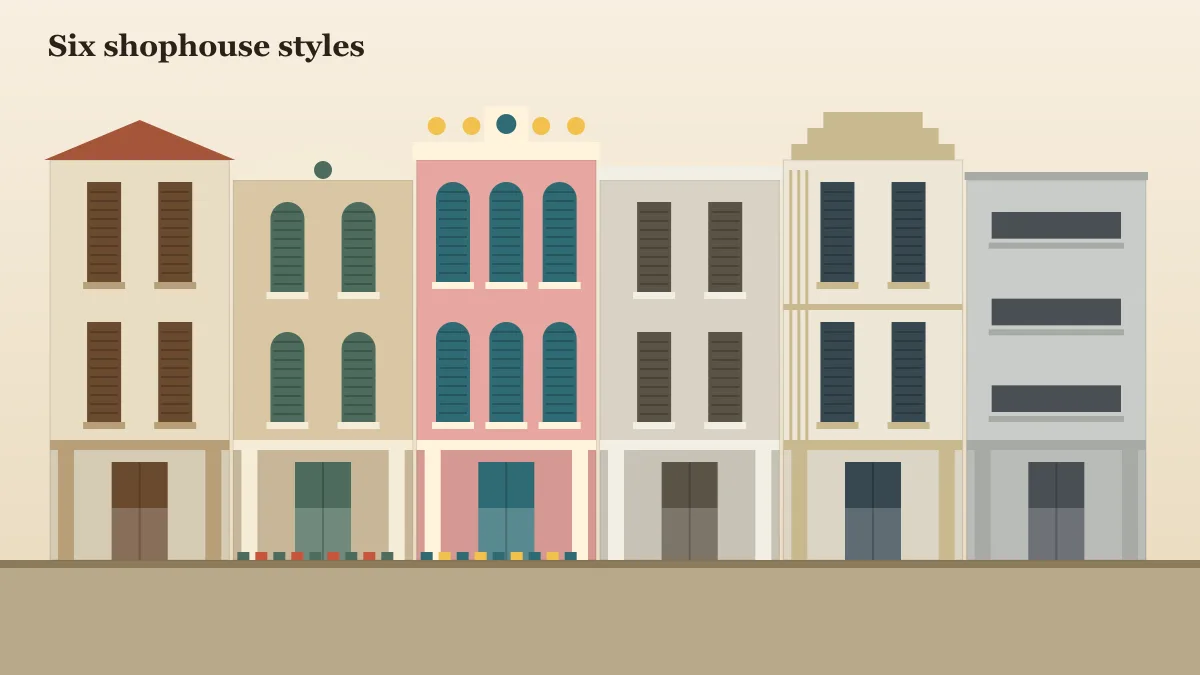
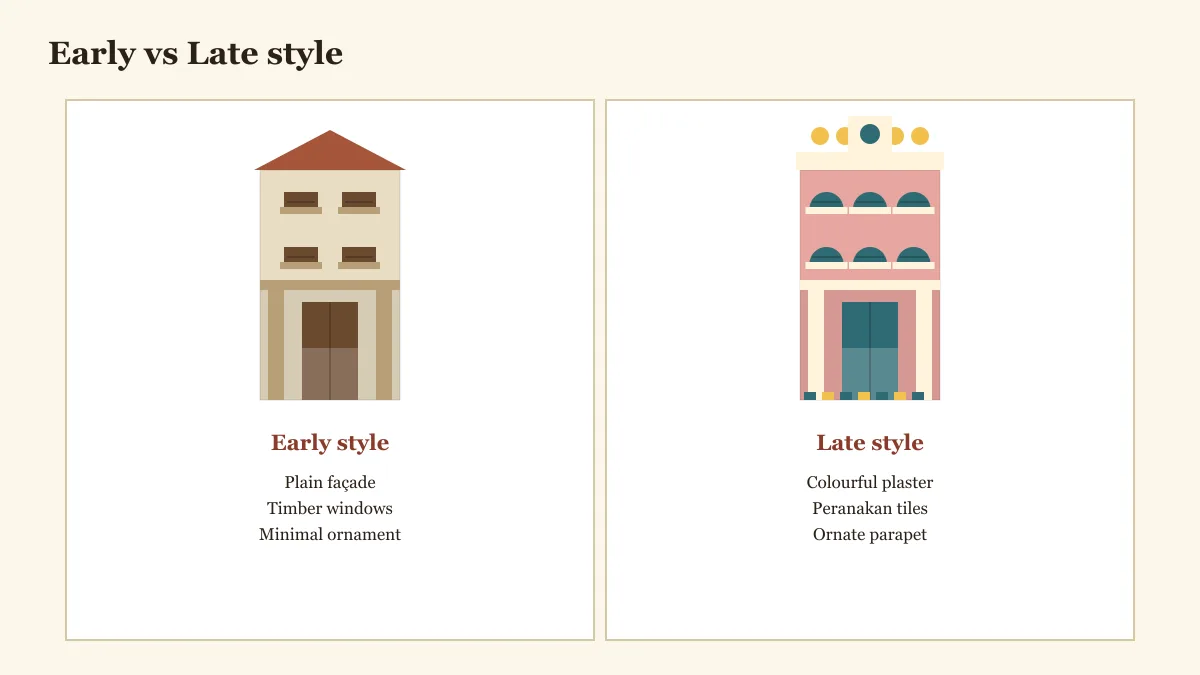
| Early | 1840s–1900s | Simple, low-key façades; timber windows; Chinese-influenced detail; often plain plaster. |
| First Transitional | c.1900s–1920s | More ornament appears; Chinese Baroque and European influences begin to show. |
| Late | c.1920s–1940 | Elaborate decoration, Peranakan tiles and colourful plasterwork. |
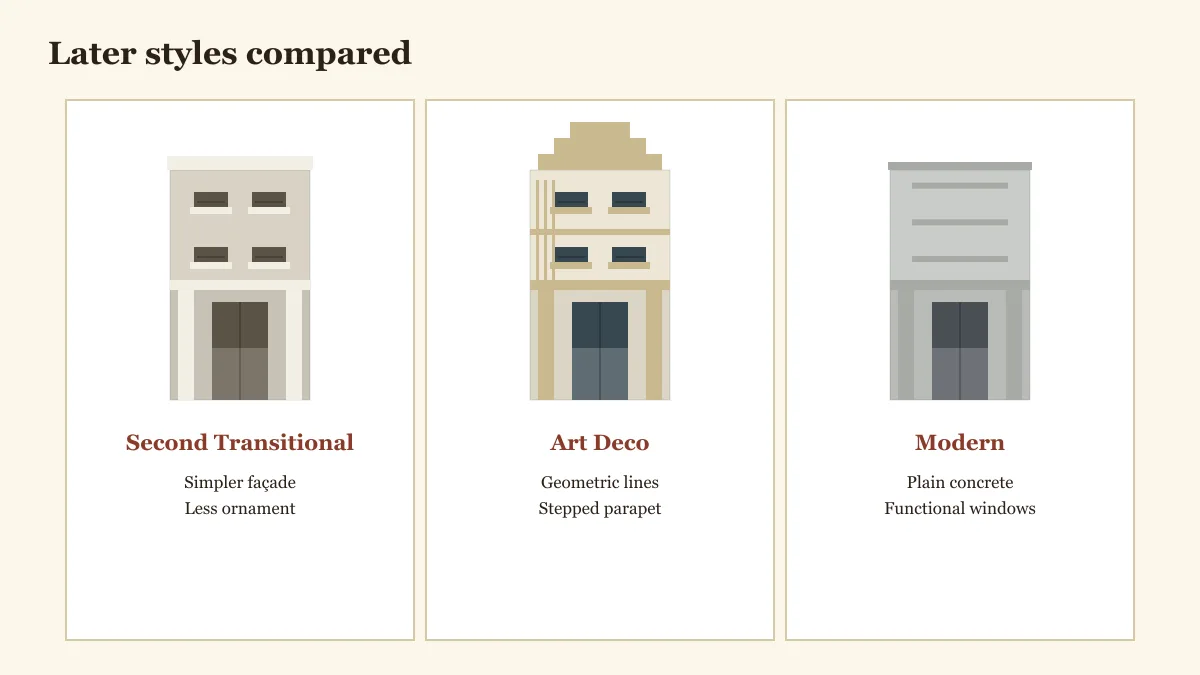
| Second Transitional | c.1930s | Simpler façades with less ornament; modern materials appear. |
| Art Deco | c.1930s onwards | Geometric, streamlined forms and fewer decorative flourishes. |
| Modern | c.1950s–1960s | Plain, functional design, often with reinforced concrete and minimal decoration. |
How to identify a style on site
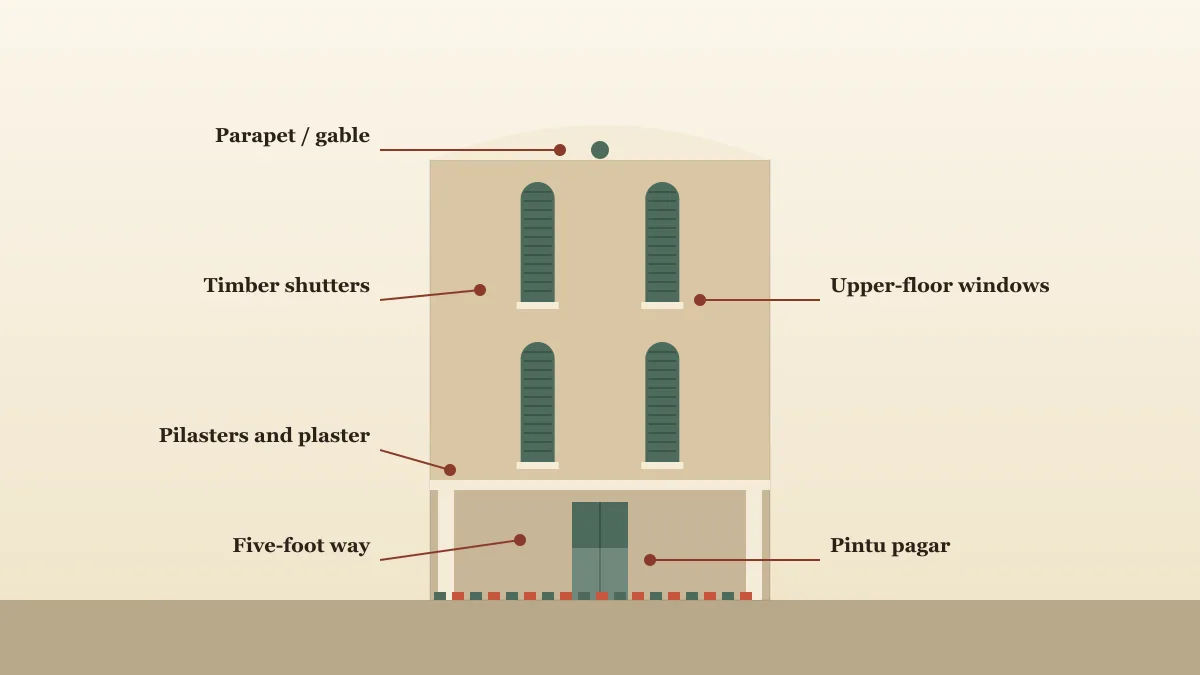
- Count and shape the upper-floor windows and shutters.
- Look at the plasterwork and tile decoration on the façade.
- Check the five-foot way columns and pilasters for period detail.
Why style matters to owners
URA conservation guidelines apply to the original features of each style, so identifying the style helps you understand what must be retained or restored. See the buyer manual and restoration guide.