
D07–08 · City Fringe
Little India shophouses
Little India Conservation Area — Serangoon Road, Campbell Lane and the side streets where community trade still sets the rhythm.
Parent district: District 07–08 City Fringe. This page is the neighbourhood layer — street character and use mix for Little India, not a live price list.
Street character
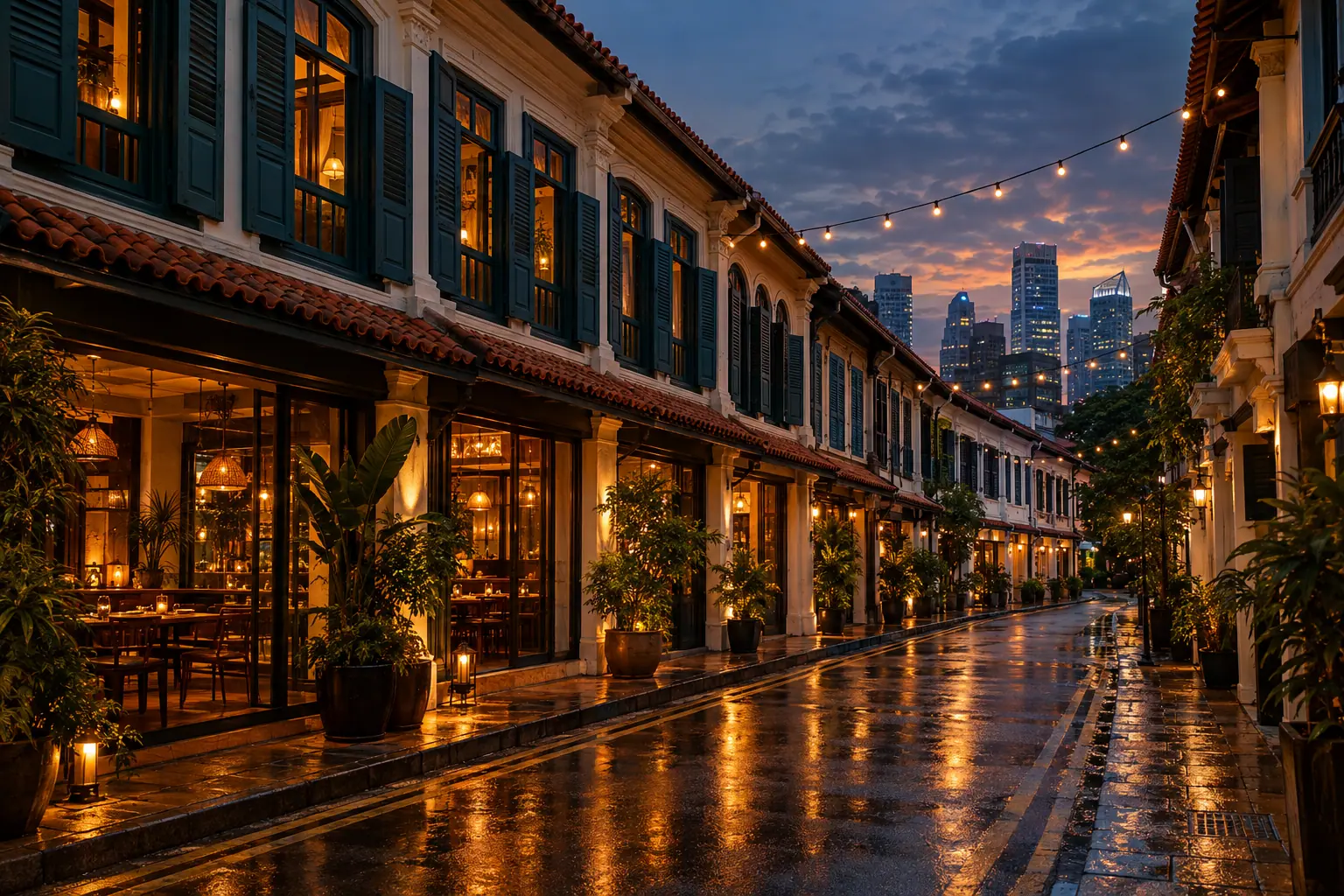
Little India’s conserved shophouses sit along Serangoon Road and the grid of Campbell Lane, Dunlop Street, Buffalo Road, Clive Street and neighbouring lanes. The Little India Conservation Area was gazetted to protect this streetscape of two- and three-storey shophouses, shophouse-temple adjacencies, and a five-foot-way culture that still serves residents and workers — not only visitors. Colour, signage and trade spill onto the walkway in a way CBD dining streets have largely edited out.
Footfall is a stack of local catchment, migrant-worker weekends, and tourism. That mix is the investment story and the operating constraint. It is a different brief from Kampong Glam (more boutique and destination retail) or Jalan Besar (more adaptive-reuse and creative tenancies). Little India MRT and Farrer Park / Rochor stations bound the walking radius.
Typical use mix
Ethnic retail, goldsmiths, provision and textile trades, restaurants, and services remain core. Newer lifestyle F&B and galleries appear on selected streets as footfall diversifies, but they do not replace the traditional mix. Ground-floor retail economics dominate; upper floors may be storage, small offices, or residences where zoning allows. Check shophouses for rent for tenant-type signals rather than importing CBD psf.
- F&B is viable on some lots but must clear the same licensing and change of use path as anywhere else.
- Traditional trades can be sticky, loyal tenants — and can also complicate a sudden concept conversion.
Tenure and conservation notes
Tenure is mixed across the precinct; do not assume 999-year Telok Ayer terms. Conservation status applies to gazetted lots — façade and streetscape retention — with building condition that can be more uneven than recently restaurateur-restored CBD rows. Budget fabric and services. Zoning may be commercial, mixed or otherwise; ABSD treatment follows the lot, not the “Little India shophouse” label. See the ABSD breakdown and URA buyer manual.
Who buys or leases here
Trade owner-occupiers, investors who understand community-retail cash flows, and occasional lifestyle operators on the gentrifying edges. Entry pricing is typically discussed as more accessible than Telok Ayer or Club Street — still without invented numbers on this page. Parent hub: District 07–08 city fringe.
Caveats
Crowd peaks, festival periods, and a tenant mix that may not match a family-office “heritage F&B” fantasy. Illegal works and subdivided upper floors are diligence items. Compare Petain Road / Balestier if you want city-fringe conservation with less tourist intensity.
Sibling neighbourhoods
Stay inside District 07–08 City Fringe or step sideways to a comparable street: Jalan Besar, Kampong Glam, Bugis. Full index: all neighbourhoods.
Frequently Asked Questions
What tenants dominate Little India shophouses?+
Ethnic retail, goldsmiths, restaurants and services remain core. Newer lifestyle F&B and galleries appear on selected streets as footfall diversifies.
Is Little India mainly a tourism play?+
Tourism is part of the catchment, but community and worker-weekend trade are structural. Underwrite both — a tourist-only model misses how the precinct actually works.
Are Qualifying Certificate issues relevant here?+
For fully commercial assets, Qualifying Certificate treatment available to foreign corporates on commercial property can still apply. Residential-zoned units require different analysis.
How do prices compare with CBD shophouses?+
Entry prices are typically lower than Telok Ayer or Club Street, with correspondingly different rents. That is a planning observation, not a live price list — commission current evidence.