
Short answer
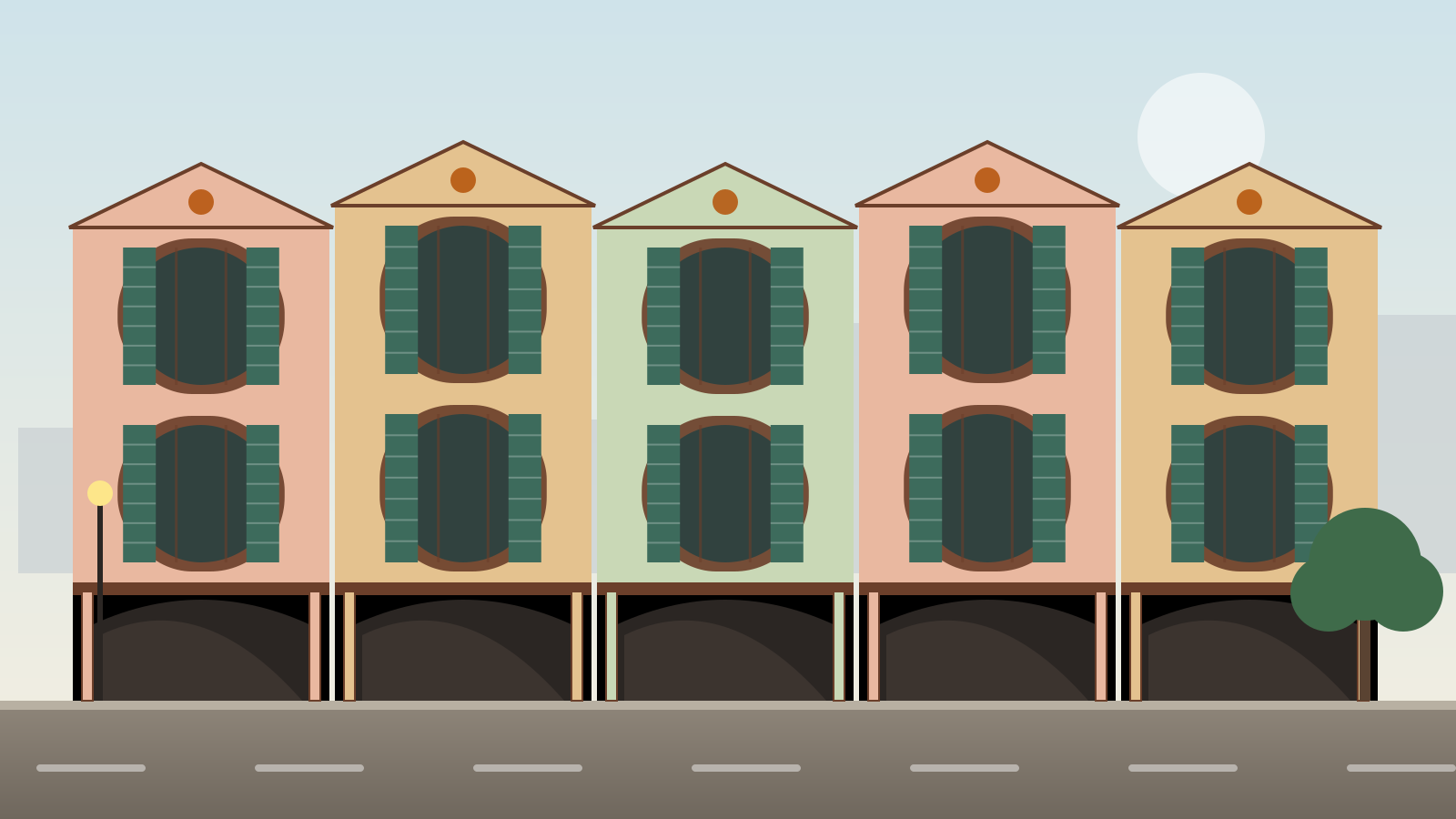
The Sim Kwong Ho shophouses are a row at 292-312 Balestier Road, Singapore, built in 1926 by Sim Cheng Neo and designed by the architectural firm Westerhout and Oman. Roots.gov.sg describes them as Chinese Baroque, or Singapore Eclectic, with stucco flowers and peacocks and glazed tiles on the columns. They feature on the Balestier Heritage Trail.
Shophouses Singapore is an independent property resource. This page summarises public heritage information from Roots.gov.sg (National Heritage Board) and is not affiliated with any owner or occupier.
Key facts
- Address
- 292-312 Balestier Road
- Built
- 1926
- Builder
- Sim Cheng Neo (Roots.gov.sg)
- Architects
- Westerhout and Oman
- Style
- Chinese Baroque / Singapore Eclectic
- Name origin
- Chinese characters on the corner facade (Roots.gov.sg)
History
1926
Row at 292-312 Balestier Road built by Sim Cheng Neo, whose family home was at 503 Balestier Road.
1928
Sim also developed shophouses at 412-418 Balestier Road, per Roots.gov.sg.
Roots.gov.sg says the group became known as the Sim Kwong Ho shophouses because of the Chinese characters on their corner facade.
Architecture to look for
| Feature | Detail |
|---|---|
| Style | Chinese Baroque, or Singapore Eclectic, blending Western and local motifs |
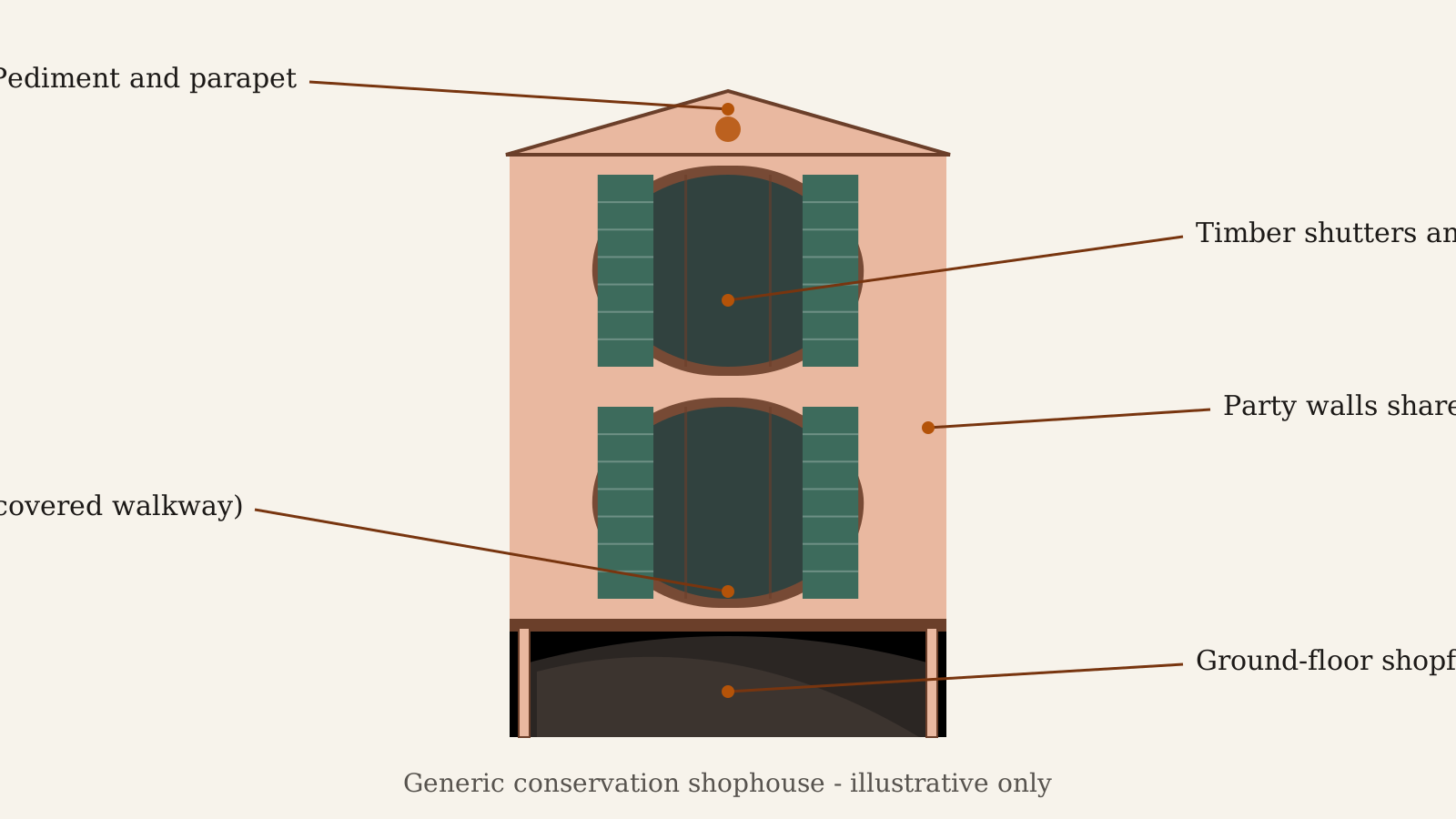
| Western elements | Moulded pilasters and pediments |
| Local motifs | Plaster stucco flowers, peacocks and other creatures |
| Columns | Colourful glazed tiles with floral wreath capitals |
Balestier today
Balestier is one of the secondary settlements named in URA's conservation guidelines. Use URA's Conservation Portal to check any specific address. For the neighbourhood's property context see Petain Road and Balestier.
People also ask
Where are the Sim Kwong Ho shophouses?+
At 292-312 Balestier Road, Singapore, per Roots.gov.sg.
Who built them?+
Roots.gov.sg says they were built in 1926 by Sim Cheng Neo and designed by Westerhout and Oman.
Why are they called Sim Kwong Ho?+
The name comes from the Chinese characters on the row's corner facade, according to Roots.gov.sg.
What style are they?+
Chinese Baroque, also called Singapore Eclectic.
Are they for sale?+
We do not know. This is a heritage explainer, not a listing. Check URA's Conservation Portal for status and speak to us about conservation shophouse opportunities.
Sources
Facts as of 5 November 2026. Pages we link to may have changed since.
- Sim Kwong Ho Shophouses, Roots.gov.sg (National Heritage Board). Accessed 2026-11-05.
- Conservation Guidelines, Urban Redevelopment Authority. Accessed 2026-11-05.
Next step
Curious about owning or leasing a real heritage shophouse?
Speak to our desk about conservation and commercial shophouses, from verified tenure and zoning to realistic yield expectations.
Browse conservation shophousesLast reviewed 5 November 2026. See all shophouse explainers.