Timeline
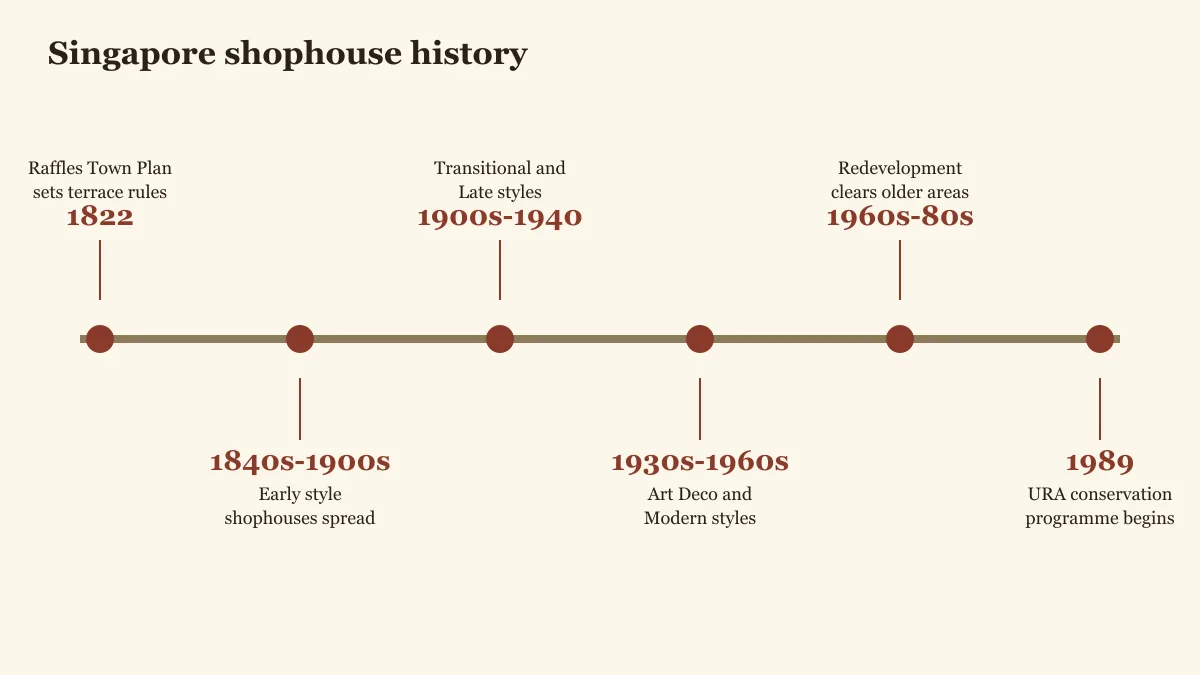
Dates are approximate for style periods; the Town Plan year and the 1989 start of the conservation programme are as recorded by URA and NLB Infopedia.
| Period | Development |
|---|---|
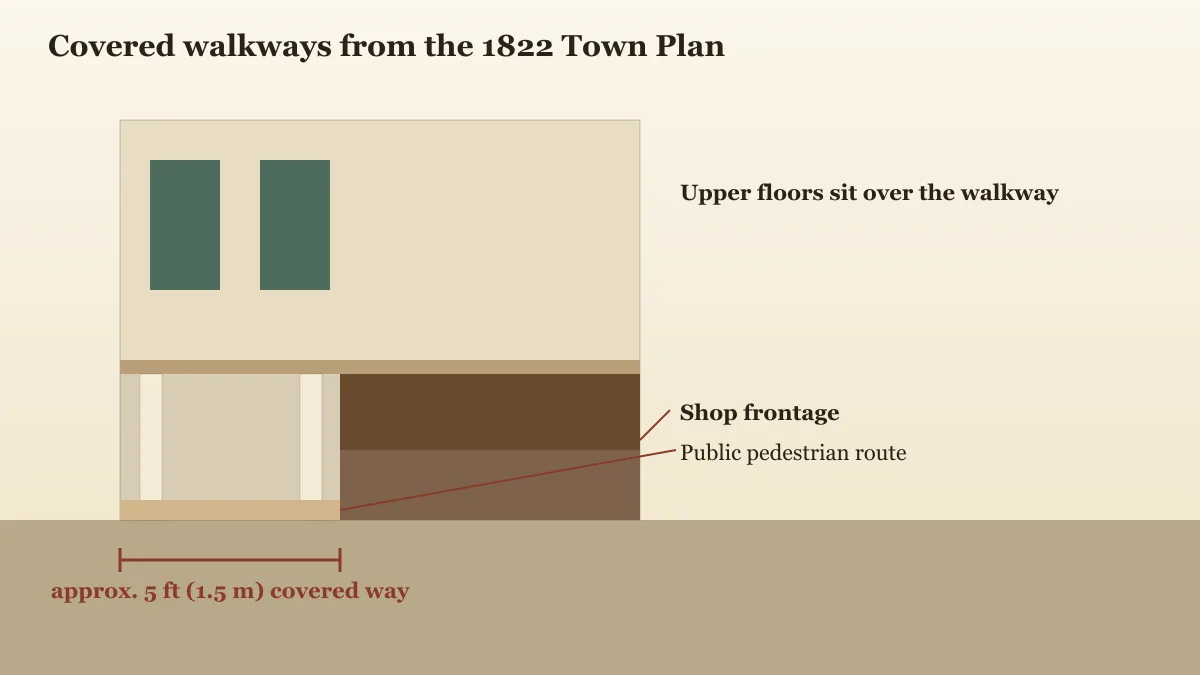
| 1822 | The Raffles Town Plan (Jackson Plan) sets out ethnic quarters and standard terrace frontages with covered walkways. |
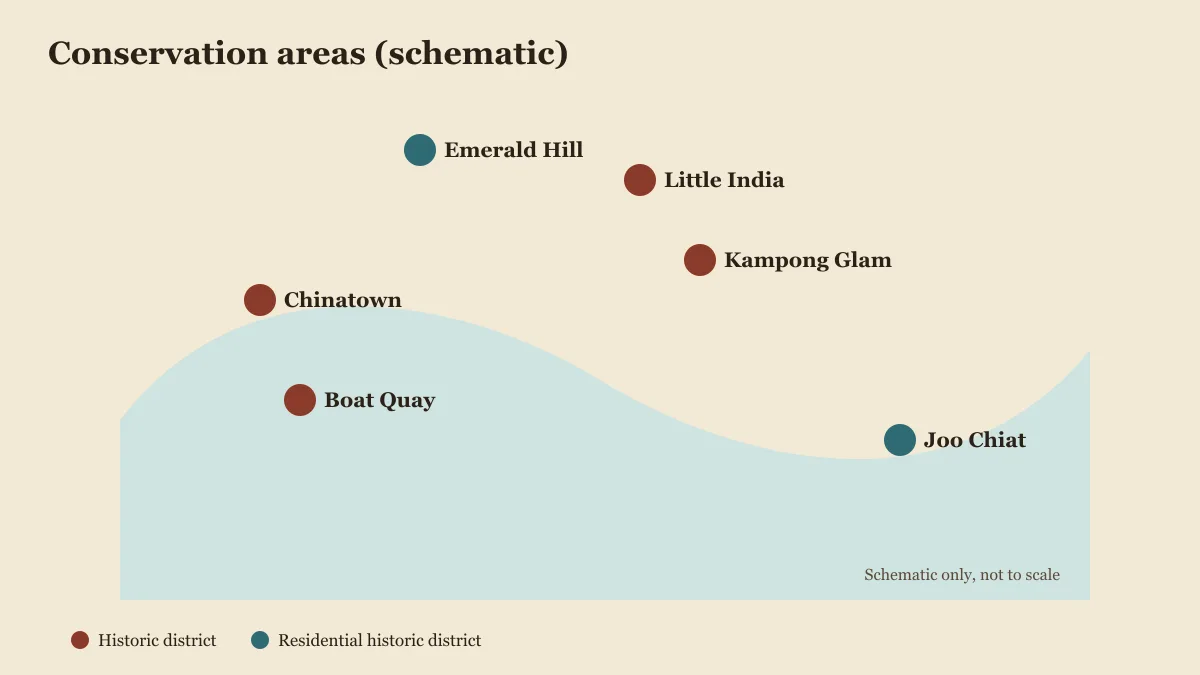
| Mid–late 1800s | Early shophouses are built in large numbers in Chinatown, Boat Quay and Kampong Glam, often with plain façades. |
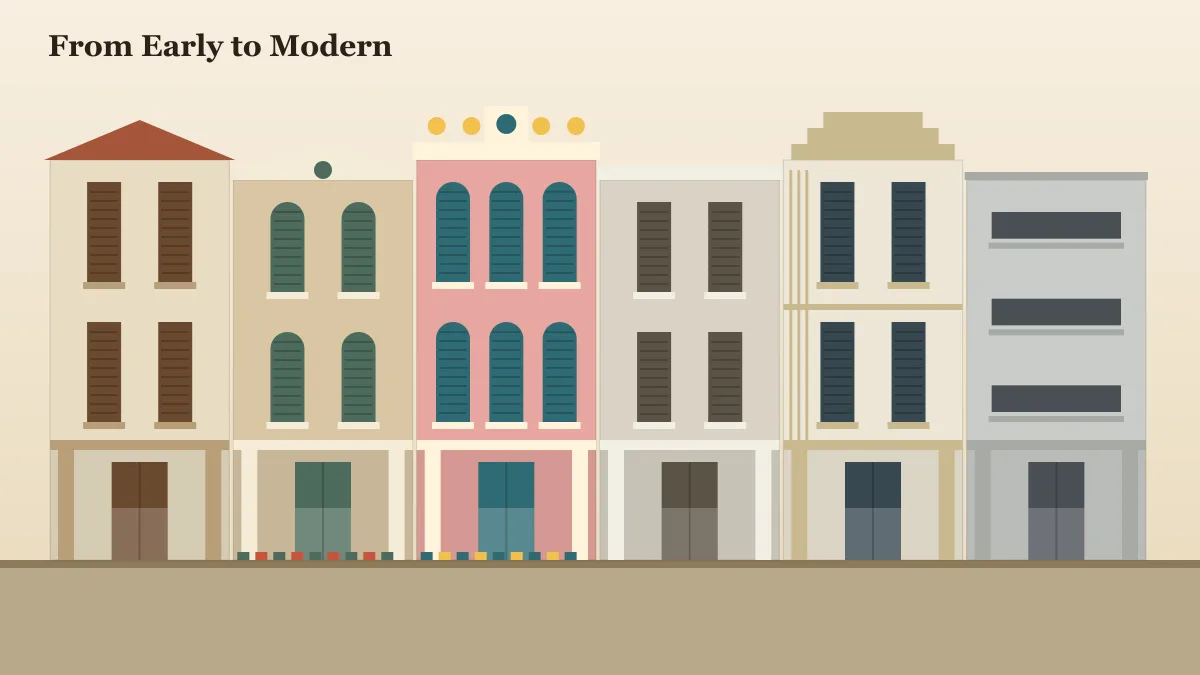
| Around 1900–1940 | Transitional and Late styles bring more ornament, then simpler, more standardised designs. |
| 1930s–1960s | Art Deco and Modern influences appear as reinforced concrete becomes common. |
| 1960s–1980s | Urban renewal and redevelopment lead to demolition of many older shophouse areas. |
| 1989 | URA's conservation programme begins to gazette areas and protect shophouse streetscapes. |
| 1994 onwards | The URA Architectural Heritage Awards recognise good restoration work. |
Why the shophouse mattered
- It housed trade and family life in one building, supporting small businesses across immigrant communities.
- Streets such as those in Chinatown, Kampong Glam and Little India still show distinct communities in their building stock.
Conservation and today's market
Once conservation began, restored shophouses became prized for boutique offices, F&B and hospitality. Read the URA buyer manual and the conservation investing guide for how this affects ownership.