

Short answer
A whole-building shophouse deal transfers every floor and the land together, giving the buyer full control and redevelopment or repositioning options within URA conservation rules. En-bloc sales of adjoining terraces are rarer and need coordinated owners. Diligence on title, tenancies and conservation compliance is critical.
- Whole building
- Land and all floors
- Rarer
- Terrace en-bloc
- Key checks
- Title, use, tenancies, structure
- Tax check
- GST treatment (IRAS)
Reviewed November 2026.
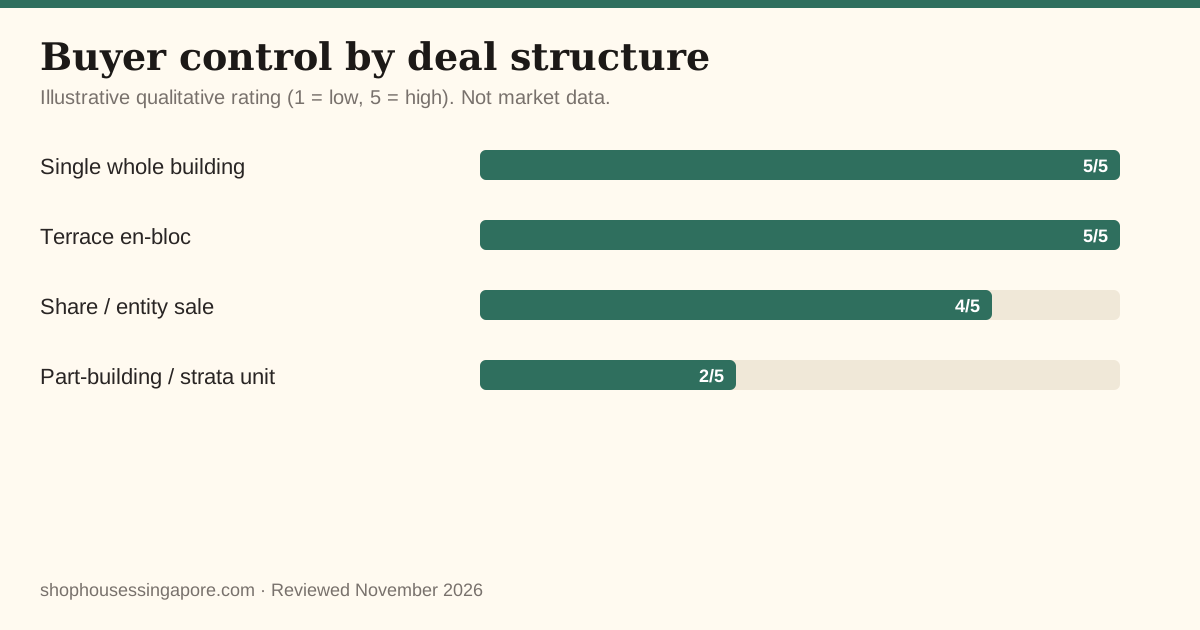
Deal structures
| Structure | What transfers | Key consideration |
|---|---|---|
| Single whole building | Land and all floors of one shophouse | Cleanest control; most common institutional target |
| Row / terrace en-bloc | Several adjoining shophouses | Coordinating owners, party walls, URA approvals |
| Part-building / strata unit | One floor or unit | Shared structure and management arrangements |
| Share or entity sale | Company holding the property | Tax and due diligence differ; take advice |
Why buyers prefer whole buildings
- Control over leasing, façade and structure
- Freedom to reposition tenant mix
- Simpler exit to a single buyer
- Clear land ownership underpinning value
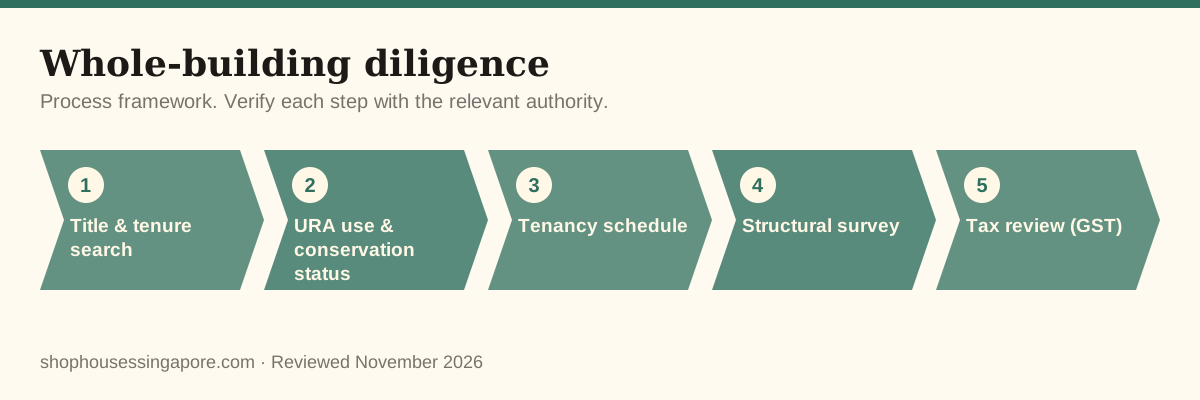
Diligence priorities
- Title search for tenure and caveats (SLA)
- Conservation status and approved use (URA)
- Tenancy schedule and lease terms
- Structural survey, especially party walls
- Fire safety and change-of-use compliance
- Tax treatment including GST where applicable (IRAS)
Sources and further reading
- URA – Urban Redevelopment Authority — REALIS, property market statistics, conservation guidelines
- SLA – Singapore Land Authority — Land titles, tenure and state-land information
- IRAS – Inland Revenue Authority of Singapore — Stamp duties, property tax, GST on property
Figures and rules change; confirm current details with the source before transacting. See also all investment and market pages.