
The short answer
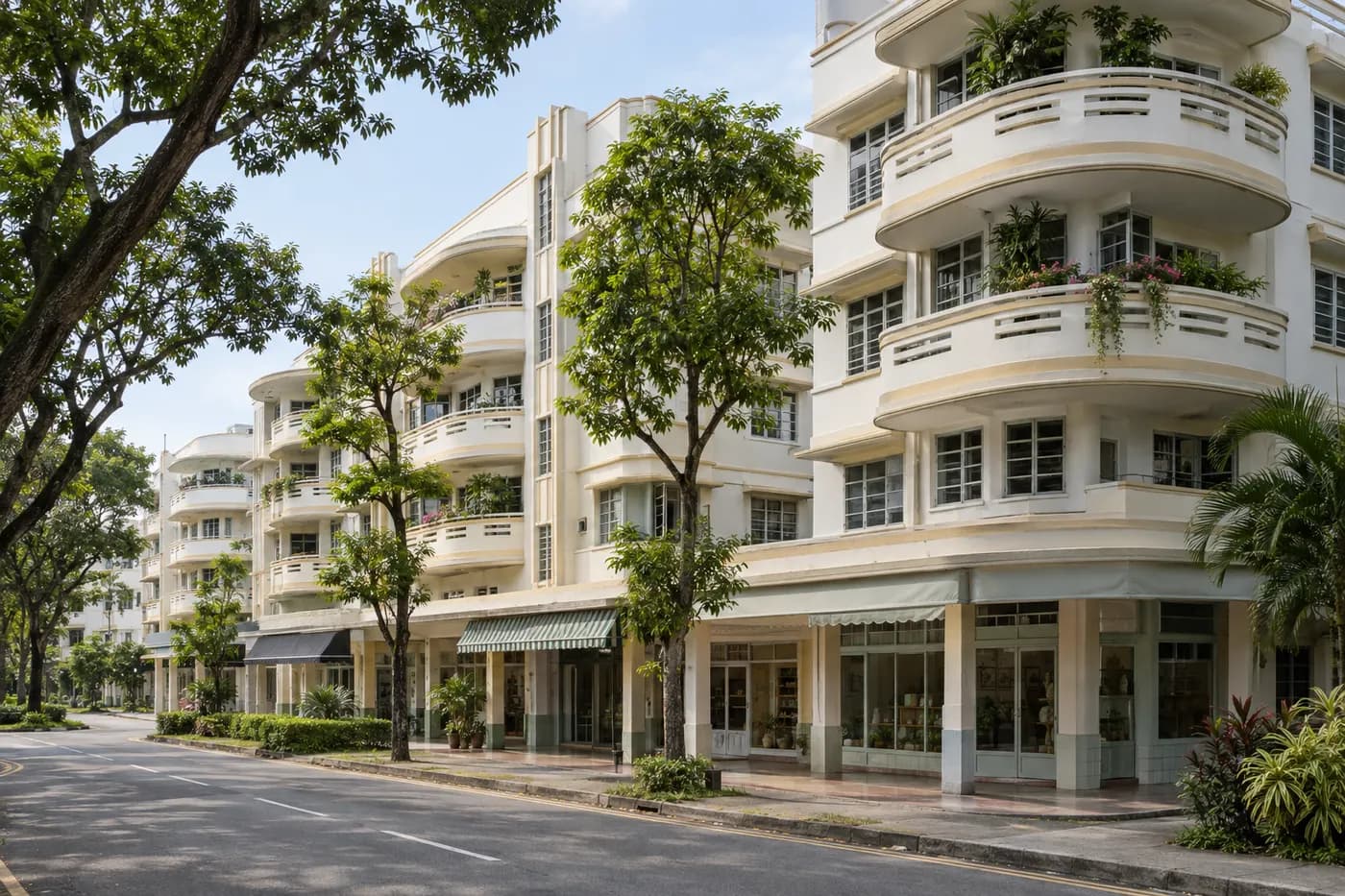
Tiong Bahru is known for pre-war Art Deco blocks with ground-floor shop units rather than classic Chinese or Peranakan shophouse terraces. Units may be owned by HDB or by private owners, and they suit cafés, bakeries and independent retail, subject to approved use, conservation rules and the lease conditions of the specific owner.
- Format
- Pre-war Art Deco blocks with ground-floor shops
- Owners
- HDB or private owners
- Suits
- Cafés, bakeries, independent retail
- Check
- Trade restrictions, exhaust, residents above
Last reviewed 2026-11-05. Rules and fees change; confirm with the relevant agency before committing to a lease or fit-out.
What you are actually renting
| Aspect | Typical situation | Why it matters |
|---|---|---|
| Building type | Pre-war Art Deco blocks with ground-floor shops | Different from terrace shophouses; façade rules still matter |
| Ownership | HDB-owned or privately owned units | Lease conditions and permitted trades differ |
| Tenant types | Cafés, bakeries, boutiques, studios | Neighbourhood trade with residents and visitors |
| Approvals | Approved use, SFA for food, SCDF fire safety | Verify before signing |
Leasing checks specific to Tiong Bahru
- Confirm who owns the unit and what trade restrictions apply under their lease conditions.
- Check conservation constraints on façades, awnings and signage.
- Ask about kitchen exhaust options, as residents live directly above many units.
- Understand opening hours expectations in a residential estate.
Residents above shape what is feasible.
Is Tiong Bahru right for your concept?
The estate attracts both residents and weekend visitors, which suits independent cafés, bakeries and design-led retail. High-volume or late-night concepts are harder to run beside homes.
Sources and where to verify
See also our shophouses for rent hub and the commercial shophouse permitted uses overview.