- Typical period
- Mostly Late style, c.1920s–1940
- Signature details
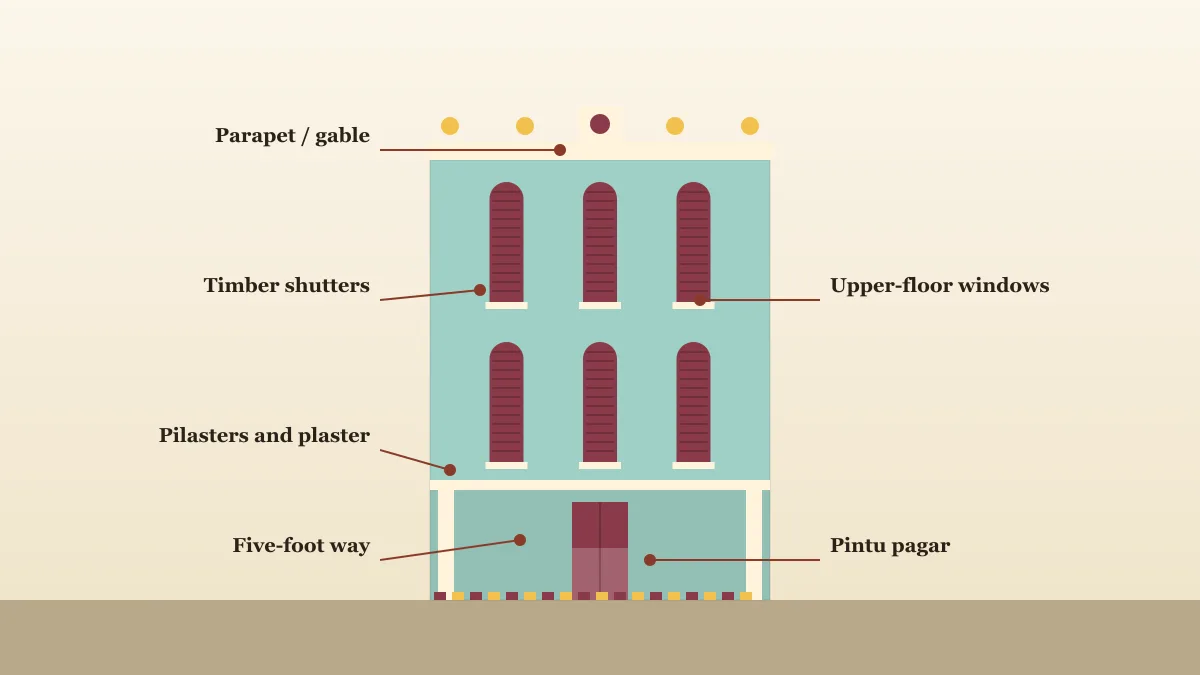
- Glazed tiles, ornate plaster, pintu pagar
- Best-known areas
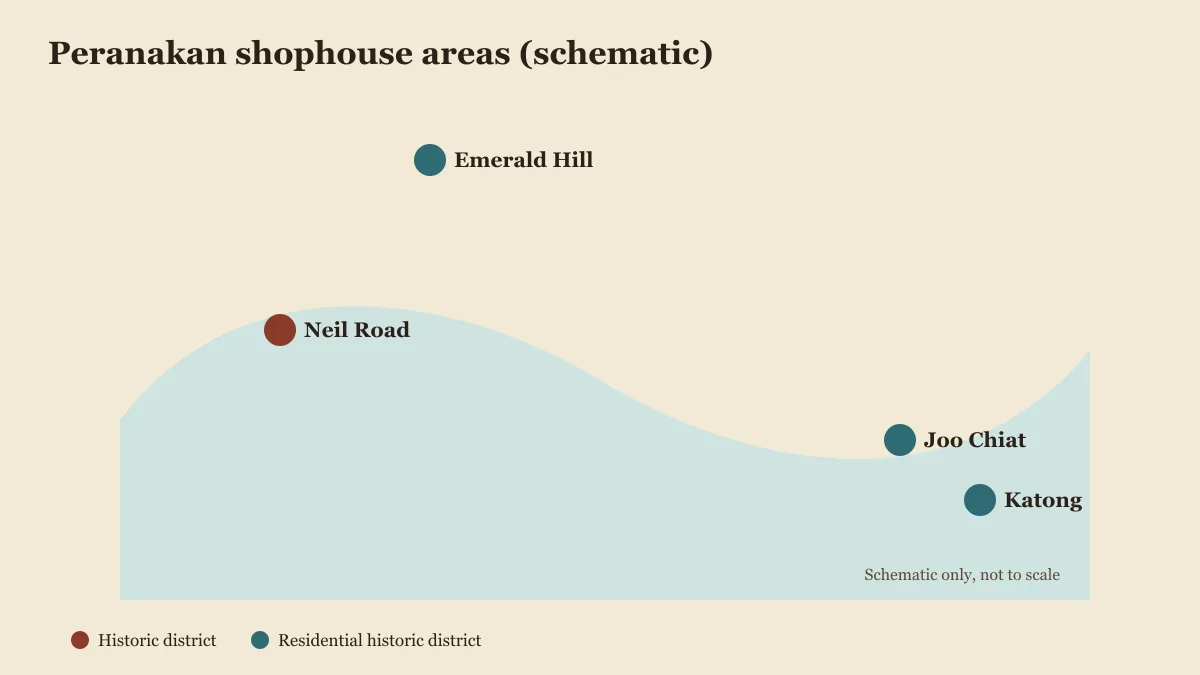
- Joo Chiat, Katong, Emerald Hill, Neil Road
- Protection
- Many sit in URA conservation areas
What makes a shophouse Peranakan?
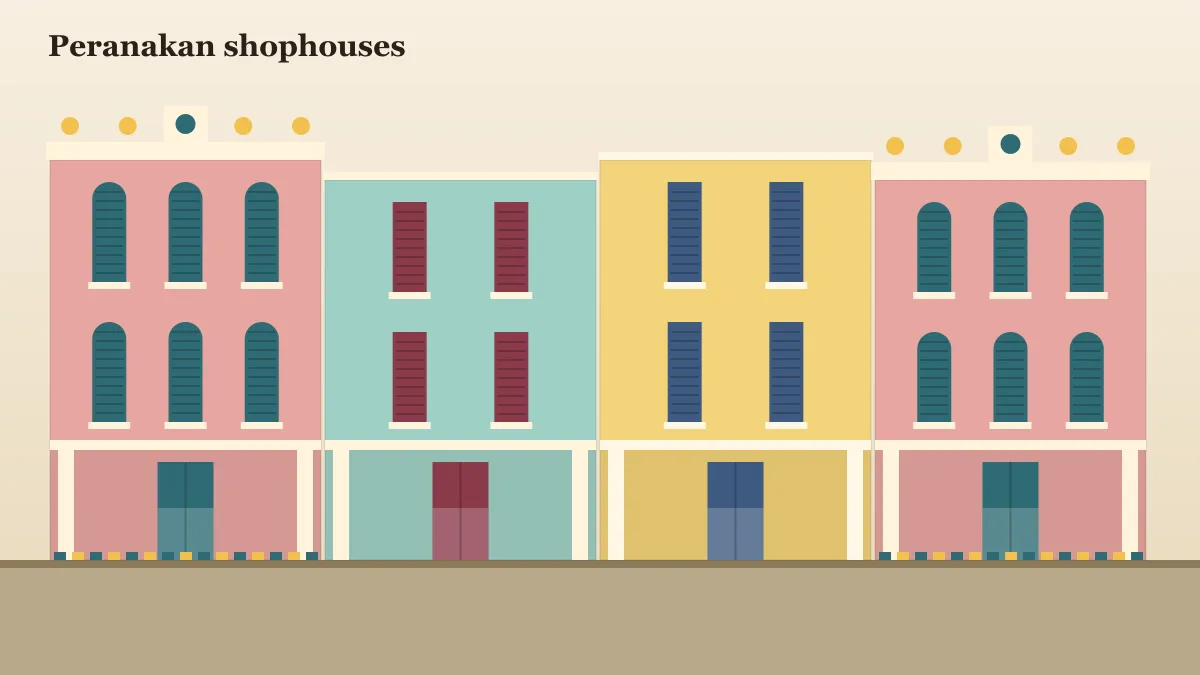
The Peranakan community blends Chinese and Malay or other Southeast Asian heritage. Shophouses and townhouses built for or by Peranakan families often show richer decoration than plainer commercial rows, and the term 'Peranakan shophouse' is commonly used for these ornate Late-style buildings.
| Feature | What to look for |
|---|---|
| Façade | Colourful plaster, ornate parapets, decorative mouldings |
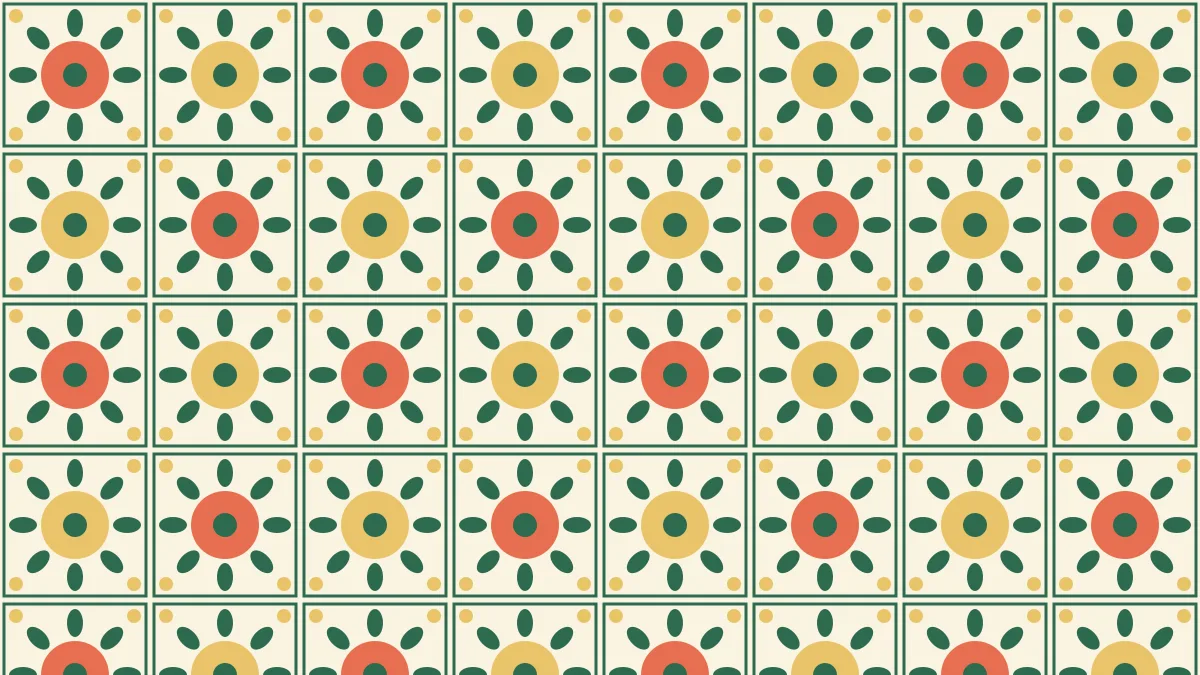
| Tiles | Glazed ceramic tiles with floral or geometric motifs on walls and the five-foot way |
| Entrance | Pintu pagar half-door with carved timber panels |
| Windows | Timber shutters with decorative detail |
| Interior | Air well, courtyard and timber staircase in many examples |
The façade is the signature: colour, tile and carved timber on a narrow frontage.
Peranakan shophouses in Joo Chiat, Katong and Emerald Hill
Owning a Peranakan shophouse
- Original tiles, timber and plasterwork are heritage fabric; plan to repair, not replace.
- Check conservation status and approved use first; see the URA conservation buyer manual.
- Budget for specialist trades; see the shophouse renovation guide.