
Short answer
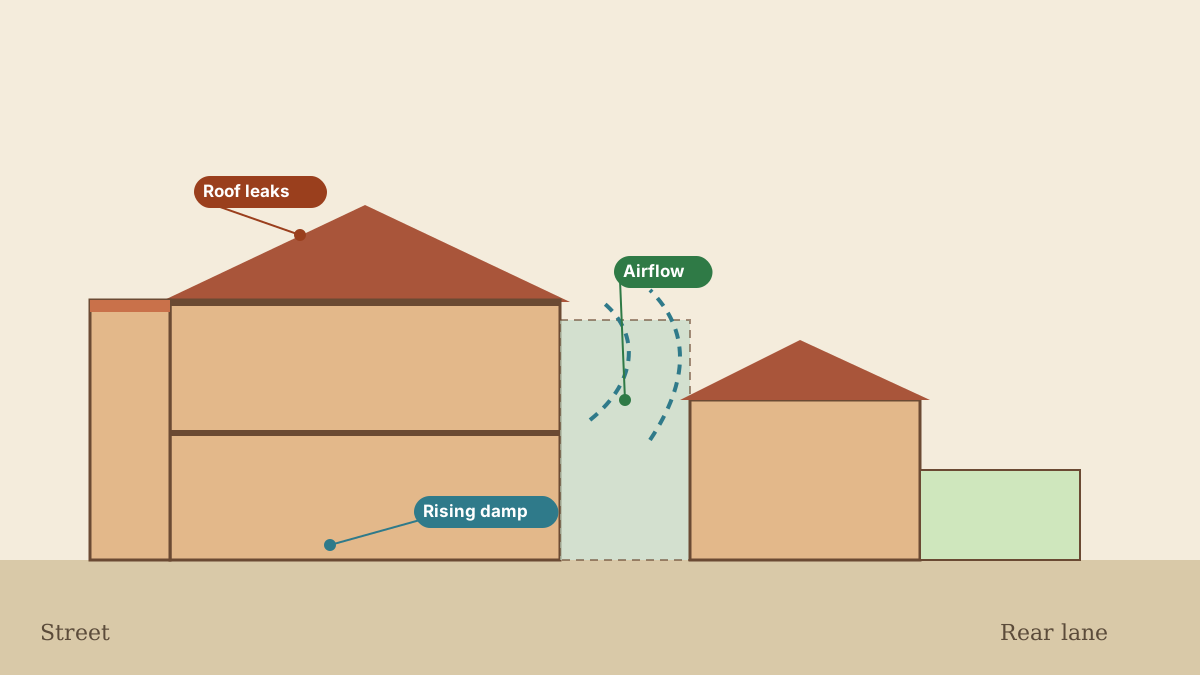
Old shophouses in Singapore's tropical climate most often need attention for termites in timber, rising or penetrating damp in masonry, roof and gutter leaks, and poor airflow in deep floor plates. Regular inspection, working drainage, breathable lime-based repairs and retained airwells prevent most major problems.
Last reviewed November 2026. Rules and figures change; confirm with the named agency before acting.
Problem and first response
| Issue | Typical signs | First response |
|---|---|---|
| Termites | Mud tubes, hollow-sounding timber, wings near lights | Licensed pest control inspection and treatment |
| Rising damp | Salt deposits, peeling paint low on walls | Fix drainage and ground levels; use breathable materials |
| Roof leaks | Stains, damp ceilings after rain | Inspect tiles, flashing, gutters and downpipes |
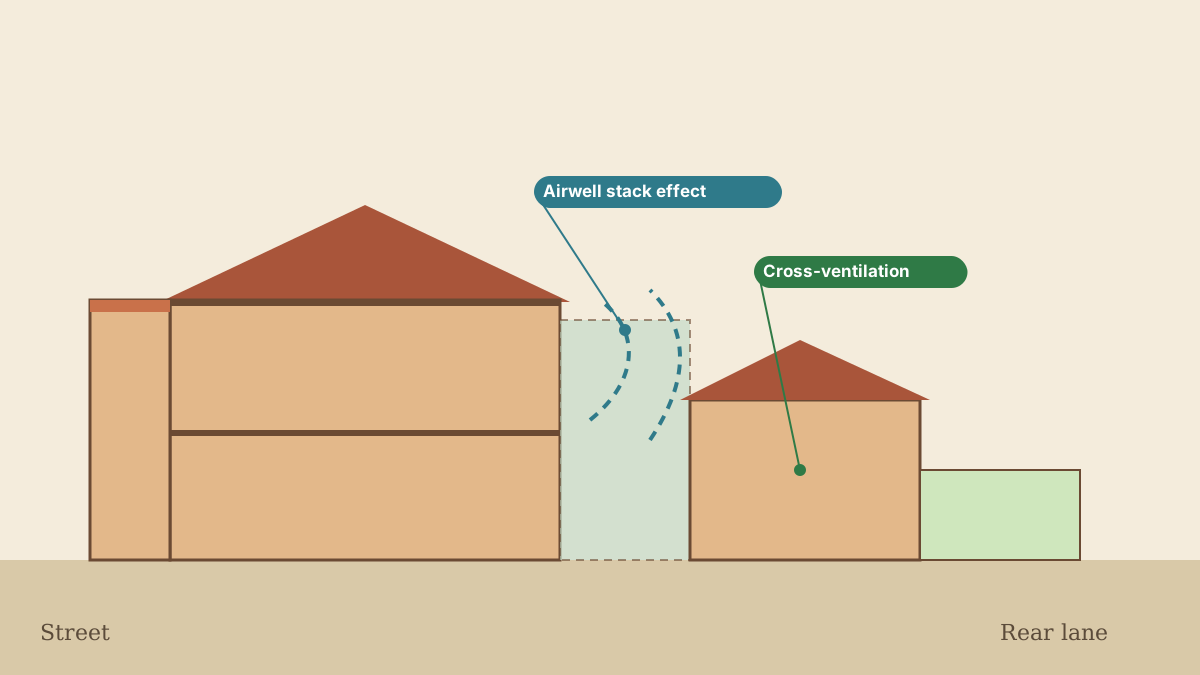
| Poor ventilation | Musty air, mould in interior rooms | Reopen airwells, add cross-ventilation and extraction |
Why breathable materials matter
Traditional shophouse walls are masonry finished with lime-based plaster that lets moisture escape. Sealing them with impermeable cement renders or paints can trap moisture. For conservation buildings, repair methods are also regulated; see our URA buyer manual.
Annual checklist
- Clear gutters, roof drains and airwell outlets before the wet season.
- Inspect timber floors, joists, doors and shutters for pest damage.
- Check external plaster and paint for blistering and salt staining.
- Test extractors and ventilation in bathrooms and kitchens.

Sources
- Urban Redevelopment Authority (URA)
- Building and Construction Authority (BCA)
- National Environment Agency (NEA)
General information only, not legal, planning or financial advice. Looking to buy or lease? See HDB shophouses or shophouses for rent.