

Short answer
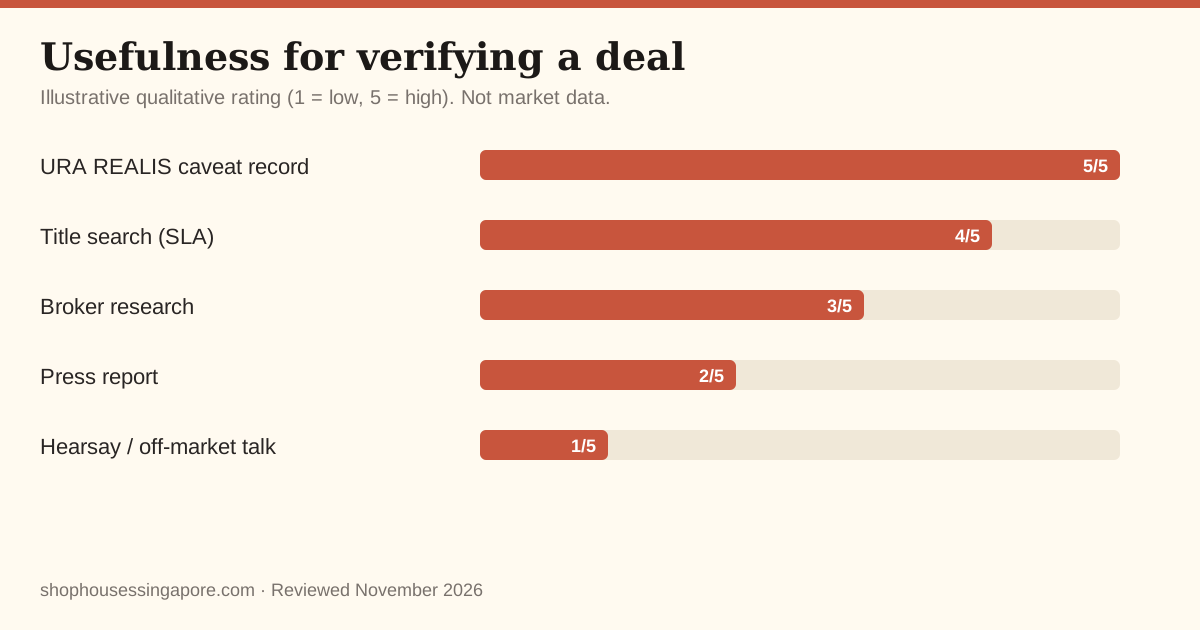
Notable Singapore shophouse transactions are identified through URA REALIS caveat records, press coverage such as The Edge and Business Times, and brokerage investment-sales reports. Verify price, area basis, tenure and date from at least two sources, since press figures may differ from caveated prices.
- Official record
- URA REALIS caveats
- Verify
- Price, area basis, tenure, date
- Gaps
- Off-market deals
- Use for
- Comparables, buyer intent
Reviewed November 2026.
How to research a transaction
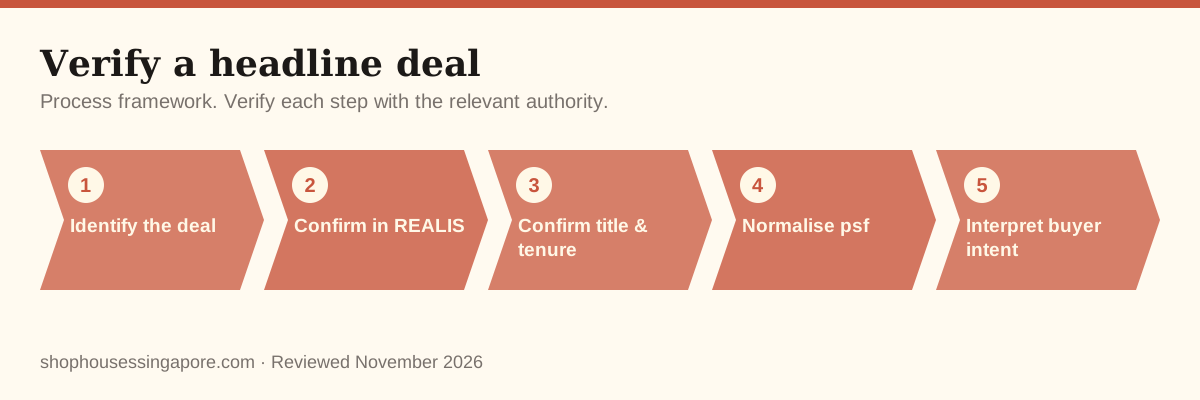
| Step | Source | Check |
|---|---|---|
| 1. Identify the deal | Press, EdgeProp, brokers | Address, parties, headline price |
| 2. Confirm the record | URA REALIS caveat data | Price, date, tenure, area |
| 3. Confirm title | SLA / title search | Tenure and encumbrances |
| 4. Normalise | Your own spreadsheet | Land vs built-up psf, tenancy, condition |
| 5. Interpret | Broker commentary | Buyer type, rationale, comparables |
What to extract from each deal
- Buyer and seller type (individual, family office, fund, operator)
- Tenure and conservation grade
- Whether sale was whole-building or part
- Existing tenancy and use
- Planned asset strategy (hold, restore, convert)
Pitfalls
- Headline prices sometimes include multiple adjoining units.
- Off-market deals may not appear on public portals.
- Different sources may quote land versus GFA psf.
- Old deals may not reflect today's rates or rents.
Sources and further reading
- URA – Urban Redevelopment Authority — REALIS, property market statistics, conservation guidelines
- EdgeProp Singapore — Transaction reports and commercial market commentary
- SRX Property — Transaction and listing data, market reports
- Knight Frank Singapore Research — Brokerage research on investment sales
Figures and rules change; confirm current details with the source before transacting. See also all investment and market pages.