

Short answer
Selling a Singapore shophouse involves a narrower buyer pool than other property, so preparation matters: clean title, compliant use, a clear tenancy schedule and realistic pricing from valuation and comparables. Check tax treatment such as GST and any seller-side duties with IRAS before listing.
- Buyer pool
- Narrower than mainstream property
- Prepare
- Valuation, leases, compliance
- Tax check
- GST and seller-side duties (IRAS)
- Routes
- Off-market, agent, open market
Reviewed November 2026.
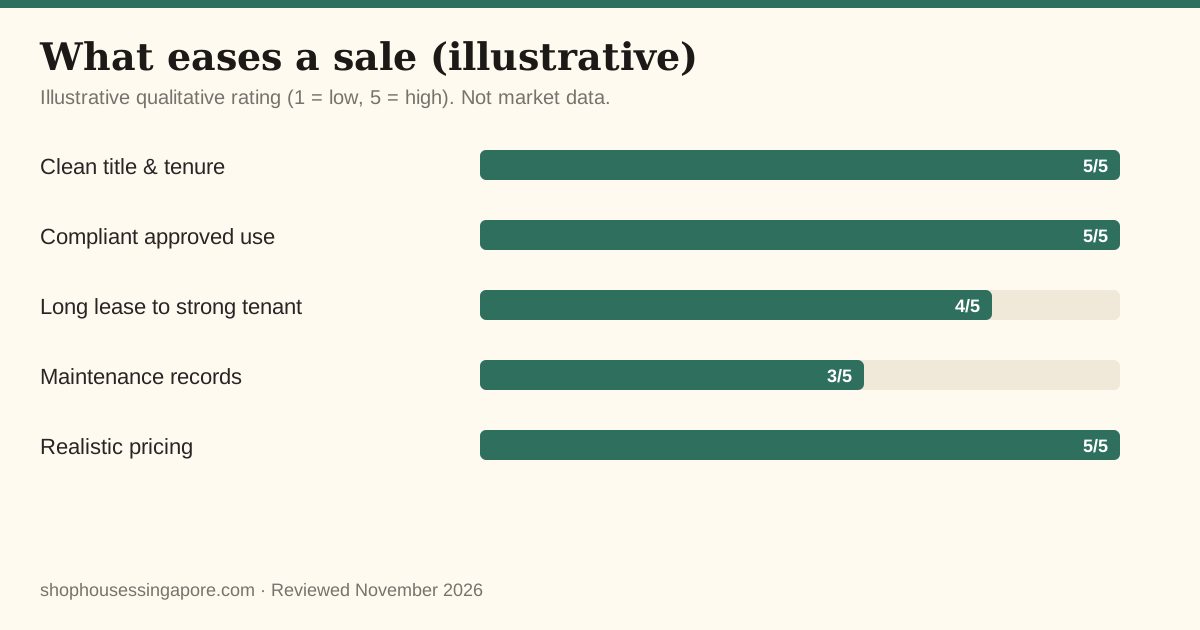
Exit preparation checklist
| Item | Why it matters |
|---|---|
| Updated valuation | Sets a defensible asking price |
| Tenancy schedule and lease copies | Buyers underwrite income from these |
| Compliance documents | Approvals, fire safety, licences |
| Maintenance and restoration records | Reduces perceived capex risk |
| Title and tenure confirmation | Avoids delays at completion |
| Tax review | GST and other seller-side taxes, if applicable |
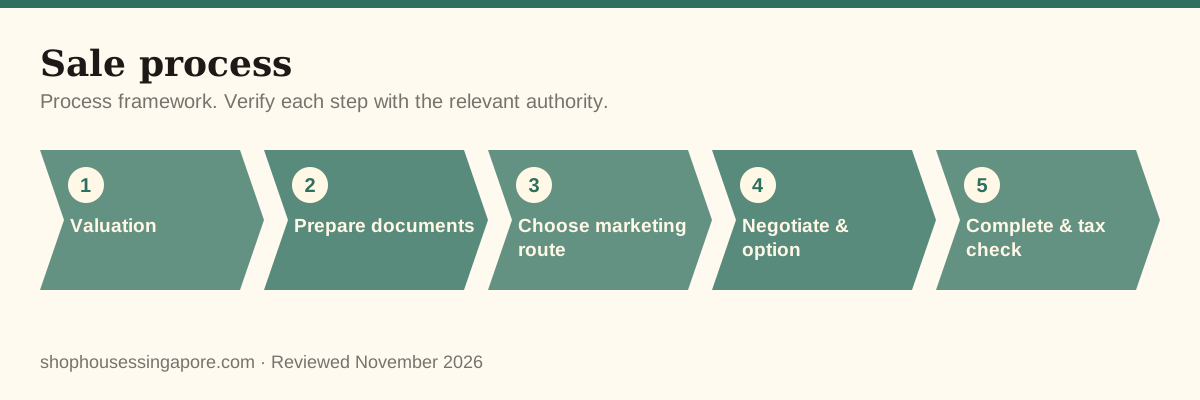
Marketing routes
- Off-market approach to known family offices and investors
- Selective marketing through specialist agents
- Open market via portals and press
- Tender or expression of interest for prime stock
Timing considerations
Lease expiries, interest-rate conditions and buyer sentiment all affect timing. A building with a long lease to a strong tenant is typically easier to sell than a vacant one, though a vacant building may attract owner-occupiers.
Sources and further reading
- IRAS – Inland Revenue Authority of Singapore — Stamp duties, property tax, GST on property
- SLA – Singapore Land Authority — Land titles, tenure and state-land information
- URA – Urban Redevelopment Authority — REALIS, property market statistics, conservation guidelines
- EdgeProp Singapore — Transaction reports and commercial market commentary
Figures and rules change; confirm current details with the source before transacting. See also all investment and market pages.