
East Coast neighbourhood guide
Geylang Serai Shophouses: Malay Heritage Hub and Shophouse Context
Singapore's best-known Malay cultural hub: how the old kampung became a retail and heritage centre, and what that means for shophouse buyers and tenants.
Quick answer
Are there shophouses in Geylang Serai?
Geylang Serai is Singapore's Malay heritage hub, centred on Geylang Serai Market and Wisma Geylang Serai. After 1960s–70s redevelopment it is mostly HDB and modern retail, with historic shophouse streets lying along Geylang Road and nearby lorongs. Check conservation status and use for each lot.
Last reviewed 5 November 2026. Market and planning statements are dated and qualitative; verify on the named lot before acting.
Geylang Serai at a glance
- Name origin
- Serai means lemongrass, grown on former plantations
- Heritage
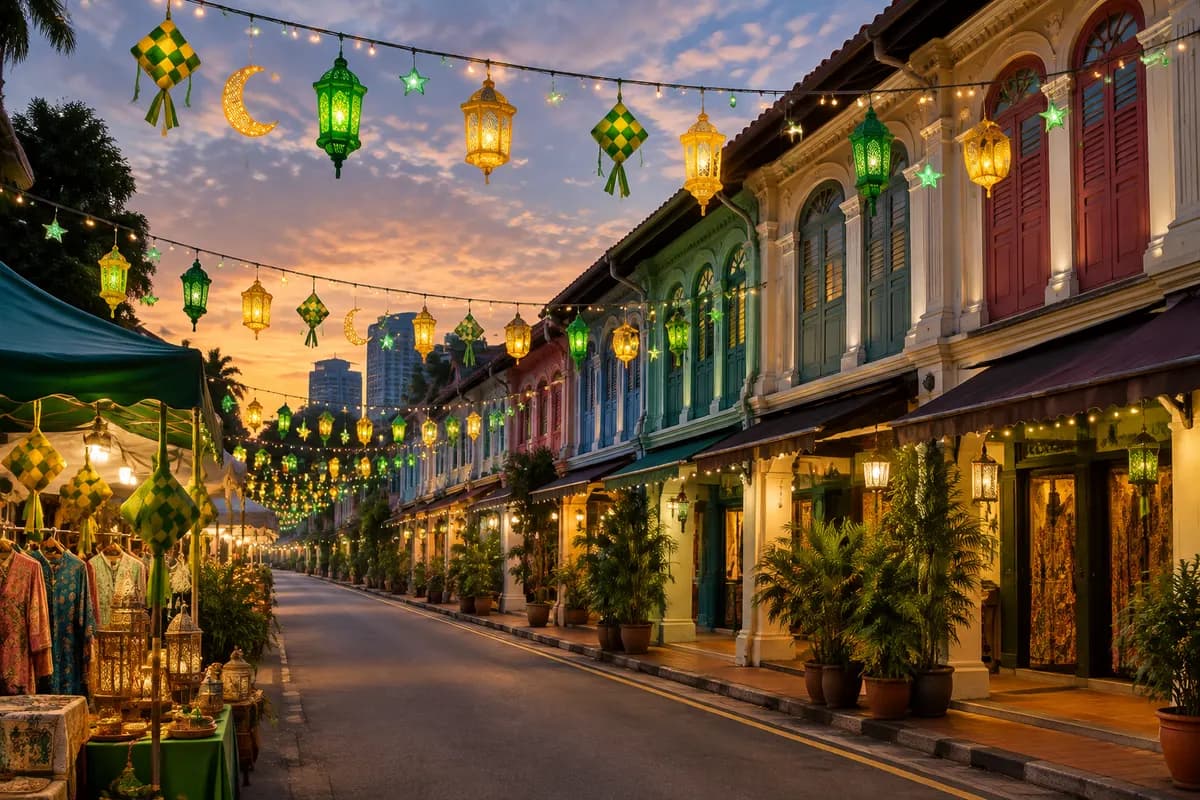
- Malay cultural hub; annual Hari Raya light-up
- Landmarks
- Geylang Serai Market, Wisma Geylang Serai with its Heritage Gallery
- Redevelopment
- 1962 plan; kampung residents moved and new complexes built in the 1970s
- Conservation
- Geylang Conservation Area lies along Geylang Road and selected lorongs; verify lots
- Transport
- Paya Lebar and Eunos MRT nearby; buses
- Related
- Geylang Road, Joo Chiat
- Facts reviewed
- 5 November 2026
Geylang Serai: more cultural hub than shophouse street
Geylang Serai means different things to different people. For many Singaporeans it is the heart of Malay food, fashion and festive culture, especially during Ramadan and Hari Raya. For shophouse seekers, it is a neighbourhood whose character is now defined by Geylang Serai Market and modern retail complexes more than by rows of conserved terraces.
That does not make it irrelevant. Shophouse streets in the wider Geylang area, protected under the Geylang Conservation Area, sit nearby, and the market's catchment supports surrounding businesses. Read our Geylang area guide and the Geylang Road page for the shophouse stock itself.
History of Geylang Serai
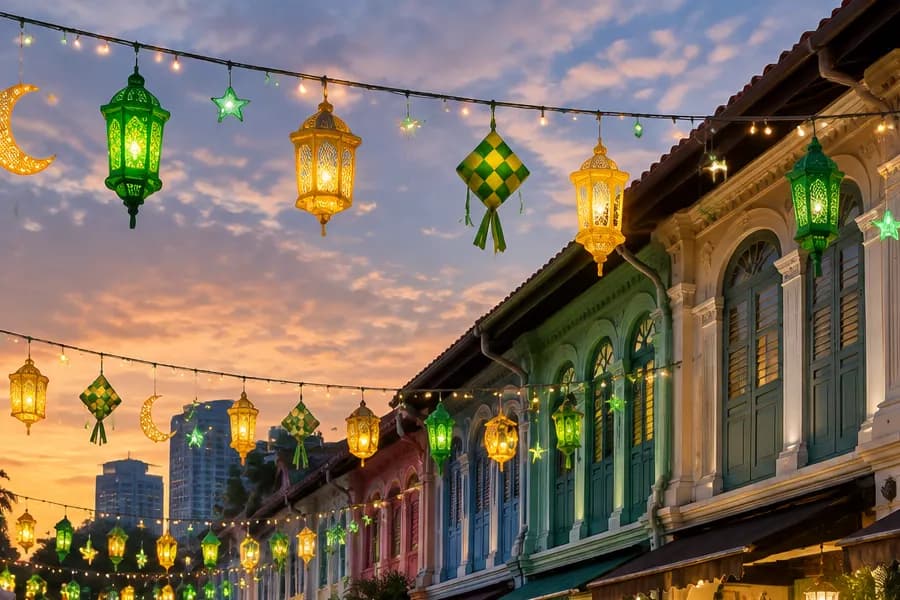
The name draws on serai, lemongrass, once grown on the plantations that covered the area along with rice and coconut. Malay communities settled here, and from the 1840s the Malay floating village was resettled in the wider Geylang area, as URA notes in its Geylang Conservation Area description.
A 1962 redevelopment plan changed the area. In the 1970s about 100,000 kampung residents were moved and new complexes were built, including the Tanjong Katong and Joo Chiat complexes. The result was a modern retail and housing core that kept the area's Malay identity while replacing most of the old kampung fabric.
1840s
Malay settlement in Geylang
The Malay floating village is resettled in the wider Geylang area.
1962
Redevelopment plan
A plan sets the stage for transformation of the kampung area.
1970s
New complexes
Around 100,000 kampung residents are moved and new complexes are built.
Today
Cultural hub
Geylang Serai Market, Wisma Geylang Serai and the Hari Raya light-up anchor the area.
Heritage, Hari Raya and the market
Geylang Serai Market is a focal point for fresh produce, cooked food and festive shopping, and Wisma Geylang Serai houses a Heritage Gallery on Malay culture. The annual Hari Raya light-up draws visitors in large numbers and shapes the area's trading calendar.
For tenants this means strong seasonal peaks around Ramadan and Hari Raya. Businesses that understand the community's needs and calendar do well; those that treat it as a generic retail location often struggle.
In Geylang Serai the calendar is as important as the address: Ramadan and Hari Raya set the rhythm of trade.
Shophouse and shop-row stock
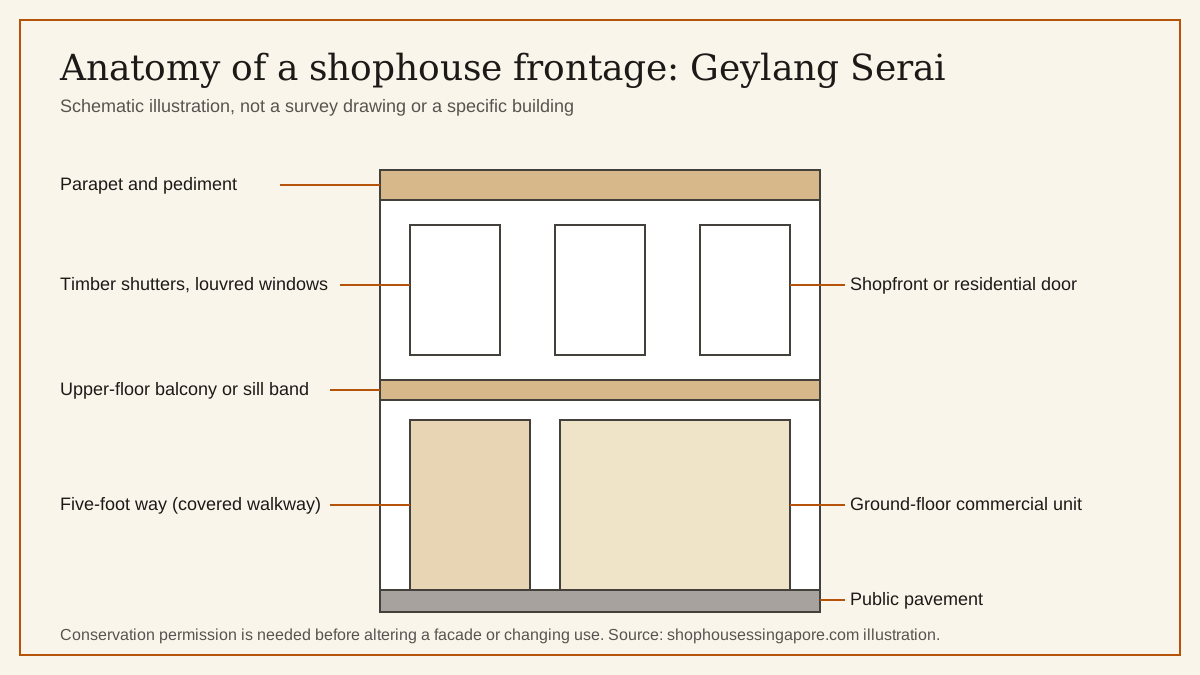
Within Geylang Serai itself, shophouse-type stock is limited, because redevelopment replaced most of the old fabric with modern blocks. Shop units in newer complexes are leased or owned under different frameworks from conserved shophouses, with different restrictions. For true shophouse streets, look to Geylang Road and the lorongs nearby.
| Aspect | Geylang Serai | Geylang Road area |
|---|---|---|
| Identity | Malay cultural and retail hub | Long shophouse corridor with lorongs |
| Stock | Modern complexes and market, few shophouses | Conservation shophouses and mixed uses |
| Peak season | Ramadan and Hari Raya | Varies by use |
Geylang Serai shophouse for sale and rent
True shophouse listings here are rare. If you see one, verify whether it is within the Geylang Conservation Area, check tenure and planning use and look closely at the lease profile. Zoning and duty exposure differ; read our commercial vs residential ABSD breakdown.
Price context as of 5 November 2026: use URA REALIS and similar lots on the same area basis. See conservation shophouses for sale and shophouses for rent for options.
URA conservation status
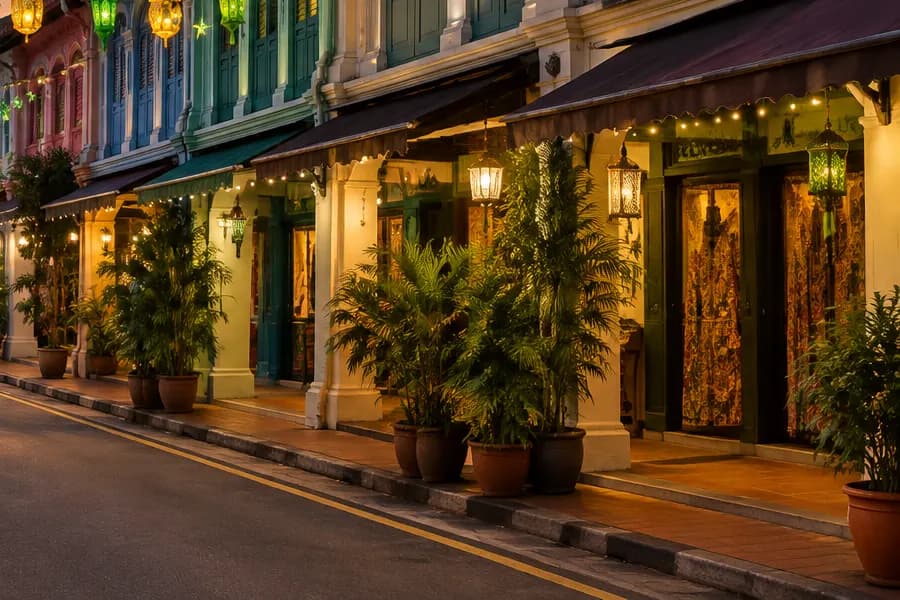
The Geylang Conservation Area, about 5 km east of the city, runs along Geylang Road and selected lorongs, and contains a mix of shophouses and low-rise bungalows. URA applies Specific Restoration Guidelines and secondary settlement guidelines. Geylang Serai's modern core is generally not conserved, and the Joo Chiat Conservation Area lies to the south.
Verify each lot with URA and read the conservation guidelines buyer manual.
MRT and transport
Paya Lebar and Eunos stations on the East-West Line, and Paya Lebar on the Circle Line, are the main rail access points, with Kembangan also nearby. Buses link Geylang Serai Market with the wider east. The Thomson-East Coast Line, opened to the east coast on 23 June 2024, also improves access to Katong and Joo Chiat.
F&B and retail scene
The market and surrounding food courts are known for Malay cuisine and festive goods. Retail includes textiles, home goods and food products. We avoid naming businesses, but note that halal considerations and community expectations are important for operators.
Seasonal trade and community expectations
Trade in Geylang Serai follows the Islamic calendar. The fasting month brings evening bazaar-style crowds, festive food and clothing demand, while the run-up to Hari Raya is among the busiest shopping periods of the year. After the festival, trade settles into a calmer pattern. Operators who plan inventory, staffing and opening hours around this cycle fare better than those who treat the year as flat.
Community expectations matter too. Halal certification is important to many customers for food businesses, and signage, products and marketing should be respectful of the community. Landlords of nearby units may have preferences about tenant mix, and some leases include clauses on use.
Because this is a destination with strong visitor flows at peak times, crowd management, deliveries and rubbish collection become operational issues. Ask existing neighbours how they handle them. If you are evaluating a nearby shophouse lot rather than a market stall or mall unit, remember that your trade will be influenced by the market's calendar even if you are on a quieter street.
A final consideration is how redevelopment history affects due diligence. Because much of the old fabric was cleared in the 1970s, a unit that looks like an old shophouse may in fact be a later building with a different tenure structure, lease term and set of rules. Always obtain the title and planning information first, and ask whether the building is part of a larger managed complex or a stand-alone lot. These facts determine what you can change, how you can finance the purchase and what the exit looks like.
Investment and living angle
Investors should focus on lots with clear use and tenure, and on the seasonal rhythm of trade. See historical yields and capital appreciation data. For living, the area is well served by transport and food, with an active cultural calendar.
Visiting and working in Geylang Serai
During Ramadan and the weeks before Hari Raya, evening crowds are heavy and parking is scarce. Plan deliveries and staffing accordingly. Outside those peaks, the area is calmer, and weekday mornings are good for market visits.
Respect local customs: dress modestly in religious or community spaces and be mindful of prayer times when scheduling. Operators who build long-term relationships with suppliers and the community tend to benefit most.
Geylang Serai shophouses: frequently asked questions
Are there shophouses in Geylang Serai?+
Few. The area was redeveloped in the 1960s and 1970s; shophouse streets are mainly along Geylang Road and nearby lorongs.
What does Geylang Serai mean?+
Serai means lemongrass, which was grown on former plantations in the area.
Is Geylang Serai conserved?+
The Geylang Conservation Area lies along Geylang Road and selected lorongs. Geylang Serai's modern core is generally not conserved.
Is there a Geylang Serai shophouse for sale?+
Rarely. Check listings and verify conservation status and use.
What is Geylang Serai famous for?+
Malay culture, Geylang Serai Market, Wisma Geylang Serai and the Hari Raya light-up.
How do I get to Geylang Serai by MRT?+
Use Paya Lebar or Eunos stations and connect by bus or on foot.
When is Geylang Serai busiest?+
Around Ramadan and Hari Raya, especially in the evenings.