
Joo Chiat neighbourhood guide
Koon Seng Road Shophouses: Peranakan Terraces in Joo Chiat
The street behind some of Singapore's most photographed Peranakan facades: history, architecture, conservation rules and how the terraces are used.
Quick answer
What are Koon Seng Road shophouses?
Koon Seng Road shophouses are a row of richly decorated Peranakan terraces in Joo Chiat, Singapore, protected within the Joo Chiat Conservation Area. They are mostly residential, famous for colourful facades, tiles and shutters, and any alteration or change of use needs URA conservation permission.
Last reviewed 5 November 2026. Market and planning statements are dated and qualitative; verify on the named lot before acting.
Koon Seng Road at a glance
- Location
- Joo Chiat, running between Joo Chiat Road and Telok Kurau side streets; postal district 15
- Named
- In 1934 after Cheong Koon Seng (1880–1934), an auctioneer and businessman
- Former name
- Lorong E East Coast
- Character
- Predominantly residential terraces with ornate Peranakan decoration
- Conservation
- Part of the Joo Chiat Conservation Area (gazetted 23 July 1993)
- Transport
- No station on the road; Thomson-East Coast Line and East-West Line stations are within a bus ride
- Related
- Joo Chiat, Tembeling and Everitt Roads
- Facts reviewed
- 5 November 2026
Koon Seng Road shophouses at a glance
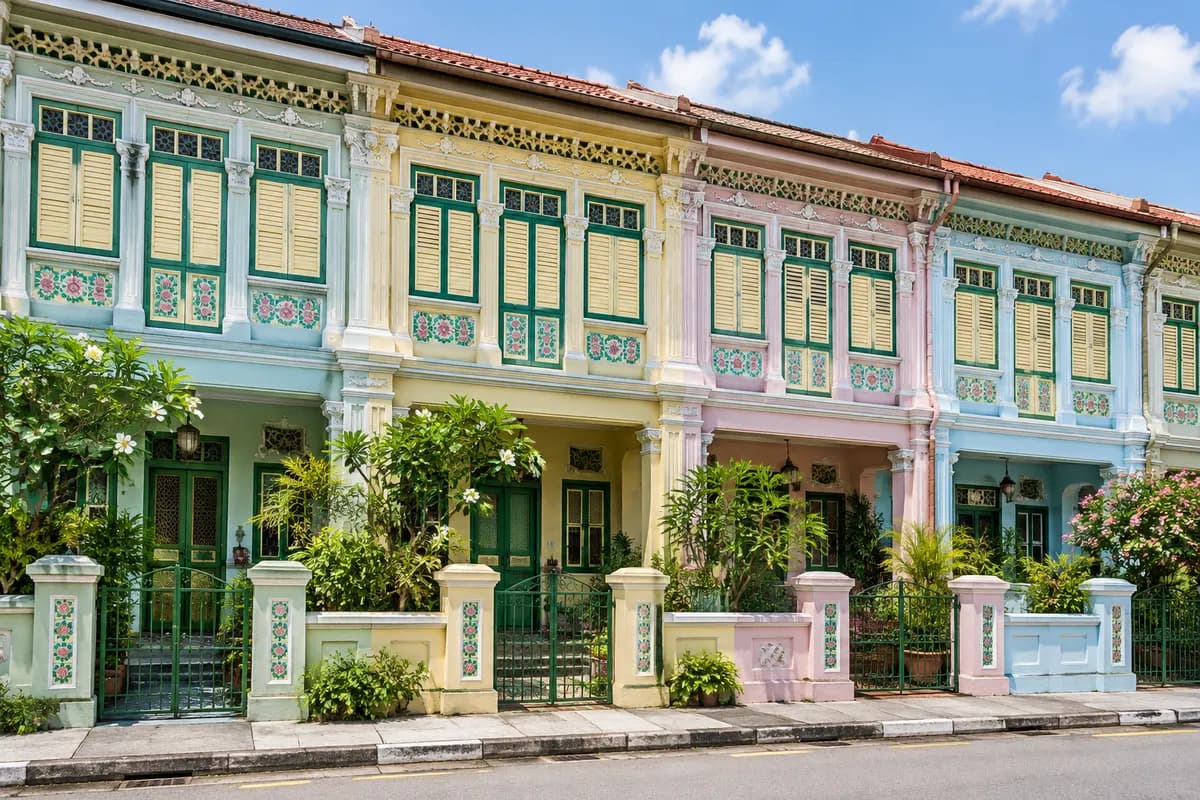
Koon Seng Road is the street people usually mean when they search for Koon Seng Road shophouses or Peranakan shophouse photos in Singapore. The conserved terraces on its facing rows carry layered ornament: glazed tiles, carved timber doors, moulded plaster and pastel paintwork that has become shorthand for Peranakan heritage.
Unlike Joo Chiat Road, which is a mixed commercial spine, Koon Seng Road is predominantly residential. Most units are homes, some with small home offices or occasional shopfront use. That has consequences for rent, sale and permitted use, which this page covers. For the wider district, start with the Joo Chiat guide.
History of Koon Seng Road
The road was named in 1934 after Cheong Koon Seng, an auctioneer and businessman who lived from 1880 to 1934. Before that it was known by the utilitarian name Lorong E East Coast, one of the numbered lanes laid out off the coast road. It runs from Pennefather and Joo Chiat Road towards Lorong J Telok Kurau and Still Road.
The terraces were built in the early to mid twentieth century as the plantation land of Joo Chiat was subdivided for housing. Developers and owners of the day competed to build attractive family terraces, which explains the ornament. Many have since been restored, and the street has become one of the best-known examples of the Peranakan terrace.
Early 20th century
Terraces built
Plantation land is subdivided and rows of two-storey terraces appear off the coast road.
1934
Renamed Koon Seng Road
The lane known as Lorong E East Coast takes the name of Cheong Koon Seng.
23 July 1993
Conservation
The area becomes part of the Joo Chiat Conservation Area.
2000s onward
Heritage landmark
The street becomes widely known as a Peranakan architecture showcase.
Peranakan architecture on Koon Seng Road
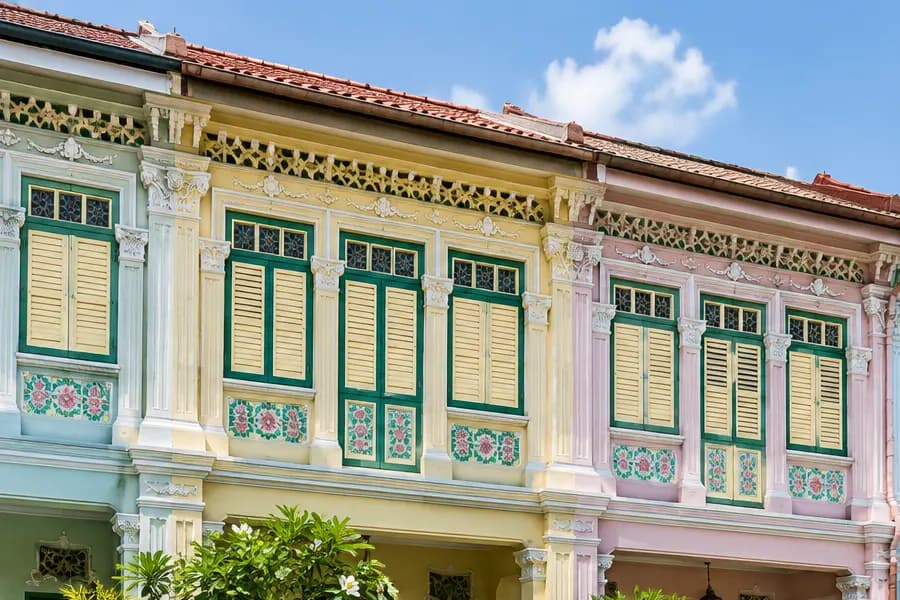
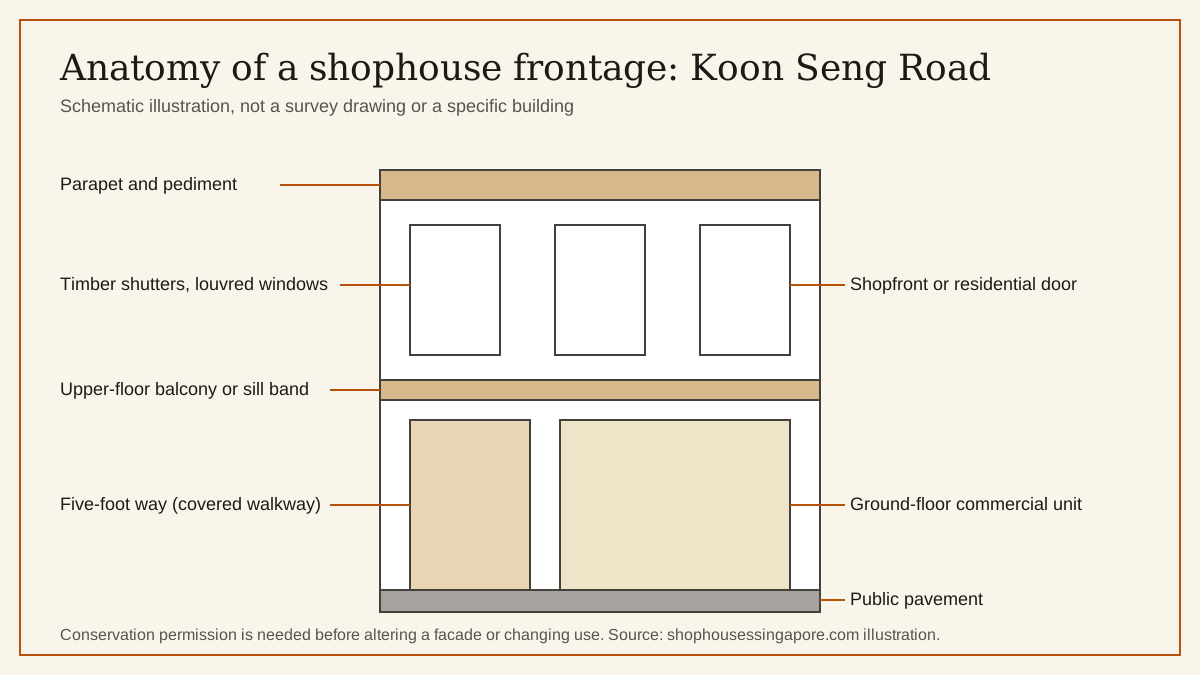
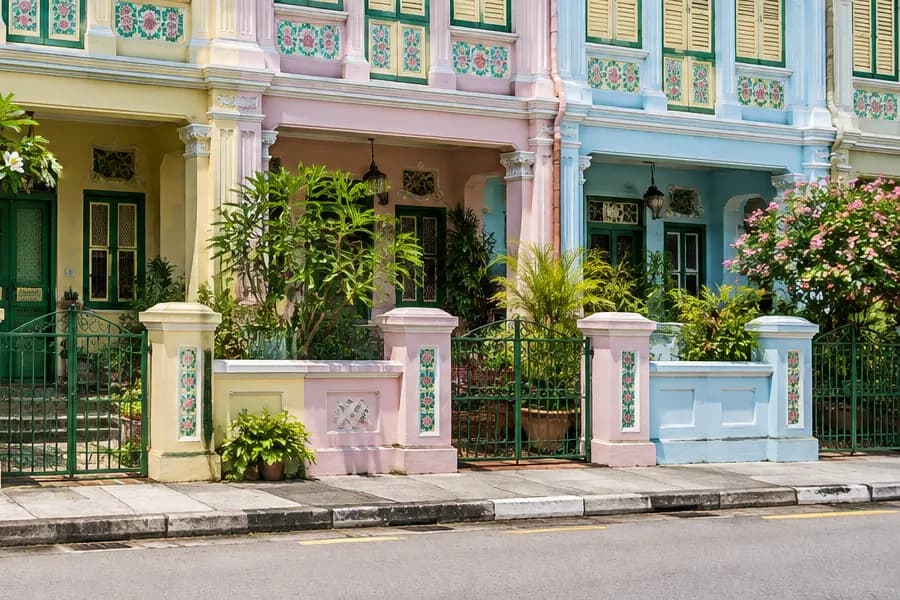
The Peranakan shophouse and terrace look draws on a mix of Chinese, Malay and European influences. On Koon Seng Road you will see carved timber shutters, louvres, ornate pediments, decorated plaster and ceramic tiles, often in bright colours. Gateposts and low walls in front of the terraces reflect their residential purpose.
Conservation rules treat these features as heritage elements. Repainting colours, replacing windows, altering the facade or changing the roofline can all need approval, and unapproved work can lead to enforcement. Always ask an owner what has been approved and when.
On Koon Seng Road the decoration is not an overlay; it is the asset, and the asset is regulated.
Koon Seng Road shophouse for sale
A Koon Seng Road shophouse for sale is rare, because most terraces are long-held family homes or investments. When units do transact, they often do so privately. Expect conversations about tenure, planning use, grade of conservation, the status of past restoration and potential for use as a residence versus a mixed-use property.
Because the street is mainly residential, the property may be treated differently from a commercial shophouse for duty and financing purposes. Read our commercial vs residential ABSD breakdown and avoid assuming that rules for commercial shophouses elsewhere apply.
Market context as of 5 November 2026: we do not publish unsourced price figures. Use URA REALIS and recent comparable lots, and normalise by the area basis used. Browse conservation shophouses for sale for current opportunities in the wider region.
| Aspect | Koon Seng Road | Joo Chiat Road |
|---|---|---|
| Dominant use | Residential terraces | Commercial shophouses and mixed use |
| Footfall | Visitors photographing facades | Diners and shoppers |
| Suited to | Owner-occupiers, long-term holders | Retail and F&B tenants |
| Main constraint | Residential use limits and conservation | Change of use and crowding |
Koon Seng Road shophouse for rent and uses
Rental supply is limited, and many terraces are leased as homes to long-term tenants. A small number of units are used for studios or boutique offices where planning use allows. Commercial uses such as restaurants are generally concentrated on Joo Chiat Road rather than here, so check the approved use of any lot before assuming you can run a business.
For commercial options in the district, see Joo Chiat Road and the current shophouses for rent page.
URA conservation status
Koon Seng Road falls within the Joo Chiat Conservation Area, gazetted on 23 July 1993. URA applies its guidelines for secondary settlements and building-specific restoration guidelines. Conservation permission is needed for additions and alterations and for a change of use.
Policy evolves, and URA has published master plan material for the wider east corridor. Check current guidance for your lot as of the date you act, and read the URA conservation guidelines buyer manual.
MRT and transport
No station sits on Koon Seng Road. Since 23 June 2024, Thomson-East Coast Line stations on the east coast, including Tanjong Katong and Marine Terrace, have improved rail access. East-West Line stations at Eunos and Paya Lebar are also used, usually with a bus connection. Walking times vary, so measure from the specific address.
Street parking is limited and weekend visitor traffic can be heavy near the best-known facades. Respect residents' privacy when visiting.
Visiting Koon Seng Road responsibly
Because Koon Seng Road is a living residential street, visitors should keep noise down, avoid blocking driveways and ask before photographing people. The best light for facade photography is generally early morning or late afternoon, and weekday mornings are quieter than weekends.
Nearby F&B and retail along Joo Chiat Road make an easy walking loop; see Joo Chiat Road and Katong.
Owning a Koon Seng Road terrace: practical points
Owners of conserved terraces carry duties beyond the usual. Timber elements need regular treatment against moisture and termites, roofs and rainwater goods need periodic repair, and tile restoration calls for specialist craftspeople. Budget for these as recurring costs, not one-off projects, and keep a maintenance log that a future buyer can inspect.
Insurance, party-wall arrangements with neighbours and the position of shared drains all deserve early legal and technical review. If you plan to add a rear extension or roof terrace, ask URA what is permissible before you engage contractors, because the limits on massing and visibility from the street are tight.
Finally, speak to residents about local norms. Visitor traffic can be heavy, and good relations with neighbours help when scaffolding, deliveries or events affect the street.
Investment and living angle
For owner-occupiers, Koon Seng Road offers a heritage home in a lively east coast neighbourhood. For investors, the draw is scarcity and recognition, balanced by conservation costs, a small buyer pool and residential-use constraints. See historical yields and capital appreciation data for a framework, and our investing in conservation shophouses guide.
Consider also Tembeling and Everitt Roads, which offer a similar terrace experience in quieter lanes.
Koon Seng Road shophouses: frequently asked questions
Where is Koon Seng Road?+
It is in Joo Chiat, in Singapore's east, running from Joo Chiat Road towards Telok Kurau side streets, within postal district 15.
Why are Koon Seng Road shophouses famous?+
They are a row of richly decorated Peranakan terraces with colourful facades, tiles and shutters, protected as part of the Joo Chiat Conservation Area.
Are Koon Seng Road shophouses residential or commercial?+
They are predominantly residential terraces. Commercial use is more common on Joo Chiat Road. Check approved use for each lot.
Is there a Koon Seng Road shophouse for sale?+
Rarely. Most are long-held, and sales are often private. Ask agents and check current listings.
Can I rent a Koon Seng Road shophouse?+
Some units are leased, mostly as homes. Rentals for commercial use depend on approved planning use.
What is the history of Koon Seng Road?+
It was renamed in 1934 after businessman Cheong Koon Seng, and was formerly Lorong E East Coast. The terraces date from the early twentieth century.
Is Koon Seng Road conserved?+
Yes, it lies within the Joo Chiat Conservation Area, gazetted on 23 July 1993.
How do I get to Koon Seng Road by MRT?+
There is no station on the road. Use Thomson-East Coast Line or East-West Line stations nearby and connect by bus or walk.
Can I take photos on Koon Seng Road?+
Yes, from public pavements, but it is a residential street. Be quiet and respect privacy.