
Joo Chiat neighbourhood guide
Tembeling Road and Everitt Road Shophouses: Quiet Joo Chiat Terraces
The quieter lanes of the Joo Chiat Conservation Area: terrace character, conservation rules, living and investment considerations.
Quick answer
What are Tembeling Road and Everitt Road shophouses?
Tembeling Road and Everitt Road shophouses are conserved terraces on quieter lanes of the Joo Chiat Conservation Area in Singapore's east. Both roads are named in URA's conservation area description, so facade work and change of use need permission. They are mostly residential and appeal to owner-occupiers who prefer calmer streets.
Last reviewed 5 November 2026. Market and planning statements are dated and qualitative; verify on the named lot before acting.
Tembeling and Everitt Roads at a glance
- Location
- Joo Chiat, east of the main commercial spine; postal district 15
- Conservation
- Parts of Tembeling Road and Everitt Road are in the Joo Chiat Conservation Area (1993)
- Name origin
- Tembeling Road is probably named after the fish ikan tembelian
- Character
- Quiet terraces and lanes; mostly homes
- Typical use
- Residential, small studios where approved
- Transport
- No MRT on the lanes; nearby bus and rail links
- Related
- Koon Seng Road, Joo Chiat
- Facts reviewed
- 5 November 2026
Tembeling Road and Everitt Road at a glance
Tembeling Road shophouses and Everitt Road shophouses are less famous than the facades of Koon Seng Road, yet they are part of the same protected fabric. URA's description of the Joo Chiat Conservation Area names parts of Everitt Road, Koon Seng Road and Tembeling Road among the streets covered. For buyers who want the Joo Chiat setting without the weekend crowds, these lanes are worth understanding.
The terraces here are generally residential, with a calmer atmosphere than Joo Chiat Road. They sit a short walk from the commercial spine, so residents can reach cafés and services on foot while living on a quieter street. See the Joo Chiat district guide for the wider context.
History of the lanes
The lanes were laid out as the coconut plantation land of Joo Chiat was subdivided in the early twentieth century. Tembeling Road is probably named after the fish ikan tembelian, one of several roads in the area with Malay names linked to local nature. Everitt Road takes its name from the colonial era naming practice for estate roads.
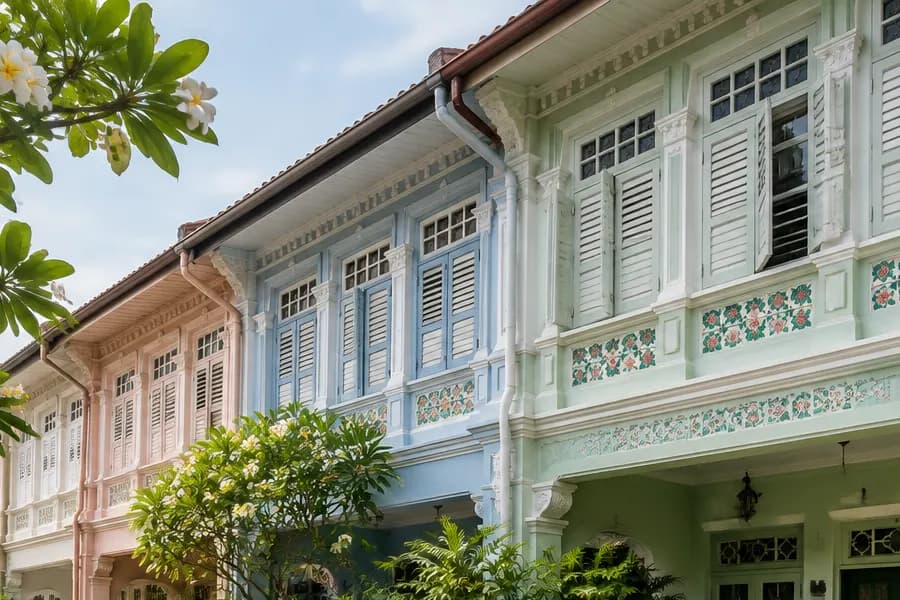
As in the rest of Joo Chiat, terraces here were built for families, with the decorative flourishes of Peranakan taste adapted to each developer's budget. Some blocks are heavily ornamented; others are plainer Transitional or Late style forms.
Early 20th century
Lanes laid out
Plantation land is subdivided and terraces are built along new side roads.
23 July 1993
Conservation Area
Parts of Tembeling Road and Everitt Road are included in the Joo Chiat Conservation Area.
2000s
Restoration wave
Many terraces are restored by owners under conservation rules.
Architecture and street character
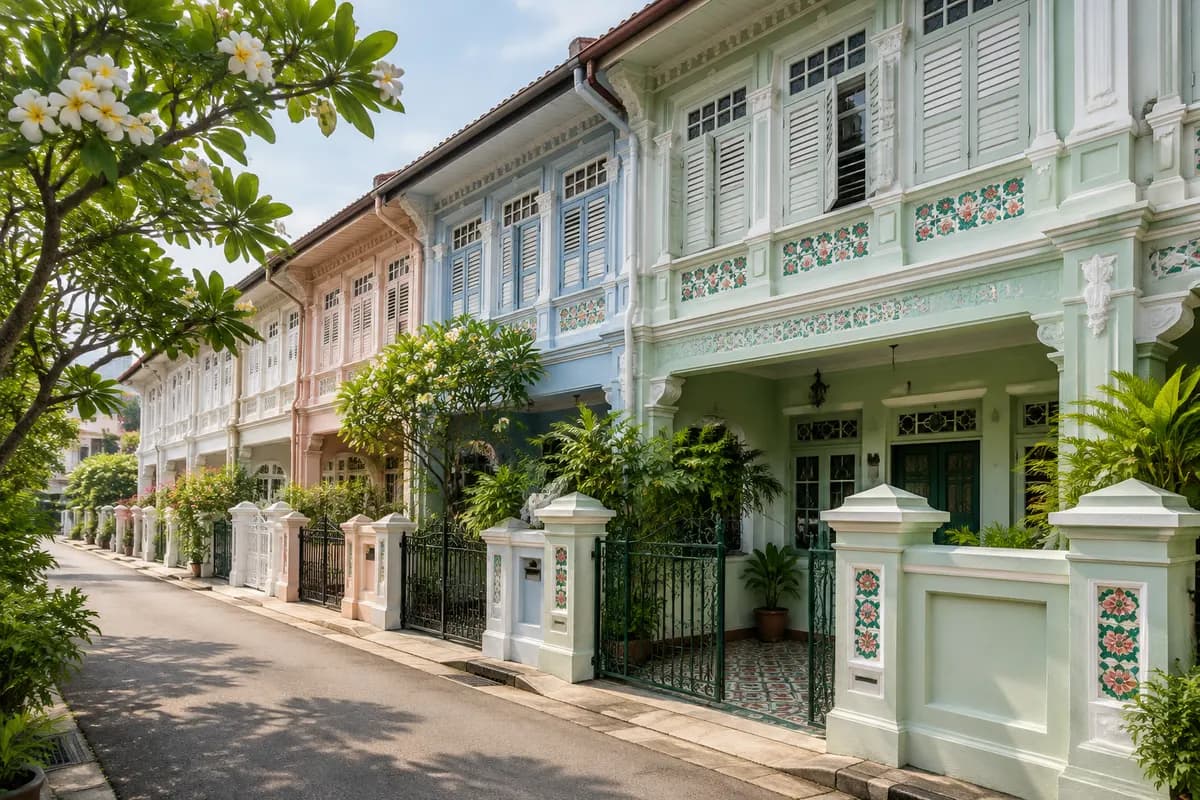
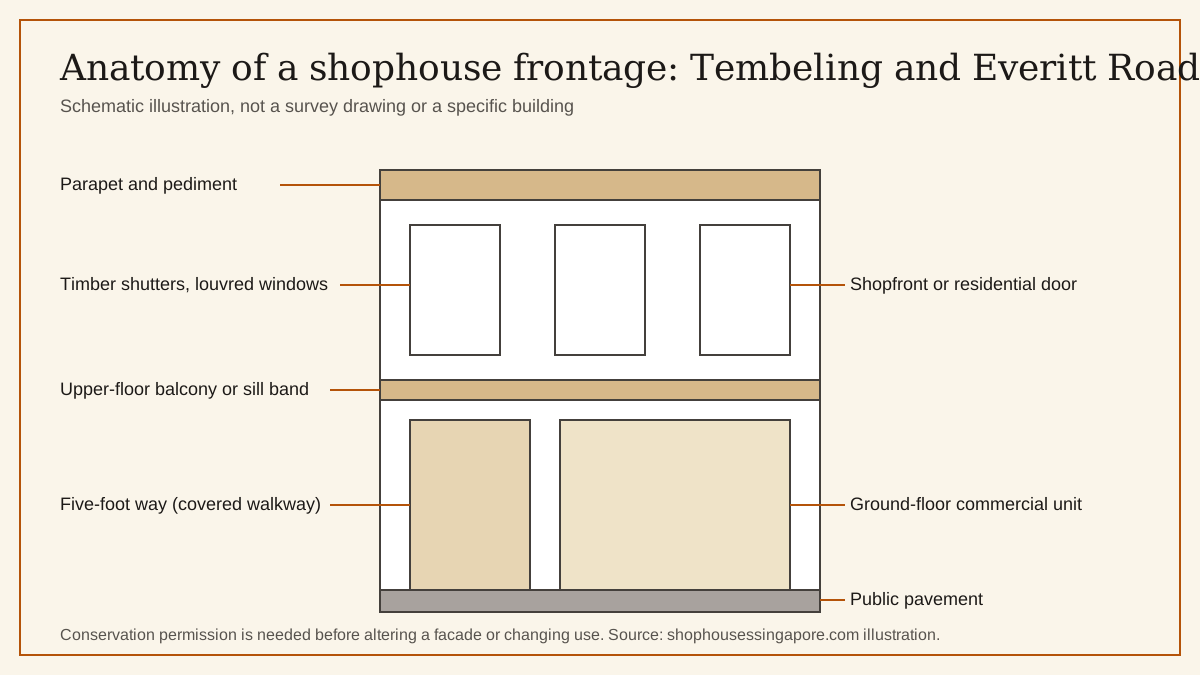
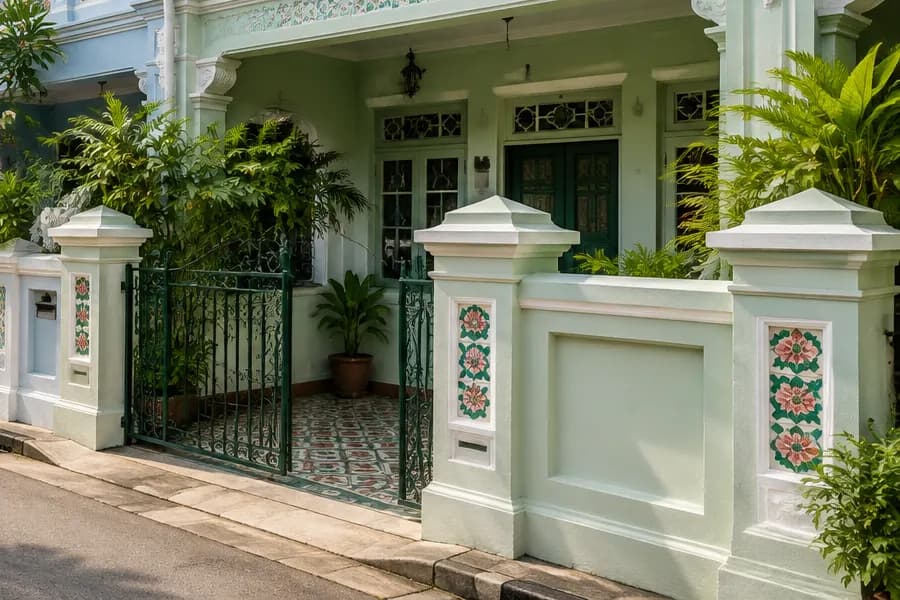
Expect two-storey terraces with front gardens or low walls, timber shutters, tiled thresholds and moulded parapets. The streetscape is more domestic than Joo Chiat Road: fewer shopfronts, more gates, and trees.
Because these are protected streetscapes, even small changes such as replacing windows, changing paint schemes or altering gates can need approval. Ask owners for the approved drawings and check that restoration work matches them.
The charm of the quieter lanes is that they feel like a neighbourhood first and a heritage site second.
Tembeling Road and Everitt Road shophouse for sale
Supply is very limited and most transactions are private. Check tenure from the title, the approved use, conservation requirements and any history of unapproved works. Because many units are residential, the duty and financing treatment differs from commercial shophouses; read our commercial vs residential ABSD breakdown.
Price context as of 5 November 2026: rely on URA REALIS and comparable lots rather than headline figures, and compare on the same area basis. Our conservation shophouses for sale page lists current opportunities across the district.
| Factor | Tembeling and Everitt Roads | Joo Chiat Road |
|---|---|---|
| Pace | Quiet, residential | Busy, commercial |
| Typical buyer | Owner-occupier, long-term holder | Investor, operator |
| Footfall | Low | High, weekend peaks |
| Change of use | Often restricted | More common, still needs approval |
Renting and uses
Rental opportunities are infrequent and mostly residential. Where planning allows, small studios, consulting rooms or boutique offices can work. Restaurant use is unlikely on residential lanes, so search Joo Chiat Road for F&B space and read the F&B licensing and change of use guide. See shophouses for rent for current availability.
URA conservation status
The Joo Chiat Conservation Area, gazetted on 23 July 1993, includes parts of Tembeling Road and Everitt Road. URA's guidelines for secondary settlements and specific restoration guidelines apply. Conservation permission is needed for alterations and use changes.
Policy can change, so confirm the position for your lot as of the date you act. See our conservation guidelines buyer manual.
Transport and MRT
No MRT station is on these lanes. Thomson-East Coast Line stations on the east coast, opened on 23 June 2024, and East-West Line stations at Eunos and Paya Lebar are the main rail access points, often reached by bus or walking. Measure distance from the specific address.
Terrace types and restoration on the quieter lanes
Not every terrace on these lanes has the same history. Some were built as speculative rows by a single developer, with repeated facade patterns; others were built plot by plot for individual families, giving more variety in ornament and height. Understanding which type you are looking at helps you read what has been altered over time.
Restoration quality also varies. A well-restored terrace will show consistent materials, correct window proportions, restored tiles and carefully matched paint colours. Poorly restored ones may show modern aluminium frames, replaced timber panels or mismatched plaster. Ask for the restoration record and photographs taken before work began.
Because the lanes are residential, noise and privacy are part of the value. Check how close the neighbouring windows are, whether the rear lane is shared, and whether any extension has changed light and ventilation. These details rarely appear in listings, but they decide whether a heritage terrace is a pleasure to live in or a long list of compromises.
Finally, think about the long run. Heritage terraces reward owners who maintain them steadily and document every approved change. A tidy file of approvals, invoices and photographs adds real confidence for the next buyer or tenant, and it protects you if a question about past works ever arises. Set aside an annual maintenance budget rather than waiting for problems, because water ingress and timber decay are cheaper to fix early.
Living and investment angle
The lanes suit owner-occupiers who value quiet and heritage, with services close by on Joo Chiat Road. Investors should note the smaller buyer pool and residential-use limits. See historical yields and capital appreciation data and the conservation investing guide.
Maintenance of older timber, tiles and roofs is a recurring cost. Budget for it and keep records of approved works to support resale.
What to check before you buy on a quiet lane
Start with the title and any caveats, then confirm URA planning use and whether the lot lies inside the conservation boundary. Ask for approved plans and compare them with the building as it stands. Commission a structural and termite inspection, because older timber floors and roof members are a common source of cost.
Visit at different times: weekday mornings, evenings and weekends. Noise, parking and visitor traffic from nearby Koon Seng Road can vary a lot. Talk to neighbours about drainage, shared walls and any disputes. Finally, take legal advice on stamp duty exposure before you bid.
Tembeling and Everitt Roads shophouses: frequently asked questions
Where are Tembeling Road and Everitt Road?+
They are quieter lanes in Joo Chiat, east Singapore (district 15), within or beside the Joo Chiat Conservation Area.
Are Tembeling Road shophouses conserved?+
Parts of Tembeling Road are named in URA's description of the Joo Chiat Conservation Area. Confirm the lot.
Are Everitt Road shophouses conserved?+
Parts of Everitt Road are included in the Joo Chiat Conservation Area. Check lot-level status with URA.
Is there a Tembeling Road shophouse for sale?+
Rarely. Supply is limited and sales are often private.
Can I run a business from these terraces?+
Only where planning use allows. Many are residential, so confirm approved use before assuming.
How do these lanes differ from Koon Seng Road?+
They are similar in character but generally quieter, with fewer visitors and less commercial pressure.
What MRT is near Tembeling Road?+
No station is on the road. Use nearby Thomson-East Coast Line or East-West Line stations with a bus or walk.
What does Tembeling mean?+
The road is probably named after the fish ikan tembelian.