
East Coast neighbourhood guide
Tanjong Katong Shophouses: Tanjong Katong Road Shophouse for Sale and Rent
The seaward end of old Katong: history, street stock, how it differs from Joo Chiat, rental and sale context, and the new rail link.
Quick answer
What are Tanjong Katong shophouses?
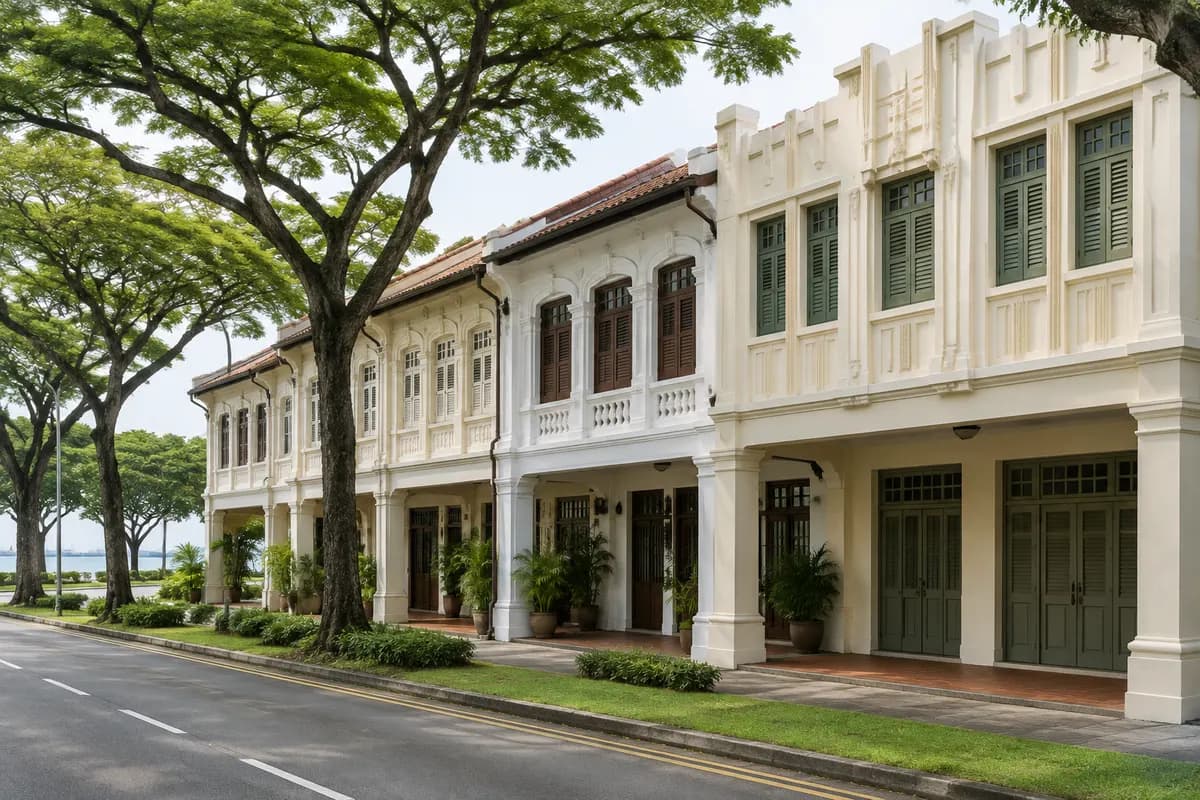
Tanjong Katong shophouses are the older terraces and shopfronts along Tanjong Katong Road and nearby streets in Singapore's east. The name means turtle point. The stock is more mixed and less uniformly conserved than Joo Chiat, so tenure, planning use and conservation status must be confirmed lot by lot.
Last reviewed 5 November 2026. Market and planning statements are dated and qualitative; verify on the named lot before acting.
Tanjong Katong at a glance
- Meaning
- Tanjong Katong means turtle point; it marked the eastern boundary of Raffles' 1819 settlement
- Road
- Tanjong Katong Road runs from Sims Avenue to Tanjong Katong Road South
- Stock
- Mixed older shophouses and terraces beside modern developments
- Conservation
- Varies by lot; confirm with URA
- MRT
- Tanjong Katong station, Thomson-East Coast Line, opened 23 June 2024
- Uses
- Neighbourhood retail, services, F&B, homes
- Facts reviewed
- 5 November 2026
Tanjong Katong: the turtle point
Tanjong means cape or point in Malay, and Katong is a sea turtle species, though other accounts link the name to sea mirage. Tanjong Katong marked the eastern edge of the 1819 settlement, and in 1822 a marine yard was set aside here. The point's seaside setting attracted wealthy families who built villas along the coast, and the area stayed a retreat until reclamation moved the shore.
Today the Tanjong Katong name appears on a long road, a district and, since 2024, a Thomson-East Coast Line station. For shophouse buyers, the key point is that the area is not a single uniform conservation zone. Read the Katong guide for the neighbouring heritage context.
History of Tanjong Katong
Tanjong Katong Road extensions began in 1906, opening land for new streets and terraces. The Grove Estate, associated with Thomas Dunman, is among the old seaside estates remembered here. East coast reclamation from 1966 to 1985 created new land that separated the old road from the sea, shifting the area's character from beachfront to inland suburb.
Along the way, older buildings were replaced by newer residential and commercial developments, while pockets of shophouses survived. That leaves a streetscape where heritage rows and modern blocks sit side by side.
1819–1822
Edge of the settlement
Tanjong Katong marks the eastern boundary of the early town; a marine yard is set aside.
1906
Road extensions
Tanjong Katong Road is extended to open land for development.
1966–1985
Reclamation
New land moves the coastline away from the old road.
23 June 2024
MRT arrives
Tanjong Katong station opens on the Thomson-East Coast Line.
Tanjong Katong Road shophouse stock and styles
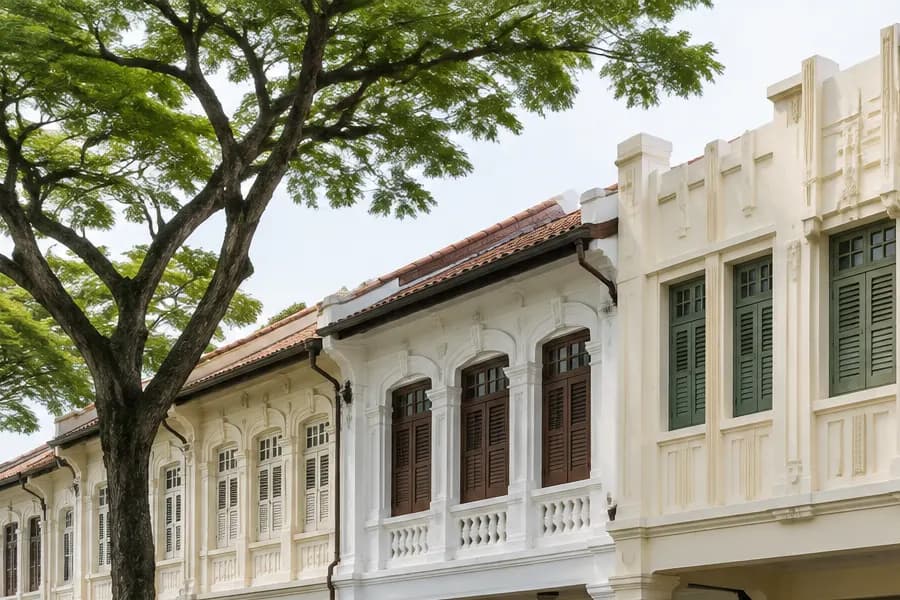
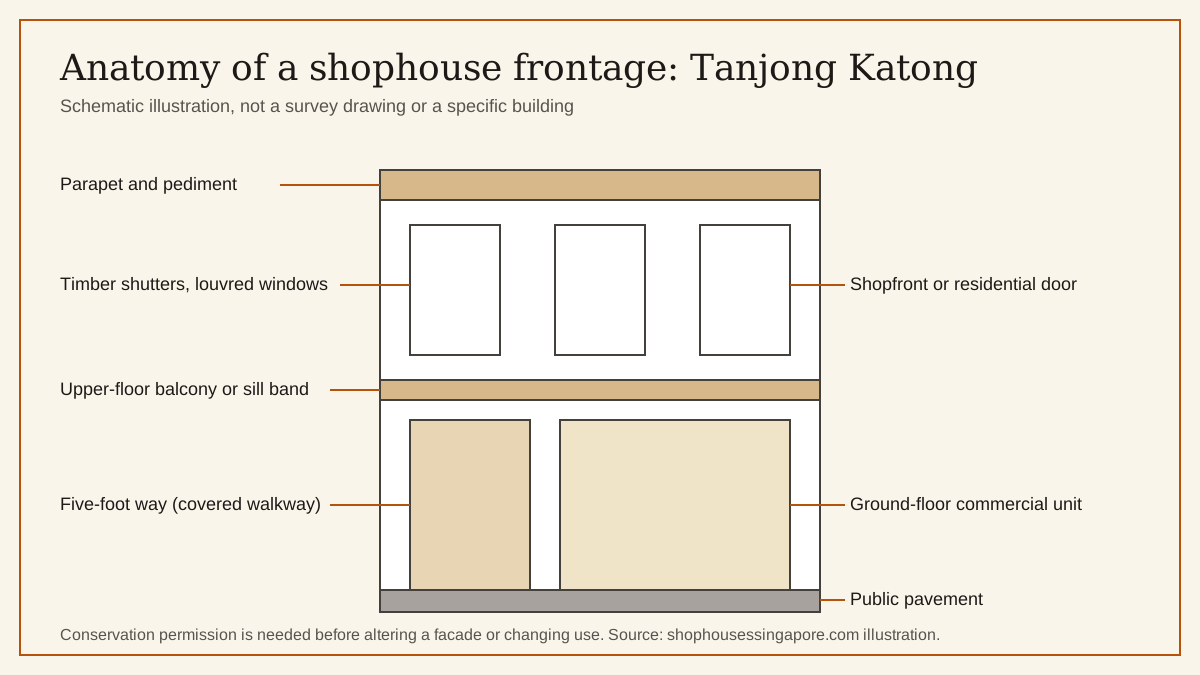
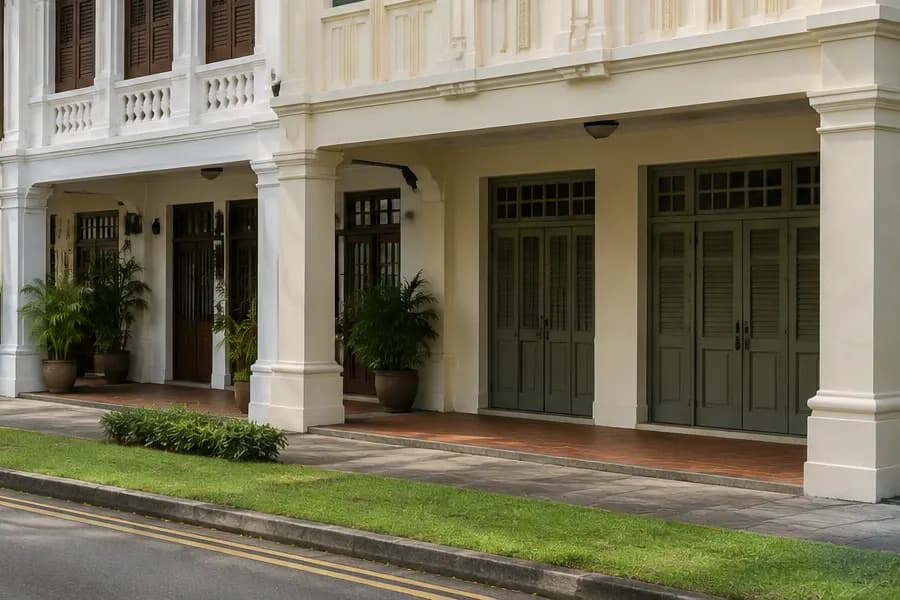
Shophouses along Tanjong Katong Road tend to be Late and Art Deco styles, with cleaner lines than the ornate Peranakan terraces of Koon Seng Road. Many are two or three storeys with five-foot ways and mixed-use floors. Some blocks are conserved while others are not, so do not assume the Joo Chiat rules apply to every unit.
Because the street is longer and more varied, unit quality ranges widely. Inspect structure, services and approved use rather than relying on the street name.
| Aspect | Tanjong Katong | Joo Chiat |
|---|---|---|
| Style | Late and Art Deco, mixed with newer blocks | Peranakan-decorated terraces and shophouses |
| Conservation | Varies by lot | Largely covered by the conservation area |
| Atmosphere | Neighbourhood and commuter | Destination and heritage |
| MRT | Tanjong Katong station nearby | No station on the main road |
Tanjong Katong shophouse for sale
A Tanjong Katong shophouse for sale can be an entry point for investors seeking east coast exposure without the heritage premium of Joo Chiat's best rows. Supply is limited, so be ready to evaluate quickly: verify tenure, URA planning use, whether the building is conserved, the existing tenancy and the building condition.
Zoning drives ABSD exposure, so read our commercial vs residential ABSD breakdown. Pricing context as of 5 November 2026: rely on URA REALIS and comparable lots on the same area basis, and treat unsourced headline numbers with caution. See conservation shophouses for sale.
Tanjong Katong Road shophouse rental
Rental demand comes from neighbourhood retail, clinics, tuition and services, F&B and small offices. The arrival of the Thomson-East Coast Line has improved access, which may shape tenant interest, but effects on rent differ by lot and should be tested against current listings rather than assumed.
Confirm approved use before signing, particularly for F&B; the F&B licensing and change of use guide explains the steps. See shophouses for rent for options.
URA conservation status
Parts of Tanjong Katong fall near the Joo Chiat Conservation Area, but not every shophouse on Tanjong Katong Road is conserved. Where a building is conserved, URA's guidelines require permission for alterations and changes of use, and facade features are typically retained.
Check each lot on URA's resources or through your architect, and read the conservation guidelines buyer manual. Policy may change, so verify as of the date you act.
MRT and transport
Thomson-East Coast Line Stage 4 opened on 23 June 2024 with seven stations: Tanjong Rhu, Katong Park, Tanjong Katong, Marine Parade, Marine Terrace, Siglap and Bayshore. Tanjong Katong and Katong Park stations serve the area directly, and LTA cited journey-time savings of up to 50% on some trips. Buses along Tanjong Katong Road and East Coast Road complement rail.
F&B, retail and the catchment
The catchment includes local residents, workers and visitors heading to the nearby heritage streets and the coast. Nearby anchors include Parkway Parade and Katong Shopping Centre. We avoid naming operating businesses, but neighbourhood-oriented concepts that serve repeat local customers tend to suit this road better than destination-only concepts.
Scenarios: how different buyers and tenants use Tanjong Katong
A café operator values weekday commuter flow from the new station and weekend visitors from the coast side; they should walk the street at 8am, 1pm and 8pm to see which hours are genuinely busy. A clinic or tuition centre values parking, lift-free access and nearby households, and cares less about heritage character. A small investor values a tenant who will renew and a building that will not need major structural spending.
Each profile points to a different frontage. Corner units give visibility but more noise; mid-terrace units are quieter and cheaper to fit out; upper floors are cheaper per square foot but harder to let without a lift. Match the unit to the use rather than the other way round.
If you are buying to hold, think about exit. The buyer pool for a plain Late-style shophouse on a mixed road differs from the pool for a conserved Joo Chiat terrace, and the difference shows up in how long a sale takes. Build that into your holding-period assumptions and keep some cash buffer for vacancy between tenants.
Finally, keep a simple decision log. Record the lot, the asking terms, what you verified and what you could not. After viewing several units the details blur, and a log helps you compare like with like. It also gives your lawyer and architect a clean starting point, and it makes it easier to walk away from a lot that fails a basic check without second-guessing yourself later.
Investment and living angle
Investors get a recognisable east coast location, improved rail access and a mixed streetscape with some upside from renewal, balanced by uncertain conservation status on some lots and mixed building quality. See historical yields and capital appreciation data and the conservation investing guide.
For living, the area is close to parks, the coast and food, with easier commuting than before. Weigh noise on busier road stretches and building age.
Tanjong Katong shophouses: frequently asked questions
What does Tanjong Katong mean?+
It means turtle point: tanjong is a cape or point and Katong is a sea turtle species, though other accounts link Katong to sea mirage.
Is there a Tanjong Katong shophouse for sale?+
Occasionally. Supply is limited and many sales are private. Check listings and ask agents.
Is there a Tanjong Katong Road shophouse rental?+
Sometimes. Confirm approved use, and compare current listings.
Are Tanjong Katong shophouses conserved?+
Some are, many are not. Check each lot with URA.
Is there an MRT at Tanjong Katong?+
Yes. Tanjong Katong station opened on the Thomson-East Coast Line on 23 June 2024.
How is Tanjong Katong different from Joo Chiat?+
It has a more mixed streetscape and less uniform conservation, with newer rail access.
Can I open a café on Tanjong Katong Road?+
Yes if the unit has approved food use or you obtain a change of use and licences.
Where does Tanjong Katong Road run?+
It runs from Sims Avenue towards Tanjong Katong Road South in the east.