
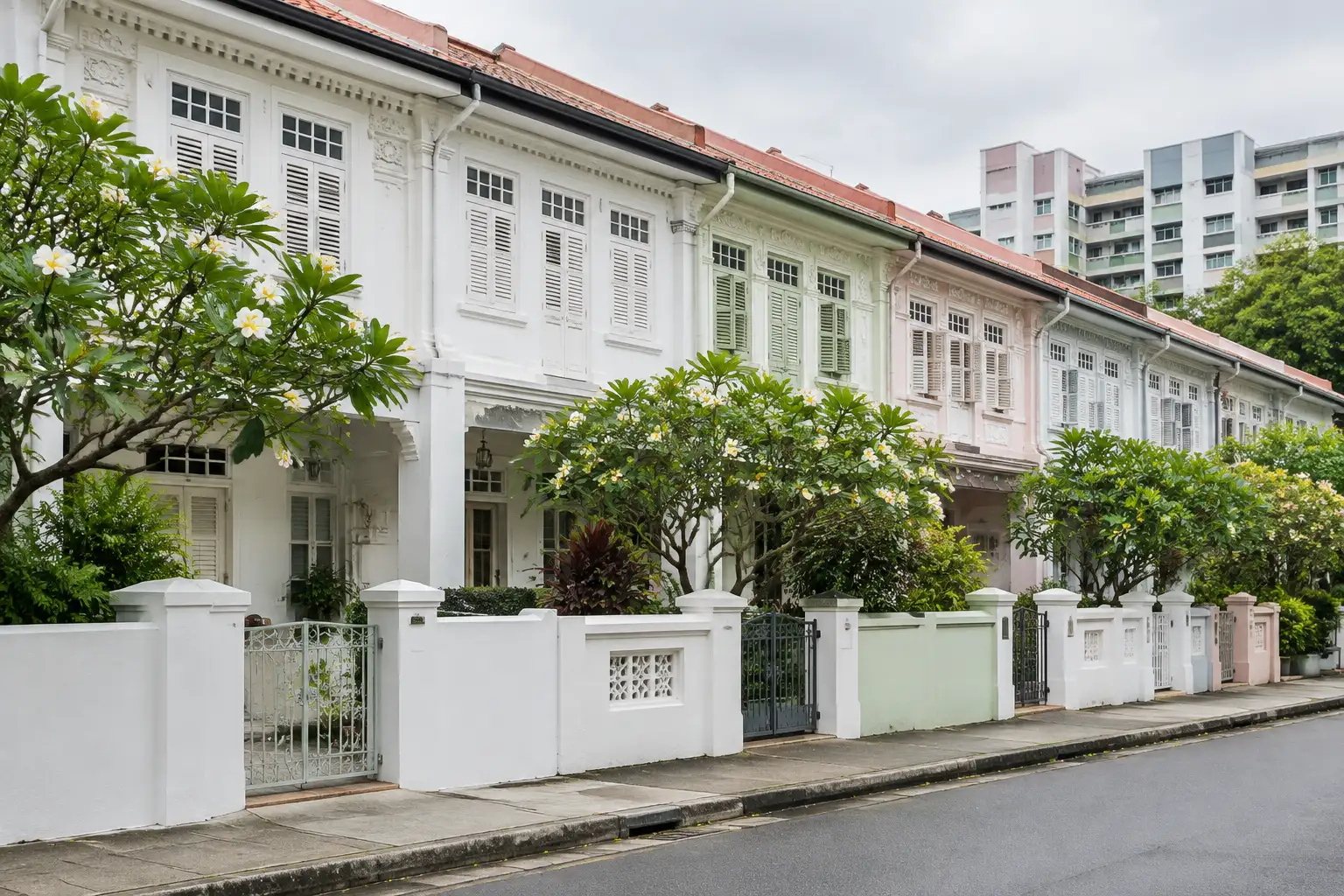
D01–02 · CBD
Spottiswoode shophouses
A quiet conserved-terrace pocket beside Blair Plain, mixed with public housing — a residential address first and a shophouse market second.
The short answer
A Spottiswoode shophouse usually means a conserved terrace on or near Spottiswoode Park Road, beside the Blair Plain Conservation Area and public-housing neighbours, close to Outram Park and Tanjong Pagar MRT. The area is residential-leaning, so buyers must verify zoning, tenure and use before assuming any commercial potential.
Spottiswoode at a glance
- Postal district
- District 2 (Tanjong Pagar), within the D01–02 CBD hub
- Conservation status
- Blair Plain Conservation Area covers conserved terraces nearby; verify the gazette for each lot
- Typical stock
- Low-rise conserved terraces and shophouse-style houses with five-foot-ways, alongside HDB estates
- Dominant use
- Residential; limited commercial use, mainly at edge lots
- Nearest MRT
- Outram Park (EW, NE, TEL) and Tanjong Pagar (EW), depending on the lot
- Tenure
- Verify per lot on an SLA title search; do not assume freehold
- Stamp duty lens
- Residential-zoned lots: BSD plus ABSD where applicable
- Best for
- Owner-occupiers and long-hold conservation buyers who want a quiet address
Spottiswoode shophouses at a glance
Spottiswoode Park Road sits on the quieter south-western side of the Tanjong Pagar belt. Conserved terraces face the street, and the wider Spottiswoode area also includes public-housing blocks. Together with Blair Road, Everton Road and the Neil Road edge, it forms the residential heart of the Blair Plain conservation pocket.
When people search for a Spottiswoode shophouse, they usually mean a conserved terrace rather than a ground-floor trading unit. Be honest about that from the start: this is not a restaurant street. Our summary-level Blair Plain and Neil Road briefing takes the same view, and the District 01–02 CBD hub places the area within the central region. This page goes deeper.
History of Spottiswoode and Blair Plain
The Tanjong Pagar and Chinatown area grew rapidly in the nineteenth and early twentieth centuries as the port economy expanded. The residential terraces around Blair Road and Spottiswoode Park Road belong to the period when the fringe of the old town filled with family-built and speculative rows, many with Peranakan-influenced decoration.
In the later twentieth century, much of the surrounding district was redeveloped, and public housing became a dominant presence in the Spottiswoode area. The conserved terraces survived because the Blair Plain area was brought under URA conservation. We avoid quoting a gazette date or construction years for individual lots, since they vary and should be confirmed from URA records or the National Archives.
The result is an unusual streetscape: restored terraces with tiled façades next to public-housing blocks, a mix that reflects how Singapore's older neighbourhoods have been layered over time.
For a buyer, that layering matters. The terraces are protected, but the surroundings are not frozen: neighbouring blocks, schools and community facilities may be upgraded or redeveloped under the Master Plan. Check the Master Plan for the wider surroundings as well as the lot itself, so that you understand what could be built, or rebuilt, within sight of your front door over a long holding period.
Spottiswoode Park Road and Blair Road shophouse stock and styles
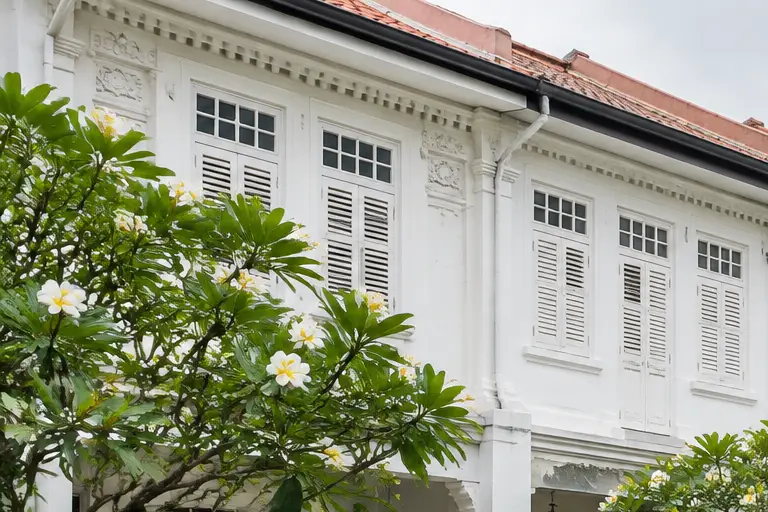
The conserved stock here is lower-key than the dining streets. Rows of terraces and shophouse-style houses line Spottiswoode Park Road and adjoining streets such as Blair Road, and many show Peranakan-influenced detailing. A Blair Road shophouse is typically a conserved terrace in the same residential pocket, so the two searches overlap.
Expect a mix of idioms rather than a single style. Features you should expect URA to care about include:
- Five-foot-ways along terrace rows, conserved as covered circulation.
- Pitched clay-tile roofs and traditional ridge profiles; altering the visible form is tightly regulated.
- Glazed ceramic tiles, timber shutters and decorative plasterwork, which are costly to match when damaged.
- Shared party walls, which bring structural and neighbour issues into most renovations.
- Rear extensions of varying vintage; the approved extent of these is a common diligence finding.
- Adjacent HDB blocks and community facilities that sit outside the conservation envelope.
Typical uses in Spottiswoode
Residential occupation is the default. Owners live in the terraces or lease them to tenants, and any Spottiswoode shophouse for rent is more likely to be a home than a shop. Commercial use is limited and tends to sit at edge lots near main roads, so do not extrapolate it into the residential streets.
Customer-facing F&B or retail inside the residential portion generally requires URA permission and is often resisted by planning policy and neighbours. If your plan is a restaurant, start with the F&B licensing and change-of-use guide, and compare commercial frontages at Tras Street or Club Street.
URA conservation status and what it means for owners
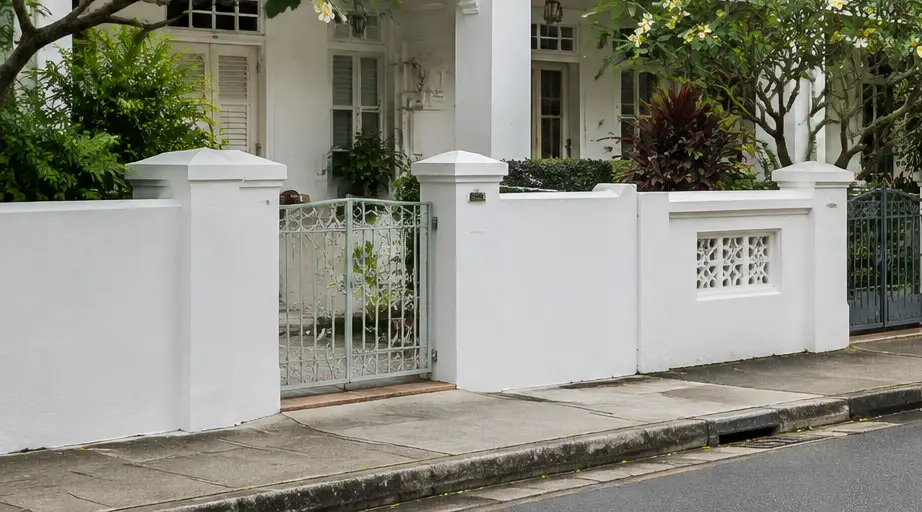
The Blair Plain Conservation Area covers many of the terraces in this pocket, but adjacent streets may fall under other designations, so check each lot. Façades, the five-foot-way, roof form and key features are to be retained and restored, while interiors and rear portions can be adapted within approved parameters. Works need URA approval and a team with conservation experience. Our URA conservation buyer manual explains the approval path.
Conservation protects supply, so scarcity is structural, but it also caps flexibility. Colours, rooflines and shopfront changes are controlled. Budget for specialist trades, longer lead times and conservation-grade materials.
Transport and MRT access
Outram Park MRT, an interchange of the East-West, North-East and Thomson-East Coast lines, and Tanjong Pagar MRT on the East-West Line are the main stations for the Spottiswoode area, with walking time depending on the lot. Maxwell MRT on the Thomson-East Coast Line is also an option for some addresses. Test the route yourself before you quote a time to a tenant.
Bus services run along the Outram and Neil Road corridors. Parking is limited on conserved streets, so check arrangements for each lot. Line names and interchange details may change as the network grows, so check the LTA map before you publish any listing.
Spottiswoode shophouse for sale and for rent: price and rent context
As of November 2026 we do not publish a headline price per square foot or yield for Spottiswoode. Conserved terraces are individual lots with different land areas, tenures and condition, and averages hide more than they reveal. What can be said is directional: the terraces are priced and rented like conserved residential property, not like commercial shophouses, and listings are infrequent.
To get evidence, pull recent caveats and transactions from URA's REALIS or the public URA transaction search, filter on the Spottiswoode Park Road and Blair Road postal ranges, and read the land area, tenure and date for each deal. For rent, check the shophouses-for-rent page and ask for signed tenancy terms. Our 2026 investing pillar explains how to stress-test income assumptions.
Dining, retail and lifestyle around Spottiswoode
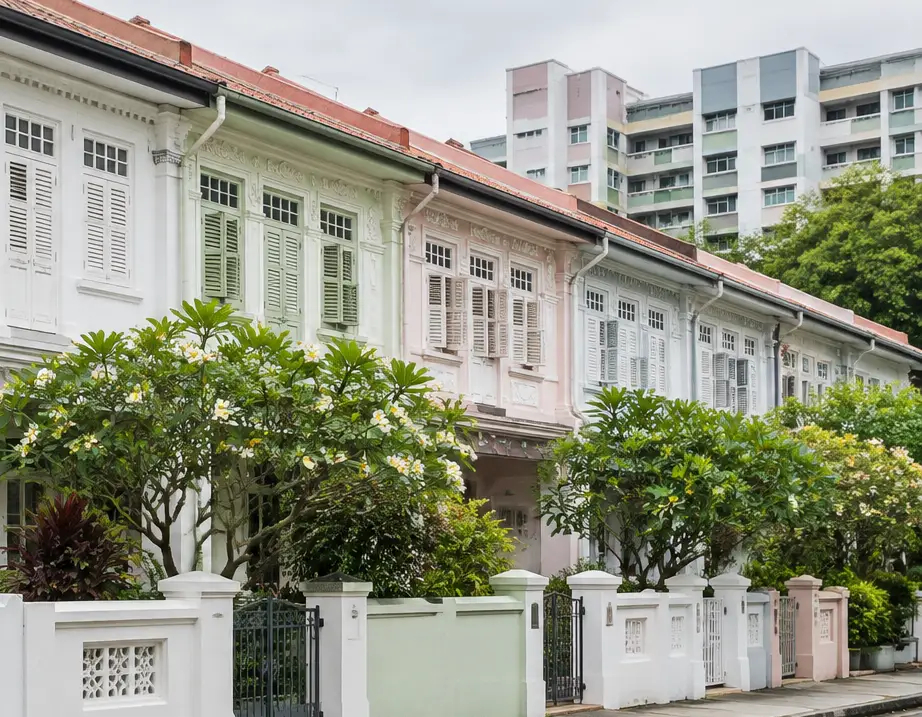
The immediate streets are quiet. The lifestyle value lies nearby: Tanjong Pagar's offices and dining, Chinatown's markets and food streets, Maxwell's hawker centre, and the green space along the Duxton Plain Park corridor. We make no claims about which individual businesses are trading at any time.
Public-housing neighbours bring everyday amenities and a mixed community, which is part of the area's character. Residents typically have easy access to neighbourhood services, markets and bus routes, and the pace of life is closer to a settled residential estate than to a nightlife district. Visit on a weekday evening and a weekend morning before you commit, and walk to the nearest MRT station at the time of day you would commute. For a more dining-oriented heritage pocket, see Duxton.
Investment and living angle
Treat Spottiswoode as a lifestyle-and-scarcity pocket rather than a yield play. The thesis is a conserved address close to the CBD, in a quiet setting with limited supply, not high commercial income.
The tax profile is usually residential. Buyer's Stamp Duty applies, and ABSD may apply depending on your residency and property holdings. Rates and rules are set by IRAS and change, so confirm them before you commit. Our commercial versus residential ABSD breakdown explains why the commercial pathway does not transfer to residential-zoned terraces. Foreign-buyer eligibility for residential property also differs from commercial shophouses, so take legal advice early.
Holding costs deserve respect: conservation-grade maintenance, damp and termite control in old timber and plaster, and insurance for heritage fabric. Many long-hold owners treat restoration as a deliberate capital project, budgeted and phased, rather than as routine repairs, and they keep records of every approval so that a later buyer can verify the building's history.
Due-diligence checklist for a Spottiswoode terrace
Before you make an offer, work through the following.
- Confirm tenure, land area and any easements through an SLA title search.
- Check Master Plan zoning and the conservation guidelines for the exact lot on URA SPACE.
- Obtain approved plans and compare them with what is built, especially rear extensions and attic works.
- Commission a structural survey covering party walls, roof timbers and drainage.
- Check for nearby construction or planned redevelopment that could affect noise and views.
- Price conservation-grade restoration separately, with a contingency.
- Ask your lawyer to confirm stamp-duty and eligibility exposure for your buyer profile before the option is exercised.
Nearby neighbourhoods
The closest heritage neighbours are Neil Road and Duxton, with Outram to the north. For the conservation listings that are live, see the conservation shophouses for sale page. The full list lives on the neighbourhoods hub.
Market commentary on this page is directional and reflects our reading as of November 2026. It is not a valuation, quotation or offer. Verify zoning, conservation status, tenure and approved use on URA SPACE, an SLA title search and the lot's planning history before you bid. See all Singapore shophouse neighbourhoods or the parent hub, District 01–02 CBD.
Frequently Asked Questions
Are there shophouses on Spottiswoode Park Road?+
There are conserved terraces and shophouse-style houses nearby, mostly residential rather than ground-floor trading units. Verify zoning and conservation status for each lot.
Is there a Spottiswoode shophouse for sale?+
Occasionally, but listings are infrequent. Check the conservation listing page, URA transaction records and specialist agents, and verify tenure and zoning before any offer.
Can I rent a Spottiswoode shophouse?+
Sometimes, mostly as a residential lease. See the shophouses-for-rent page and confirm the permitted use before you sign.
Is Blair Road a shophouse area?+
Blair Road is part of a residential-leaning conservation pocket. A Blair Road shophouse is typically a conserved terrace, not a restaurant shell, so check zoning for each lot.
Is Spottiswoode a conservation area?+
Many terraces nearby sit in the Blair Plain Conservation Area, so façades and roofs must be retained and works need URA approval. Adjacent streets may differ, so check each lot.
Which MRT station is closest to Spottiswoode Park Road?+
Outram Park and Tanjong Pagar MRT are the main stations, depending on the lot. Check the LTA map for current line details.
Can I open a café on Spottiswoode Park Road?+
Usually not in the residential portion. Change of use generally requires URA approval and is often resisted, so check zoning and the F&B licensing path first.
Will I pay ABSD when buying a Spottiswoode terrace?+
Possibly. The terraces are generally residential, so Buyer's Stamp Duty applies and ABSD may apply depending on your residency and holdings. Rules are set by IRAS and change, so confirm first.
How much does a Spottiswoode shophouse cost?+
Prices vary widely with land area, tenure and condition. As of November 2026 we recommend pulling URA transaction data for the specific lot rather than relying on averages.