
D01–02 · CBD
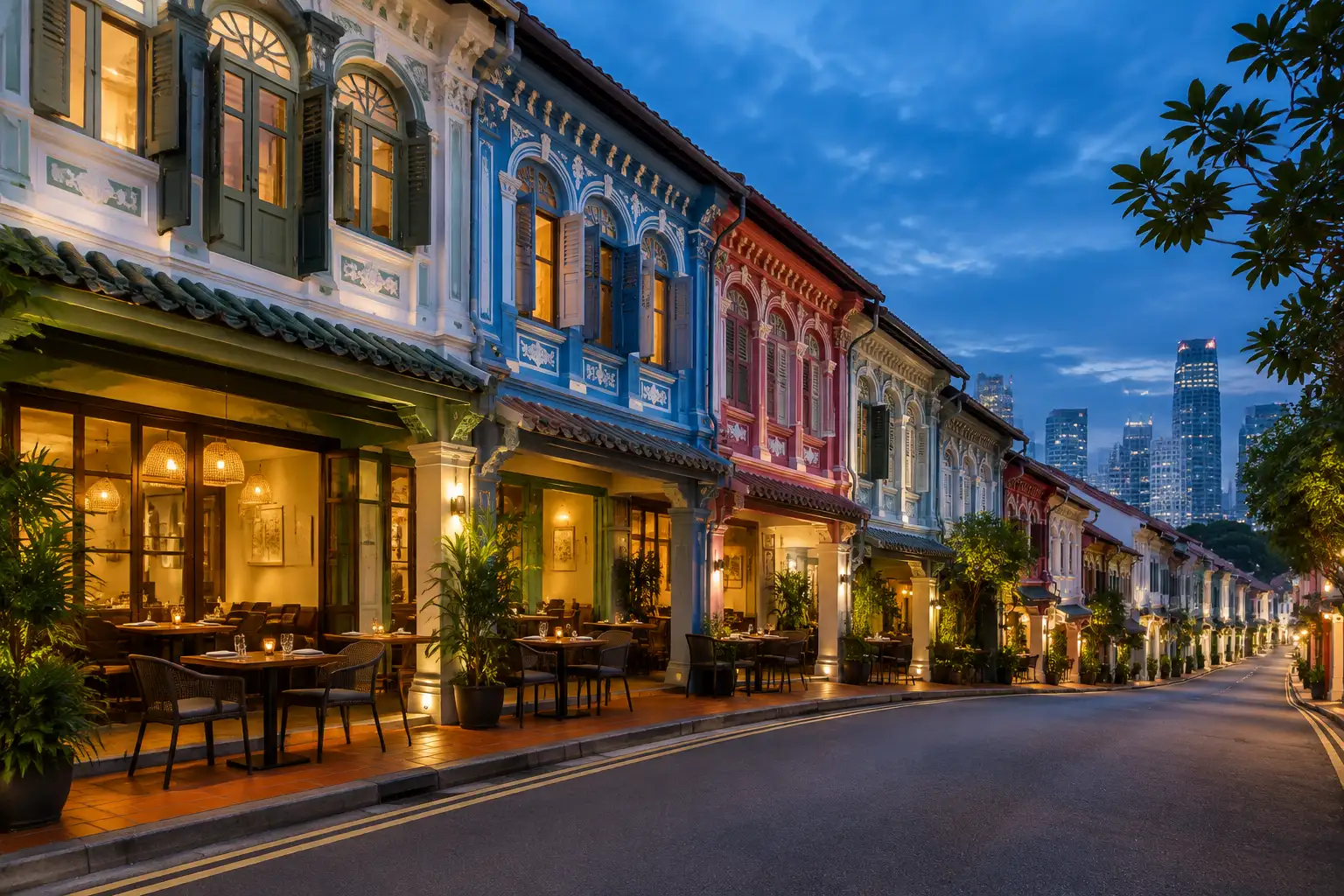
Club Street shophouses
A conserved dining-and-bar street named for the Chinese clubs that once lined it — the CBD fringe's best-known commercial shophouse address, compared against Ann Siang and Tras Street.
The short answer
Club Street is a conserved shophouse street in Chinatown linking Cross Street with Ann Siang Hill, named after the Chinese clubs once sited there. It is now known for restaurants, bars and galleries, and many units are commercial-zoned. Telok Ayer and Chinatown MRT are the usual walk-in stations; always verify zoning and tenure per lot.
Club Street at a glance
- Postal district
- District 2 (Chinatown / Tanjong Pagar), within the D01–02 CBD hub
- Location
- Runs between Cross Street and Ann Siang Hill, within the Outram Planning Area
- Name origin
- Named after Chinese clubs on the street; accounts disagree on which club gave the name
- Conservation status
- Within the Chinatown Conservation Area; façade, roof and streetscape controls apply
- Typical stock
- Two- and three-storey conserved shophouses with five-foot-ways
- Dominant use
- Restaurants, bars and galleries on lower floors; offices, studios or serviced uses above
- Nearest MRT
- Telok Ayer (DT18) and Chinatown (NE4/DT19) are the usual choices; confirm walking time
- Tenure
- Often freehold per our existing briefing, but verify each title on SLA
- Stamp duty lens
- Commercial-zoned lots follow a different pathway from residential; confirm zoning first
Club Street shophouses at a glance
Club Street is one of the clearest examples in Singapore of a conserved shophouse street turned into a dining corridor. It runs from the Cross Street end through to Ann Siang Hill, and the rows of restored two- and three-storey units hold restaurants, bars and a few galleries. For buyers and tenants, the common question is simple: what does a Club Street shophouse cost, and can it be leased or bought for food and beverage?
The short answer is that Club Street is a commercial brief. Our existing Club Street and Ann Siang briefing describes freehold commercial F&B shells and one of the deepest buyer pools in the CBD conservation belt. This page goes further on history, use, buying and leasing, and on how Club Street differs from its neighbours Ann Siang Hill and Tras Street.
Why it is called Club Street: history of the clan clubs
Reference accounts say Club Street got its name from the Chinese clubs once sited along it. Wikipedia-derived accounts, citing a study of Singapore street names, give two competing explanations: some say the name came from the Chinese Weekly Entertainment Kee Lam Club, formed in 1891 and a leading Straits Chinese club for decades, and others point to the Chui Lan Teng club, which reportedly existed there for more than 90 years. We cannot settle which is right and the safe statement is that clubs gave the street its name.
The street was reportedly predominantly Hokkien, and the Hokkien names recorded for it include chui lan teng. The same accounts say a big gateway once marked the entrance from Cross Street, and that the street was known for sandalwood idols. These details are historical colour rather than investment facts, and we recommend verifying them with the National Library or NHB Roots before quoting them.
One well-documented club link is the Ee Hoe Hean Club. URA's conservation portal says it was founded in 1895 by Hokkien community leaders for the wealthy Chinese elite, and other accounts say it was at 38 Club Street from 1910 before moving to Bukit Pasoh Road in 1925. The street also contains the Pondok Peranakan Gelam Club, a communal home for a Bawean-Malay community from 1932 to 2000 that was declared a historic site in 2000. For the next street over, see Bukit Pasoh.
Club Street shophouse stock, streets and styles
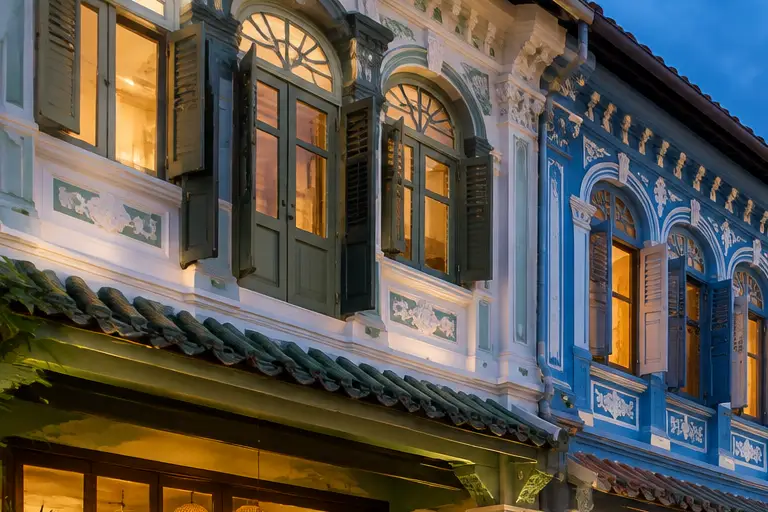
Club Street is a relatively short street with a slight rise towards Ann Siang Hill. Along it are conserved shophouses of two and three storeys, many restored with fresh paint, timber shutters, plaster details and five-foot-ways that now double as outdoor seating or queueing areas. The surrounding blocks are a mix of restored rows and some older, plainer frontages, so quality is not uniform.
Compared with the steeper Ann Siang Hill, Club Street is flatter and easier to service. Compared with Tras Street, which is a linear F&B row, Club Street is more of a night-and-weekend dining corridor with a mix of restaurants and bars. What to check on any unit:
- Façade condition and whether restoration work has already been approved and completed.
- Five-foot-way use, which is subject to approvals and conditions for any outdoor seating.
- Kitchen extraction, grease trap and rear-lane access, which determine whether a restaurant concept is realistic.
- Party walls and neighbouring tenants, because noise and smell complaints can affect trading.
- Approved versus built floor area, especially on upper floors and rear extensions.
Typical uses on Club Street
Restaurants and bars dominate the ground floor, with galleries, offices and studios appearing on upper levels. Wikipedia-derived accounts mention restaurant groups and several bars and cafés, but operators change quickly and we make no claims about who is trading now. The practical lesson is that the street suits concepts that rely on evening trade and destination appeal.
F&B use still requires approvals. Read our F&B licensing and change-of-use guide before you assume a given unit can host a kitchen. A unit that is already operating as a restaurant is not automatically transferable to a different cuisine or a louder concept, and conservation guidelines affect signage and outdoor activity.
Chinatown Conservation Area status and what it means
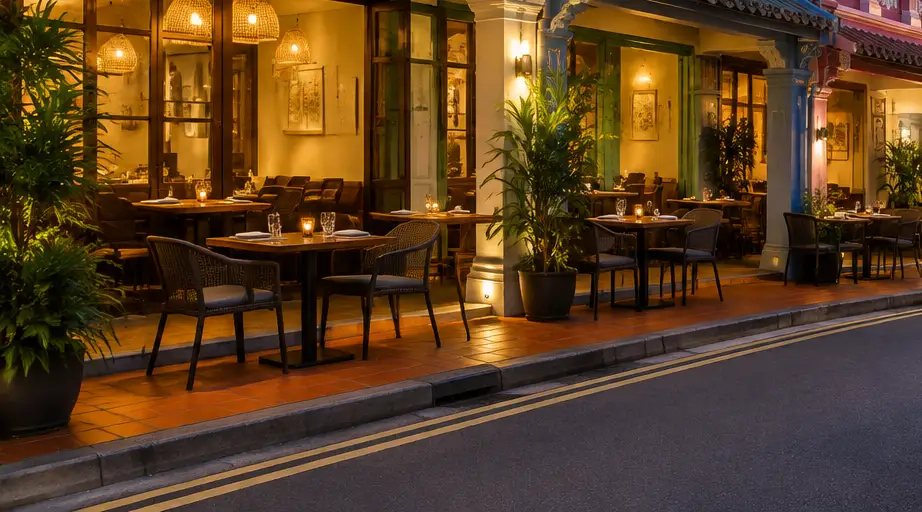
Club Street sits within the Chinatown Conservation Area. Front façades, roof forms, five-foot-ways and key architectural features are to be retained and restored, and URA conservation permission is required for works and new uses. This gives the street permanent scarcity, because no new units can be added, but it also constrains changes such as extra storeys, bold signage or reconfigured frontages.
Our URA conservation buyer manual explains the approval route, and the conservation shophouses for sale page explains how we categorise listings.
Transport and MRT access
Club Street is within walking distance of several stations. Telok Ayer on the Downtown Line and Chinatown on the North East and Downtown lines are the usual choices, and Maxwell on the Thomson-East Coast Line and Tanjong Pagar on the East-West Line are within reach. Exact times depend on which end of the street you start from and the gradient, so test the walk at the hours your customers will use it.
Taxis and ride-hail drop-offs are possible at the Cross Street end, but the street is narrow and busy on weekend evenings. Parking is limited and customers often rely on the MRT and nearby car parks. Confirm current station codes and lines on the LTA map.
Club Street shophouse for sale or rent: price and rent context
As of November 2026 we do not publish a headline price per square foot or a monthly rent for Club Street. Lots differ widely in land area, tenure, restoration state and lease encumbrances, and an average would hide those differences. The directional point is that Club Street is among the more liquid addresses in the conservation belt, and tenant demand for dining space is typically stronger here than on quieter side streets, but neither is a promise on any one lot.
If you are looking for a Club Street shophouse for sale, use URA transaction search or REALIS to read recent caveats by street, noting land area, tenure and zoning on each. If you want a Club Street shophouse for rent, ask for the last few lease terms, the rent-free and fit-out periods, and any landlord obligations, instead of relying on asking rents. Start with our shophouses for rent and commercial shophouses for sale pages.
Dining, nightlife and lifestyle on Club Street
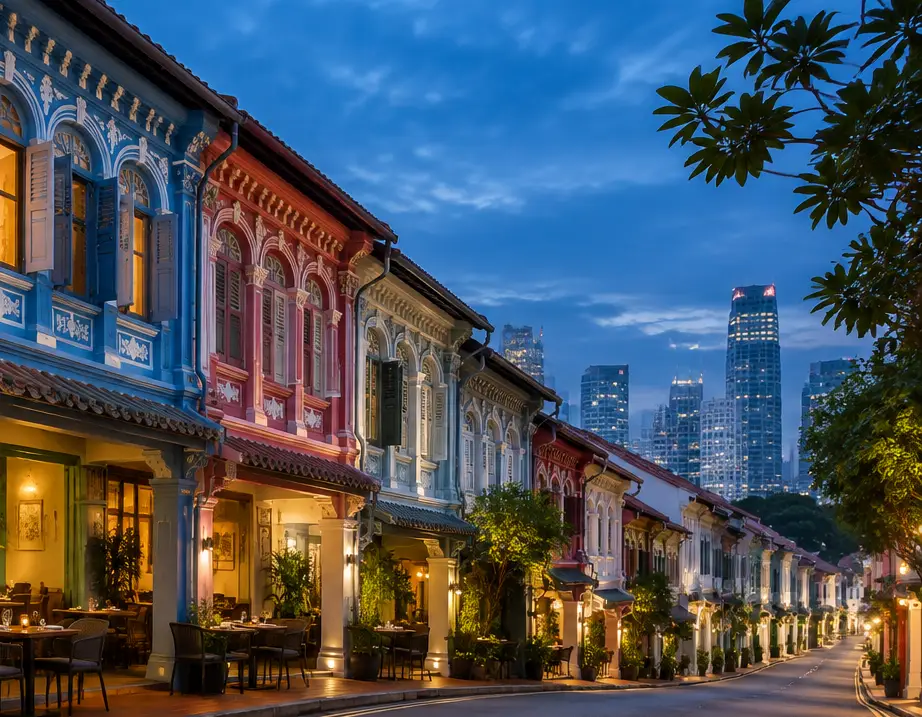
Evenings and weekends are the peak, with diners and drinkers filling the five-foot-ways. The scene is more dining-and-bar than touristic, with a mix of office workers from the CBD and residents. Daytime is quieter, so concepts that depend on lunch trade should test the numbers. Compare with the busier trade streets of Chinatown and the heritage-temple street of Telok Ayer.
Club Street versus Ann Siang versus Tras: Club Street is the flatter, longer corridor, Ann Siang Hill is the steeper and more intimate fork, and Tras Street is the linear F&B row closer to Tanjong Pagar. They share a customer base but differ in servicing, frontage and weekend pattern.
Investment and living angle
The Club Street thesis is commercial: a scarce conserved address, an established dining reputation and a deep tenant pool, with the added attraction that freehold stock is common. The risks are cyclical F&B demand, regulatory limits on use, and heavy competition on a short street. A buyer should underwrite occupancy and a realistic exit, not the busiest weekend.
Stamp duty depends on zoning and use. A commercial-zoned shophouse follows a different pathway from a residential one, and confirming zoning on URA SPACE should precede any stamp-duty assumption. Buyer's Stamp Duty applies broadly, and ABSD may apply to residential property depending on your profile; rates are set by IRAS and change, so verify current figures. Our commercial versus residential ABSD breakdown and the freehold shophouses guide explain the details, and the 2026 investing pillar sets the wider frame.
Due-diligence checklist for a Club Street shophouse
Before you make an offer, work through the following.
- Confirm tenure and land area through an SLA title search.
- Check Master Plan zoning and conservation guidelines for the lot on URA SPACE.
- Review existing leases, rent reviews, signage and outdoor-seating approvals.
- Compare approved plans with what is built, especially upper floors and rear extensions.
- Test kitchen extraction, grease trap and deliveries.
- Commission a structural and building survey covering party walls and roof timbers.
- Ask your lawyer to review stamp-duty exposure before the option is exercised.
Nearby neighbourhoods
Ann Siang Hill is next door, and Tras Street offers the linear F&B alternative. For quieter heritage streets, see Bukit Pasoh. The full list is on the neighbourhoods hub, and the District 01–02 CBD hub gives the wider context.
Market commentary on this page is directional and reflects our reading as of November 2026. It is not a valuation, quotation or offer. Verify zoning, conservation status, tenure and approved use on URA SPACE, an SLA title search and the lot's planning history before you bid. See all Singapore shophouse neighbourhoods or the parent hub, District 01–02 CBD.
Frequently Asked Questions
Why is it called Club Street?+
Reference accounts say it was named after the Chinese clubs once sited there. Some point to the Chinese Weekly Entertainment Kee Lam Club, others to the Chui Lan Teng club, so the exact origin is debated.
Where is Club Street in Singapore?+
It is in Chinatown within the Outram Planning Area, running between Cross Street and Ann Siang Hill. It is a short walk from Telok Ayer and Chinatown MRT stations.
Is there a Club Street shophouse for sale?+
Availability changes and stock is small. Check current listings, ask agents active in the Chinatown–Tanjong Pagar belt and search URA transaction records to see which buildings have traded.
Is there a Club Street shophouse for rent?+
Units come up occasionally, usually for F&B or office use. Ask for past lease terms and confirm permitted use for the specific unit; see our shophouses for rent page for how to search.
Are Club Street shophouses freehold?+
Many are described as freehold commercial shells in our area briefing, but tenure differs by lot. Verify each title through an SLA search before assuming freehold.
Is Club Street a conservation area?+
Yes. It sits within the Chinatown Conservation Area, so façades and key features must be retained and URA conservation permission is required for works and new uses.
Can I open a restaurant or bar on Club Street?+
Often yes in principle, since many lots are commercial-zoned, but each unit needs zoning confirmation, URA permission and F&B licensing. Check the specific lot before planning a kitchen.
How does Club Street differ from Ann Siang and Tras Street?+
Club Street is a flatter dining and bar corridor, Ann Siang Hill is steeper and more intimate, and Tras Street is a linear F&B row nearer Tanjong Pagar. Servicing and weekend patterns differ.
Will I pay ABSD on a Club Street shophouse?+
It depends on zoning and use. Commercial-zoned property follows a different pathway from residential property, which can attract ABSD. Rates are set by IRAS and change, so verify them before committing.
Which MRT station is nearest to Club Street?+
Telok Ayer and Chinatown are the usual choices, with Maxwell and Tanjong Pagar within reach. Check the LTA map for current lines and test the walk for your end of the street.