
D01–02 · CBD
Neil Road shophouses
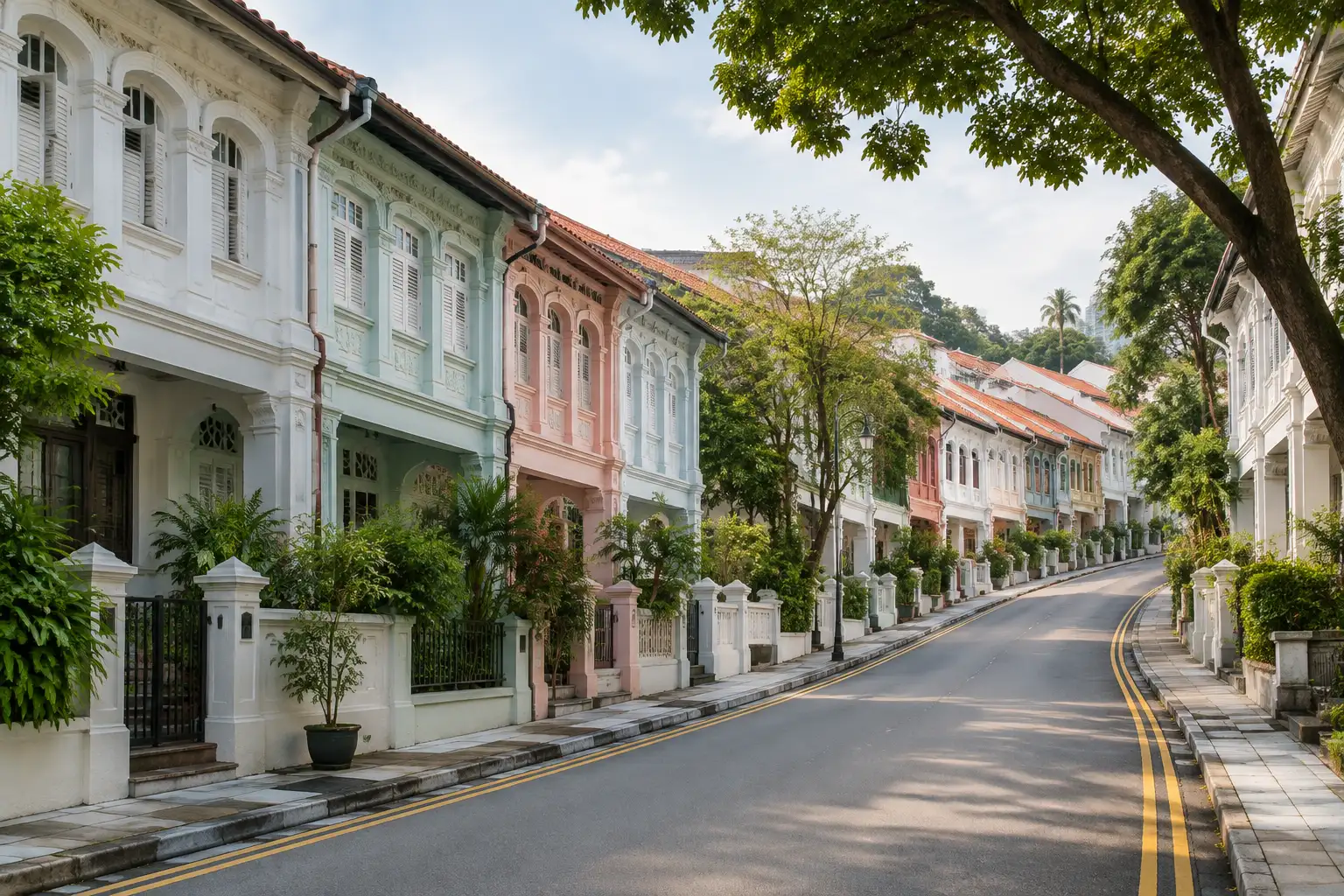
A long historic spine of conserved shophouse rows linking the Chinatown and Tanjong Pagar edges with the quieter Blair Plain terraces — more residential-leaning than the dining streets nearby.
The short answer
Neil Road shophouses are conserved two- and three-storey rows along a historic road linking the Chinatown and Tanjong Pagar edges with Outram and Blair Plain. The road is residential-leaning with some commercial lots, so Neil Road shophouse buyers must verify zoning, tenure and use on URA SPACE before relying on any listing.
Neil Road at a glance
- Postal district
- District 2 (Tanjong Pagar) and adjoining Chinatown–Outram edge, within the D01–02 CBD hub
- Conservation status
- Runs through conservation areas including Tanjong Pagar and Blair Plain; verify the gazette for each lot
- Typical stock
- Two- and three-storey conserved shophouses and terraces with five-foot-ways, mostly early twentieth century
- Dominant use
- Residential-leaning with pockets of F&B, small offices and studios; zoning varies by lot
- Nearest MRT
- Outram Park (EW, NE, TEL), Maxwell (TEL) and Tanjong Pagar (EW), depending on the stretch of road
- Tenure
- Verify per lot on an SLA title search; do not assume freehold
- Stamp duty lens
- Residential-zoned lots follow BSD and ABSD where applicable; commercial-zoned lots are a different pathway
- Best for
- Owner-occupiers, long-hold conservation buyers, selective small-operator uses
Neil Road shophouses at a glance
Neil Road is one of the longer historic roads in the Chinatown–Tanjong Pagar conservation belt. Rows of restored shophouses line stretches of it, interrupted by newer buildings, with the character shifting as you walk: busier and more commercial towards the Chinatown and Tanjong Pagar side, quieter and more residential towards the Blair Plain terraces and the Outram edge.
That shifting character is the key to searching for a Neil Road shophouse. There is no single use, price or zoning for the road. Our summary-level Blair Plain and Neil Road briefing treats the pocket as residential-leaning with ABSD caveats, and the District 01–02 CBD hub places it in the wider central area. This page goes deeper.
History of Neil Road
The Chinatown and Tanjong Pagar area was built up through the nineteenth and early twentieth centuries as Singapore's port economy grew. Shophouses were the standard urban building: a trading or workshop unit at street level, accommodation above, and a covered five-foot-way in front. Neil Road follows that pattern, and its terraces mostly date from the decades when this belt filled with family-built and speculative rows.
Like much of the surrounding district, the road saw a change of trades over time. Workshops, small traders and clan or family premises gave way to a mix of homes, small businesses and, in recent decades, cafés, restaurants and studios. Parts of the wider area were cleared or redeveloped in the later twentieth century, which is why the surviving shophouse rows are valued.
The shophouses survived because the area was brought under URA conservation, with the Tanjong Pagar Conservation Area gazetted in the late 1980s and other conservation areas covering adjacent pockets. We avoid quoting construction years for individual lots, since dates vary by building. Confirm them from URA conservation records or the National Archives rather than marketing copy.
Neil Road shophouse stock, streets and styles
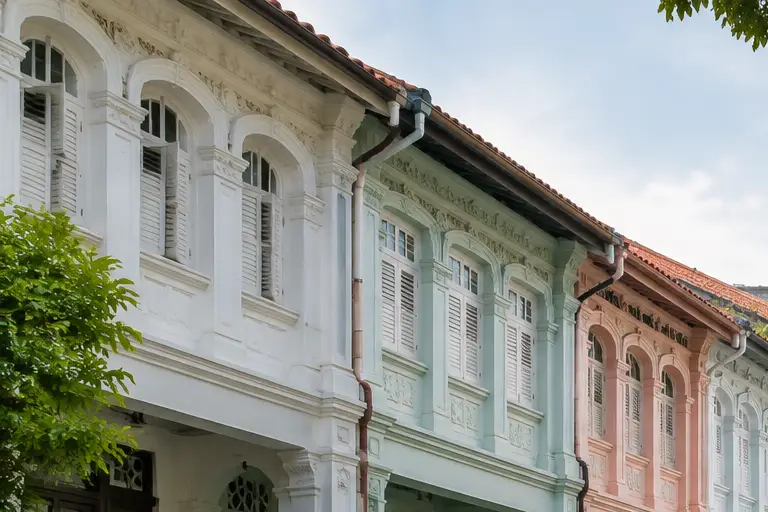
Neil Road is a through road rather than a short lane, so stock varies. The better-known rows are continuous runs of conserved terraces, sometimes in pastel or earth tones, with timber windows, carved panels and traditional roof tiles. Side streets such as Blair Road, Spottiswoode Park Road and the lanes towards Duxton and Keong Saik give access to the quieter, more residential parts.
Expect a mix of idioms rather than one pure style. Earlier rows lean towards richly decorated façades and timber shutters, while later rows are plainer, with cleaner pilasters and simpler parapets that reflect Late Shophouse and Art Deco influence. Features you should expect URA to care about include:
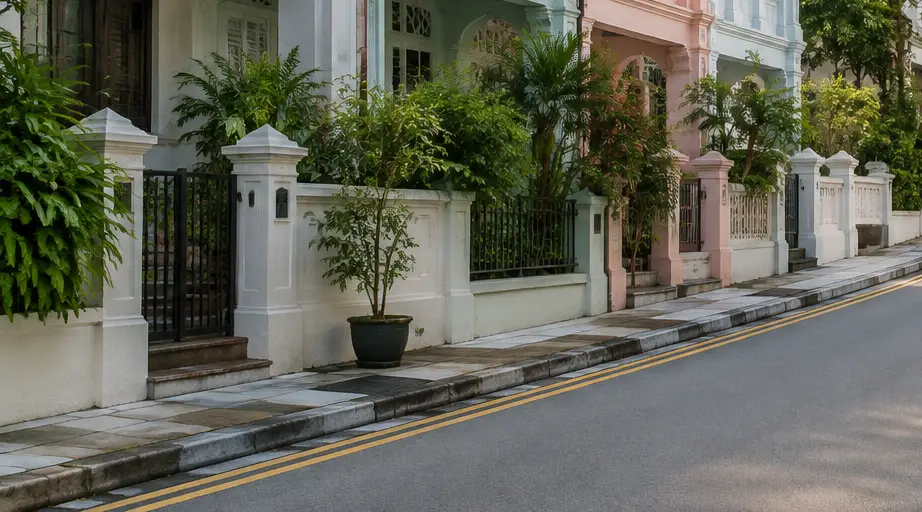
- Conserved five-foot-ways that act as continuous covered pedestrian circulation.
- Pitched clay-tile roofs and traditional ridge profiles; altering the visible form is tightly regulated.
- Timber louvred windows, fanlights and decorative plasterwork on upper-storey façades.
- Narrow, deep plots with shared party walls, which brings structural and neighbour issues into most renovations.
- Rear additions of varying vintage; the approved extent of these is a common diligence finding.
- Shopfront alterations that may have been approved for one use but not another.
Typical uses on Neil Road
Most Neil Road shophouses are used as homes, offices or studios, with food and beverage and small retail at selected commercial-zoned lots. That is a different brief from Club Street or Tras Street, where commercial F&B frontages are the norm. Because tenancies change, we make no claims about which operators are trading today.
If the plan is a café or restaurant, treat zoning and approved use as the first question rather than the last. Start with the F&B licensing and change-of-use guide, then compare the commercial streets at Tras Street and Club Street.
URA conservation status and what it means for owners
Neil Road passes through more than one conservation area, so do not assume a single status for the whole road. Façades, the five-foot-way, roof form and key features are to be retained and restored, while interiors and rear portions can be adapted within approved parameters. Works need URA approval and normally involve a team with conservation experience. Our URA conservation buyer manual explains the approval path.
Conservation protects supply, so scarcity is structural, but it also caps flexibility. Shopfronts, signage and rooflines are controlled. Budget for specialist trades, longer lead times and conservation-grade materials.
Transport and MRT access
Which station is nearest depends on your stretch of Neil Road. Outram Park MRT, an interchange of the East-West, North-East and Thomson-East Coast lines, and Maxwell MRT on the Thomson-East Coast Line serve the Chinatown and Duxton end. Tanjong Pagar MRT on the East-West Line is also within walking distance for some lots. Test the route yourself before you quote a time to a tenant.
Bus services run along Neil Road and the Outram corridors. Parking on conserved streets is limited, so most residents and operators depend on the MRT, taxis and ride-hail. Line names and interchange details can change as the network expands, so check the LTA map before you publish any listing.
Neil Road shophouse for sale and for rent: price and rent context
As of November 2026 we do not publish a headline price per square foot or yield for Neil Road. Lots differ in land area, tenure, zoning and condition, and an average would mislead. What can be said is directional: residential-zoned conserved terraces are priced like landed homes, commercial-zoned frontages are priced like commercial property, and a restored lot typically commands a premium over a tired one. Listings are infrequent, so a Neil Road shophouse for sale is more likely to surface through agents than on public portals.
To get evidence, pull recent caveats and transactions from URA's REALIS or the public URA transaction search, filter on the Neil Road postal range, and read the land area, tenure and date for each deal. For rent, ask for the signed tenancy terms and verify them. Our 2026 investing pillar explains how to stress-test income assumptions, and the shophouses for rent page lists what is on the market.
Dining, retail and lifestyle around Neil Road
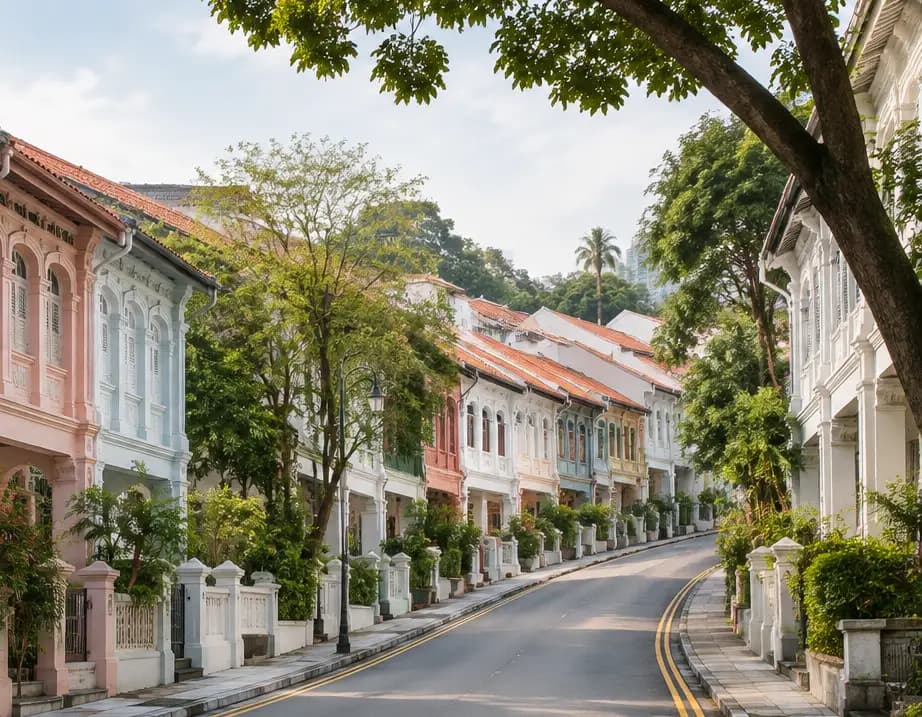
The road is quieter than its neighbours. Keong Saik Road and Duxton Hill carry the boutique-hotel and bar scene a few minutes away, Chinatown's markets and food streets are close, and Maxwell's hawker centre is within reach. That makes Neil Road a calm base with the lifestyle options a short walk away.
Noise depends on position. Lots near the bar streets can hear weekend activity, while lots deeper into the Blair Plain side are noticeably calmer. For another view of the heritage-dining pocket, see Duxton.
Investment and living angle
Neil Road suits long-hold owners who value a conserved address close to the CBD. The thesis is scarce supply, walkability and heritage character rather than a high commercial yield, and the residential-leaning brief should be reflected in your return expectations.
Stamp duty depends on zoning and use. Residential-zoned lots follow Buyer's Stamp Duty and, depending on your residency and property holdings, ABSD. Commercial-zoned lots follow a different pathway, but Buyer's Stamp Duty still applies. Rates and rules are set by IRAS and change, so confirm them with your lawyer before you commit. Our commercial versus residential ABSD breakdown explains why zoning, not appearance, decides the pathway.
Holding costs deserve respect: conservation-grade maintenance, damp and termite control in old timber and plaster, and insurance for heritage fabric.
Due-diligence checklist for a Neil Road shophouse
Before you make an offer, work through the following.
- Confirm tenure, land area and any easements through an SLA title search.
- Check Master Plan zoning and the conservation guidelines for the exact lot on URA SPACE.
- Confirm the approved use and any history of enforcement notices.
- Obtain approved plans and compare them with what is built, especially rear extensions and attic works.
- Commission a structural survey covering party walls, roof timbers and drainage.
- Review any tenancy: term, rent review, reinstatement and who owns fit-out.
- Ask your lawyer to confirm stamp-duty exposure for your buyer profile before the option is exercised.
Nearby neighbourhoods
The closest neighbours are Spottiswoode and the Blair Plain terraces to the south, Duxton to the north, and Outram and Kreta Ayer towards Chinatown. The full list lives on the neighbourhoods hub.
Market commentary on this page is directional and reflects our reading as of November 2026. It is not a valuation, quotation or offer. Verify zoning, conservation status, tenure and approved use on URA SPACE, an SLA title search and the lot's planning history before you bid. See all Singapore shophouse neighbourhoods or the parent hub, District 01–02 CBD.
Frequently Asked Questions
Are there shophouses on Neil Road?+
Yes. Neil Road has runs of conserved shophouses and terraces, though the road also includes newer buildings. Conservation status and zoning vary by lot, so verify each on URA SPACE.
Is there a Neil Road shophouse for sale?+
Occasionally, but listings are infrequent and often off-market. Check the commercial and conservation listing pages, URA transaction records and specialist agents, and verify tenure and zoning before any offer.
Can I rent a Neil Road shophouse?+
Sometimes, as homes, offices or studios and, at commercial-zoned lots, F&B units. See the shophouses-for-rent page and confirm the permitted use before you sign.
Is Neil Road a conservation area?+
The road runs through conservation areas such as Tanjong Pagar and Blair Plain, so façades, roofs and streetscape elements must be retained, and works need URA approval. Check the gazette for each lot.
Is Neil Road residential or commercial?+
It is residential-leaning with pockets of commercial use. Zoning varies by lot, so do not assume a shophouse here can be used as a restaurant without checking URA records.
Which MRT station is closest to Neil Road?+
It depends on the stretch. Outram Park, Maxwell and Tanjong Pagar MRT stations all serve parts of the road. Check the LTA map for current line details.
Will I pay ABSD when buying a Neil Road shophouse?+
Possibly, if the lot is residential-zoned. Commercial-zoned lots follow a different pathway, but rules are set by IRAS and change, so confirm with your lawyer first.
How much does a Neil Road shophouse cost?+
Prices vary widely with land area, tenure, zoning and condition. As of November 2026 we recommend pulling URA transaction data for the specific lot rather than relying on averages.
How is Neil Road different from Blair Plain?+
Neil Road is the longer historic spine, while the Blair Plain Conservation Area covers the quieter residential streets off it. Always check which conservation area a lot sits in.