
D01–02 · CBD
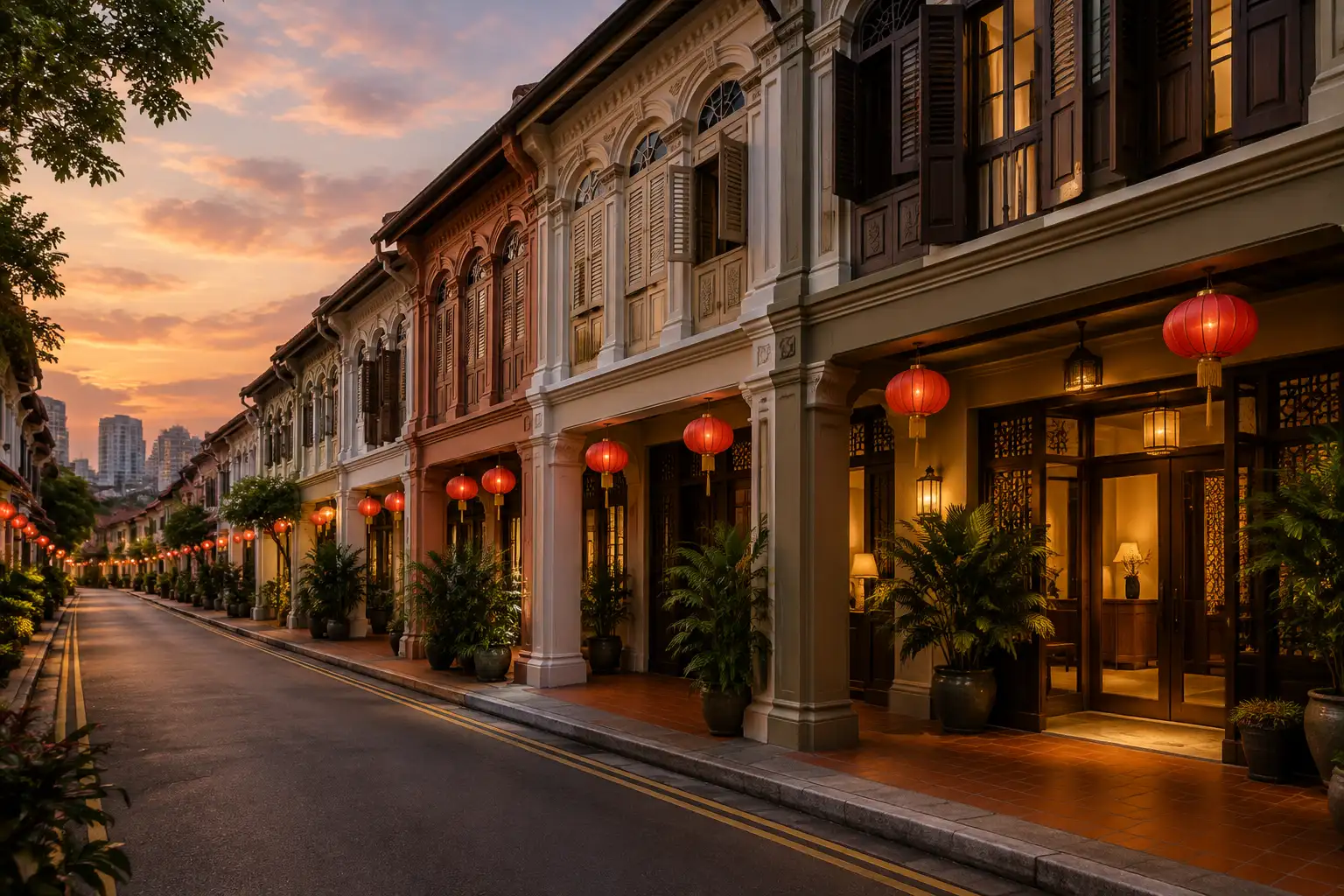
Bukit Pasoh shophouses
A short curved street of conserved terraces and former clubhouses between Chinatown and Tanjong Pagar — quieter than Club Street, more mixed than a pure F&B strip, and one to underwrite lot by lot.
The short answer
Bukit Pasoh Road is a short conserved street in District 2 on the Chinatown–Tanjong Pagar edge, historically home to Chinese clubs and clan associations. Today it mixes boutique hospitality, offices, residences and a few surviving association buildings. Outram Park, Maxwell and Chinatown MRT are all within walking distance.
Bukit Pasoh at a glance
- Postal district
- District 2 (Chinatown / Tanjong Pagar), within the D01–02 CBD hub
- Conservation status
- Within a URA Conservation Area (listed by URA as the Chinatown – Bukit Pasoh Conservation Area); façade and streetscape controls apply
- Typical stock
- Two- and three-storey conserved shophouses and terraces, plus a few larger club and association buildings
- Heritage identity
- Long associated with Chinese clubs and clan associations, including the Ee Hoe Hean Club at 43 Bukit Pasoh Road
- Dominant use
- Mixed: boutique hospitality, offices, studios, residences and association use; verify zoning per lot
- Nearest MRT
- Outram Park (EW16/NE3/TE17), Maxwell (TE18) and Chinatown (NE4/DT19), each a walk away
- Tenure
- Mixed; verify each title on SLA before assuming freehold or leasehold
- Stamp duty lens
- Depends on zoning and use: residential lots carry BSD plus possible ABSD; commercial lots follow a different pathway
- Best for
- Boutique-hotel and studio operators, owner-occupiers, patient heritage buyers
Bukit Pasoh shophouses at a glance
Searching for Bukit Pasoh shophouses usually leads to a handful of conserved terraces and former clubhouses rather than a long list of listings, because stock on this street is small and rarely changes hands. Availability is best checked through the commercial shophouses for sale page, URA transaction records and direct agent enquiries.
Bukit Pasoh Road is a compact street that curves along the base of the rise between Neil Road, Kreta Ayer Road and the Outram edge of Chinatown. It is not a high-street. There is no dense F&B row as on Club Street and no tourist footfall as on Pagoda Street. What you find instead is a quiet run of restored terraces, a few larger institutional buildings and a pocket of small boutique hospitality that trades on calm and character.
That quietness is the whole story for a buyer. Bukit Pasoh rewards people who want a conserved address near the CBD without the weekend crowd, and it penalises people who assume every conserved CBD lot can be leased to a restaurant. Our summary-level Tanjong Pagar area briefing and the District 01–02 CBD hub give the wider frame; this page focuses on the street itself.
History of Bukit Pasoh Road
Bukit Pasoh grew up as part of the Chinese commercial and residential quarter that expanded south-west of the Singapore River in the late nineteenth and early twentieth centuries. As the Chinese population grew, merchants and community leaders formed clubs and associations, which needed clubhouses close to where their members lived and traded. This part of town became a natural home for them.
The best-documented example sits at 43 Bukit Pasoh Road. According to URA's conservation portal, the Ee Hoe Hean Club was founded in 1895 by Hokkien community leaders for the wealthy Chinese elite, although membership was open to Chinese of any clan or dialect. URA notes that members were involved in the politics of early twentieth-century China and that the club supported the 1911 Xinhai Revolution. Wikipedia-derived accounts of Club Street say the club moved between Duxton Road, Club Street and eventually Bukit Pasoh Road in 1925, which is why the club story links this street so closely to its neighbour.
Through the twentieth century Bukit Pasoh remained associated with clubs, associations and residential terraces, and the area also carried a reputation for martial-arts and community activity. We do not attempt to list individual associations here, because buildings change hands and use over time and we cannot verify each one. The reliable point is the pattern: this was a street of community institutions rather than a street of shops, and that pattern still shapes its character.
The conservation story followed in the late twentieth century, when Singapore moved away from wholesale clearance in the Chinatown area and began protecting entire streets of historic buildings. Today URA lists the street within the Chinatown – Bukit Pasoh Conservation Area, so the survival of the terraces is an outcome of policy rather than accident.
Bukit Pasoh Road shophouse stock and architectural styles
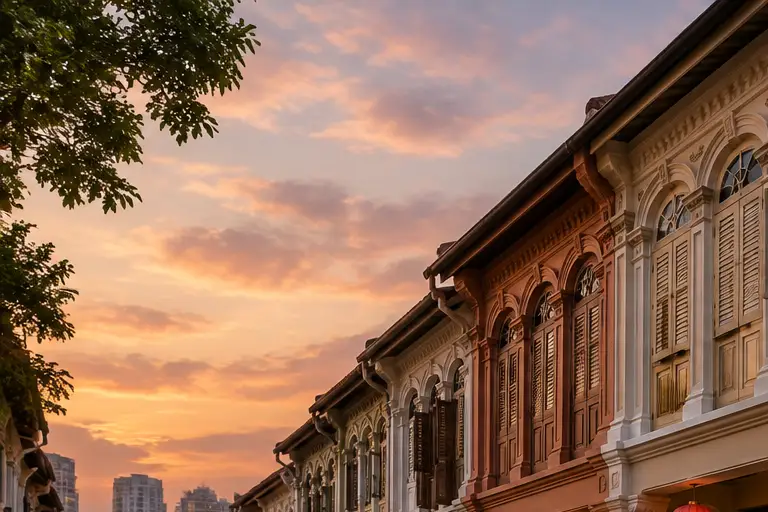
The conservation street is short and gently curved, and most of the interest is in the terraces along both sides. Typical buildings are two or three storeys, with plastered façades, timber windows and louvred shutters, and, on many of the units, a covered five-foot-way. Several buildings use the residential-front pattern that URA describes as timber casement windows flanking a double-leafed timber door, and URA guidelines say such residential fronts are to be retained and restored regardless of land-use zoning.
Stylistically the street includes a mix of eras. Some terraces show the decorative richness of earlier shophouse design, with ornate plaster, glazed tiles and carved details, while others reflect simpler, more geometric late-period and Art Deco influences. A few larger buildings, built for clubs and associations rather than family trade, have broader frontages, double-height halls and civic features that you will not find on a standard narrow shophouse.
What to expect to see, and what URA will care about, includes:
- Retained front façades, including the residential-front pattern of timber casement windows and double-leafed doors where it exists.
- Original or restored roof form with clay tiles; changes to pitch, material and visible profile are tightly controlled.
- Five-foot-ways where present, treated as continuous circulation space.
- Party walls, which make structural works and neighbour coordination part of any serious renovation.
- Larger institutional footprints on former club sites, whose layouts do not follow a typical shophouse plan.
- Rear extensions of mixed age; compare the physical building with approved plans before you rely on floor area.
Typical uses on Bukit Pasoh
Use on Bukit Pasoh is genuinely mixed, and that is the main thing to understand. You will find boutique hospitality, small offices, design and creative studios, private residences and a few surviving community or association uses. Which of those is permitted in a given building depends on its Master Plan zoning and on URA's conservation use guidelines, so you must check the specific lot rather than infer from a neighbour.
Boutique hotels and serviced stays have a track record on this street and on nearby Keong Saik Road, where the existing briefing on Keong Saik and Duxton Hill describes a boutique hotel and bar identity. Heavy F&B is a harder sell here than on the dining corridors because the street is quieter and not every unit is zoned for restaurant use. If your plan is a restaurant or bar, read the F&B licensing and change-of-use guide first, and compare Club Street where commercial dining is the norm.
URA conservation status and what it means for owners
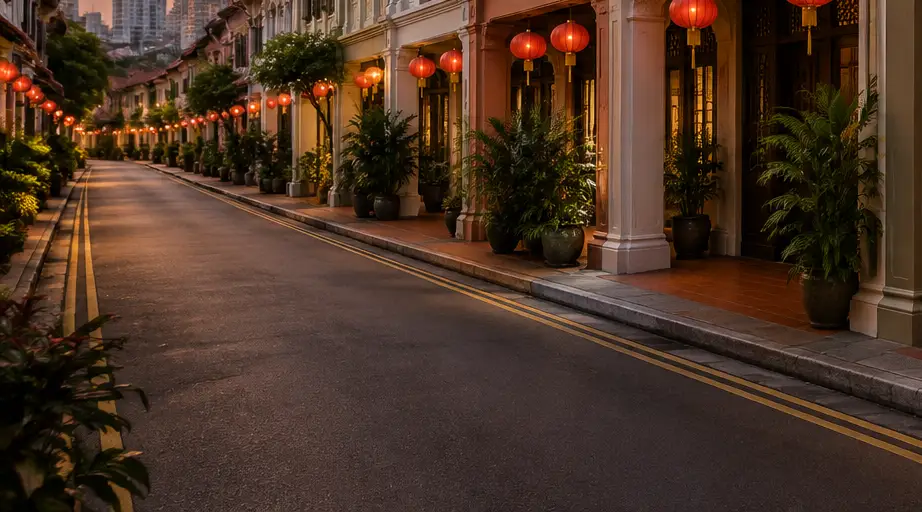
Bukit Pasoh Road sits within a URA Conservation Area, which URA's portal names as the Chinatown – Bukit Pasoh Conservation Area. In practice that means façades, roofs, five-foot-ways and key architectural features are to be retained and restored, and URA states that conservation permission is required before additions and alterations and before a new use can begin. For buildings in historic districts, URA also publishes specific restoration guidelines, which you can request for a lot, along with signage and use guidelines.
The practical consequence is that an owner cannot treat the front of the building as a blank canvas. Interiors and rear portions have more room to adapt, but everything is done within approved parameters and usually with a qualified conservation professional. Our URA conservation buyer manual explains the approval path, and the conservation shophouses for sale page shows how we frame the category more generally.
Transport and MRT access
Bukit Pasoh is served by several stations rather than one. Outram Park is a three-line interchange (East-West, North East and Thomson-East Coast lines), Maxwell is on the Thomson-East Coast Line, and Chinatown is on the North East and Downtown lines. SRX's location data for the road lists these three stations as the nearest. Exact walking times vary by which end of the street you start from and by the route you take through Chinatown, so treat any quoted time as approximate and test it on foot.
Tanjong Pagar MRT on the East-West Line is further along but still reachable, and the CBD towers around Tanjong Pagar Centre are a short walk. Station codes and lines can change as the network is extended, so confirm current details on the LTA map before you rely on them in a listing or a business plan. Driving is possible, but kerbside parking in the conservation precinct is tight and many visitors will arrive by taxi or ride-hail.
Bukit Pasoh shophouse for sale: price and rent context
As of November 2026 we do not publish a headline price per square foot or rent figure for Bukit Pasoh. The street has few lots, they trade infrequently, and they differ widely in land area, tenure, zoning and condition. An average built from a handful of unlike transactions would mislead more than it informed.
The directional picture is that Bukit Pasoh is a quieter, more mixed micro-market than the dining corridors, so its pricing and rents should be compared with similar heritage stock in the same bracket, not simply read off Club Street. To get evidence, use URA's transaction search or REALIS, filter by street name, and read the land area, tenure, zoning and date on each record. For rentals, compare asking rents against comparable units on the same street and on nearby conserved streets, and ask for the lease terms rather than a headline number. The shophouses for rent page explains how we think about tenant demand.
Dining, retail and lifestyle around the street
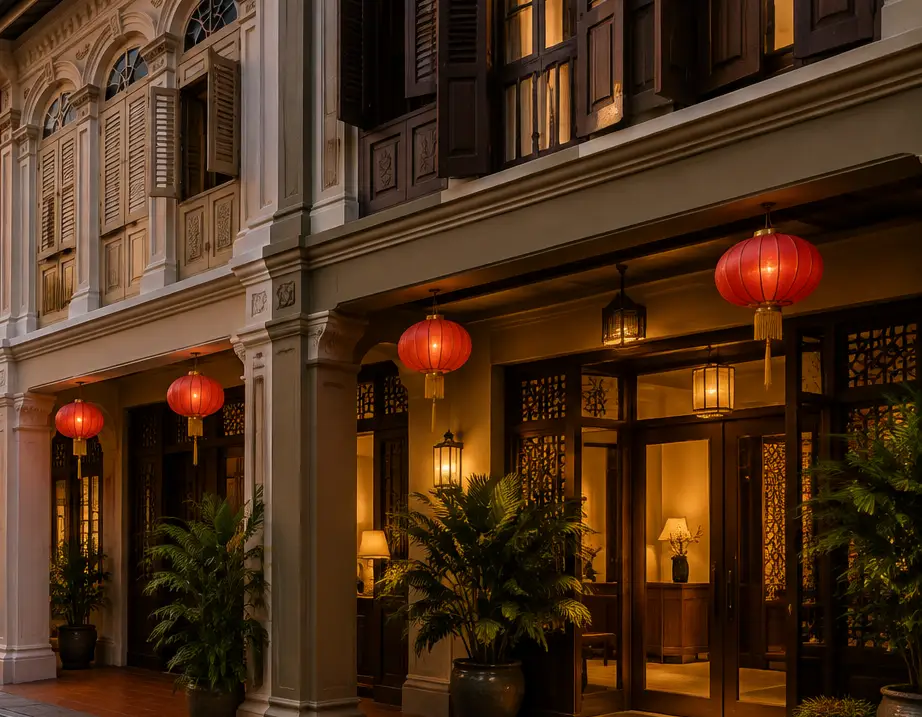
Bukit Pasoh itself is quiet. Its lifestyle value is the surrounding area: Chinatown's food streets and Maxwell Food Centre on one side, the Tanjong Pagar dining belt on the other, and the Neil Road and Duxton terraces beside it. Day-to-day, you are a short walk from hawker food, offices and shops, but you are not living on a nightlife strip. We make no claims about which individual venues are open at any time, since tenancies turn over quickly and you should check on the day.
For comparison within the same heritage belt, Duxton and Neil Road have a more residential flavour, while Kreta Ayer is busier and more trade-oriented.
Investment and living angle
The investment case on Bukit Pasoh is scarcity, location and operator niche rather than raw footfall. Conserved heritage buildings cannot be replicated, the street sits close to the CBD, and a quiet street suits boutique stays, studios and owner-occupation. The risk is that the buyer pool can be narrower than on the dining corridors and that use restrictions may limit your exit options. Underwrite a realistic second buyer before you commit.
Stamp duty depends on how the lot is zoned and used, not on how it looks. A building zoned and used as a commercial shophouse follows a different pathway from a residential terrace, and some units in this part of town are mixed or residential-leaning, in line with our existing view of the Blair Plain and Neil Road side of the belt. Buyer's Stamp Duty applies broadly, and Additional Buyer's Stamp Duty may apply to residential property depending on your profile; rates are set by IRAS and change, so verify them. Our commercial versus residential ABSD breakdown explains the distinction, and the freehold shophouses guide covers tenure.
Holding costs include conservation-grade maintenance, damp and termite management, and insurance for heritage fabric. For wider context on the category, read the 2026 conservation shophouse investing pillar.
Due-diligence checklist for a Bukit Pasoh shophouse
Before you make an offer, work through the following.
- Confirm tenure, land area and any restrictions through an SLA title search.
- Check Master Plan zoning and the conservation use guidelines for the exact lot on URA SPACE.
- Request the Specific Restoration Guidelines for the building and confirm what must be retained.
- Compare approved plans with what is physically built, especially rear extensions and attic works.
- Commission a structural survey that covers party walls, roof timbers and drainage.
- Confirm the permitted use and the approvals needed before a change of use, before you price your intended business.
- Ask your lawyer to review stamp-duty exposure for your buyer profile before the option is exercised.
Nearby neighbourhoods
Club Street and Ann Siang Hill sit just north and are the nearest dining corridors; see Ann Siang Hill for the steeper, more intimate fork. To the south-west, Outram and Neil Road carry a more residential feel. The full list lives on the neighbourhoods hub.
Market commentary on this page is directional and reflects our reading as of November 2026. It is not a valuation, quotation or offer. Verify zoning, conservation status, tenure and approved use on URA SPACE, an SLA title search and the lot's planning history before you bid. See all Singapore shophouse neighbourhoods or the parent hub, District 01–02 CBD.
Frequently Asked Questions
What is Bukit Pasoh Road known for?+
It is known as a conserved street of terraces and former clubhouses historically linked to Chinese clubs and clan associations, including the Ee Hoe Hean Club at 43 Bukit Pasoh Road. Today it mixes boutique hospitality, offices and residences.
Is Bukit Pasoh a conservation area?+
Yes. URA's conservation portal lists the street within the Chinatown – Bukit Pasoh Conservation Area, so façades, roofs and streetscape elements must be retained and conservation permission is required for works and new uses.
Which MRT station is nearest to Bukit Pasoh Road?+
Outram Park, Maxwell and Chinatown stations are all in walking distance, depending on which end of the street you start from. Check the LTA map for current lines and interchange details.
Can I open a restaurant or bar on Bukit Pasoh Road?+
It depends on the lot. Zoning and URA use guidelines vary between buildings, and conservation permission is required before a new use. Check the specific unit before you plan a restaurant or bar.
Are Bukit Pasoh shophouses commercial or residential?+
Both exist. The street has a mix of commercial, hospitality and residential use, so zoning must be confirmed per lot on URA SPACE rather than assumed from the neighbours.
Will I pay ABSD on a Bukit Pasoh shophouse?+
It depends on zoning and use. Residential property can attract Additional Buyer's Stamp Duty depending on your profile, while commercial property follows a different pathway. Rates are set by IRAS and change, so verify them before committing.
Is there a Bukit Pasoh shophouse for sale right now?+
Availability changes and the street has few lots, so we do not list stock here. Check current listings, ask agents who work the Chinatown–Tanjong Pagar belt, and search URA caveats to see which buildings have traded.
Can I rent a shophouse on Bukit Pasoh Road?+
Occasionally. Units come to the market infrequently and permitted use varies by lot, so confirm zoning and conservation use guidelines before you sign a lease. See our shophouses for rent page for how to search.
How much does a Bukit Pasoh shophouse cost?+
Prices vary widely by land area, tenure, zoning and condition, and the street has few transactions. As of November 2026 we recommend pulling URA transaction records for the specific street rather than relying on an average.
How is Bukit Pasoh different from Club Street?+
Club Street is a busier dining and bar corridor with freehold commercial shells, while Bukit Pasoh is quieter and more mixed, with boutique hospitality, offices, residences and association buildings.
Is Bukit Pasoh good for a boutique hotel?+
The street has a record of boutique hospitality and a calm setting, but permission depends on the zoning and conservation use guidelines for each lot. Confirm permitted use before you underwrite a hotel plan.