
D01–02 · CBD
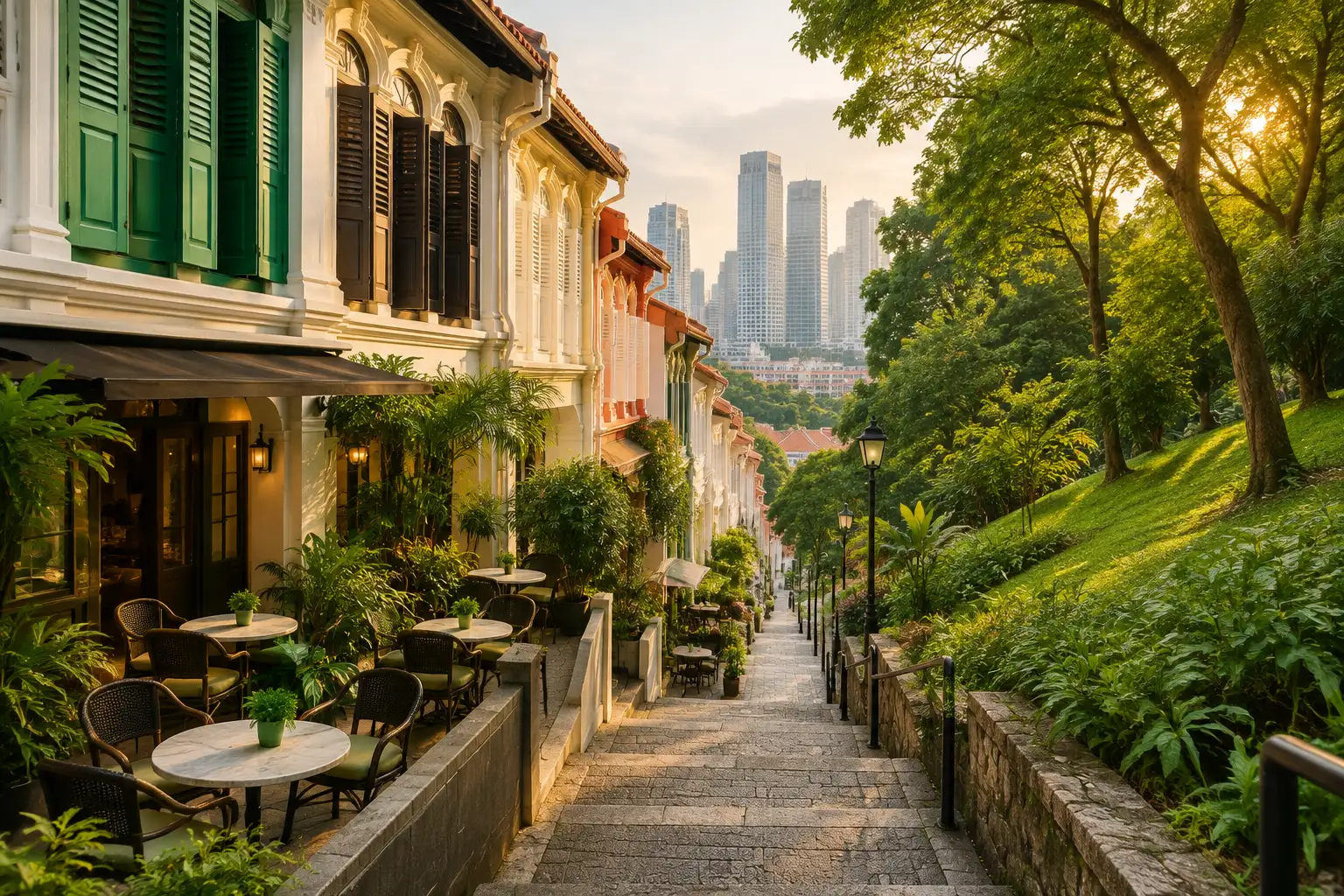
Ann Siang Hill shophouses
A steep, one-way conserved lane and small hill park between Club Street and South Bridge Road — an intimate fork of the Chinatown dining belt with its own gradient, servicing and buyer logic.
The short answer
Ann Siang Hill is a small hill and one-way road in Chinatown, linking Club Street and Ann Siang Road to South Bridge Road. Its shophouses were mostly built between 1903 and 1941 and are now restored for dining, bars and offices. Telok Ayer MRT is the nearest station, and zoning must be checked lot by lot.
Ann Siang Hill at a glance
- Postal district
- District 2 (Chinatown / Tanjong Pagar), within the D01–02 CBD hub
- Namesake
- Chia Ann Siang, a wealthy businessman; the hill was earlier known as Scott's Hill
- Conservation status
- Within the Chinatown Conservation Area; façade, roof and streetscape controls apply
- Typical stock
- Two- and three-storey restored shophouses and terraces, mostly built between 1903 and 1941
- Dominant use
- Restaurants, bars, offices and some residential and hospitality; verify per lot
- Green space
- Ann Siang Hill Park at the end of Ann Siang Road
- Nearest MRT
- Telok Ayer (DT18); Chinatown (NE4/DT19) and Maxwell (TE18) are also within walking distance
- Tenure
- Mixed; verify each title on SLA rather than assuming freehold
- Stamp duty lens
- Commercial-zoned lots follow a different pathway from residential; confirm zoning before assuming either
Ann Siang Hill shophouses at a glance
Ann Siang Hill is a short, steep street with a small park at its crown, and the shophouses along it step up the slope in tight, colourful rows. Together with neighbouring Ann Siang Road and Club Street it forms one of the most photographed conservation corridors in the CBD fringe. If you are searching for an Ann Siang shophouse, the first thing to know is that the stock is small, the gradient is real and each building is different.
Our existing Club Street and Ann Siang briefing treats the two as one dining cluster, which is accurate at summary level. This page separates the hill from its neighbour so you can see where it behaves differently. For the sister street, see Club Street.
History of Ann Siang Hill and Ann Siang Road
Singapore's national library describes Ann Siang Road as named after Chia Ann Siang, and reference accounts say the hill was originally called Scott's Hill. Chia Ann Siang was a wealthy businessman, and the street name preserves his place in the Chinese commercial community of the nineteenth century. Most of the buildings on the hill and along Ann Siang Road were constructed between 1903 and 1941, according to the library's account.
The area was a place of community institutions and small trades. Wikipedia-derived accounts say it was a traditional site of remittance houses, where migrants sent money to families in China, and that letter writers and calligraphers worked from the five-foot-ways to help illiterate migrants write home. The same accounts describe Ann Siang Road as a traditional home of clan associations and exclusive social clubs. We treat those details as historical colour and recommend checking individual building histories with the National Heritage Board before using them in a pitch.
Nearby landmarks help frame the district. The first Anglo-Chinese School in Singapore, started by Methodist missionaries on 1 March 1886, stood at 70 Amoy Street near Ann Siang Road and is now ACS House, a URA-marked historic site. The Pondok Peranakan Gelam Club on Club Street, once home to a Bawean-Malay community from 1932 to 2000, was declared a historic site in 2000. These are not shophouse investment facts, but they show why this small corner has such a layered identity.
Ann Siang shophouse stock, streets and styles
The key streets are Ann Siang Hill, the one-way road that climbs from Club Street towards South Bridge Road, and Ann Siang Road, which begins at Ann Siang Hill and runs through to Kadayanallur Street. Ann Siang Hill Park sits at the end of Ann Siang Road, surrounded by shophouses near Amoy Street and Club Street. This produces a more varied streetscape than a flat linear row: terraces step with the slope, and some units have split levels or uneven rear access.
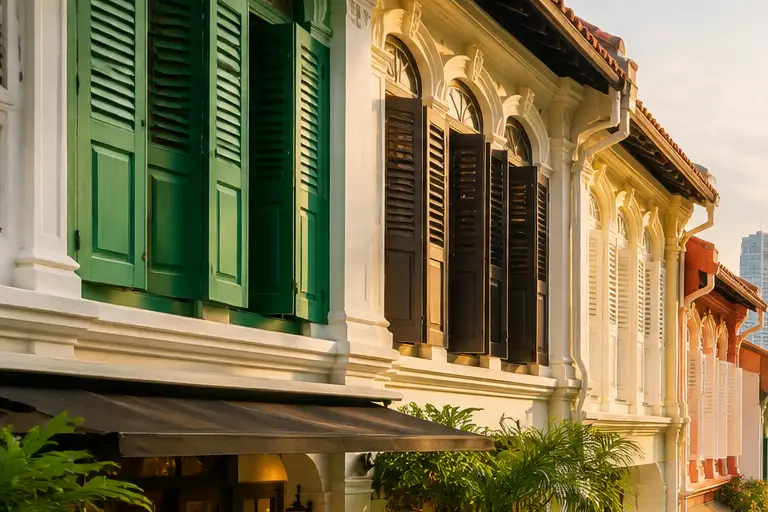
Architecturally, a 1903–1941 build window spans several shophouse idioms, from richer decorative detailing in earlier buildings to simpler, more geometric late-period façades. Expect timber shutters, plaster mouldings, glazed tiles and covered five-foot-ways, though the specific mix differs by lot. Features worth checking on any Ann Siang Hill unit include:
- Slope and servicing: loading, bin stores and kitchen exhaust routes are harder on a one-way hillside.
- Retained façades and five-foot-ways, treated as conserved elements.
- Party walls and stepped rooflines that make renovations a neighbour-coordination exercise.
- Rear access and fire-escape arrangements, which differ lot to lot on a hill.
- Mixed-age rear extensions; verify approved floor area against what is built.
Typical uses on Ann Siang Hill and Ann Siang Road
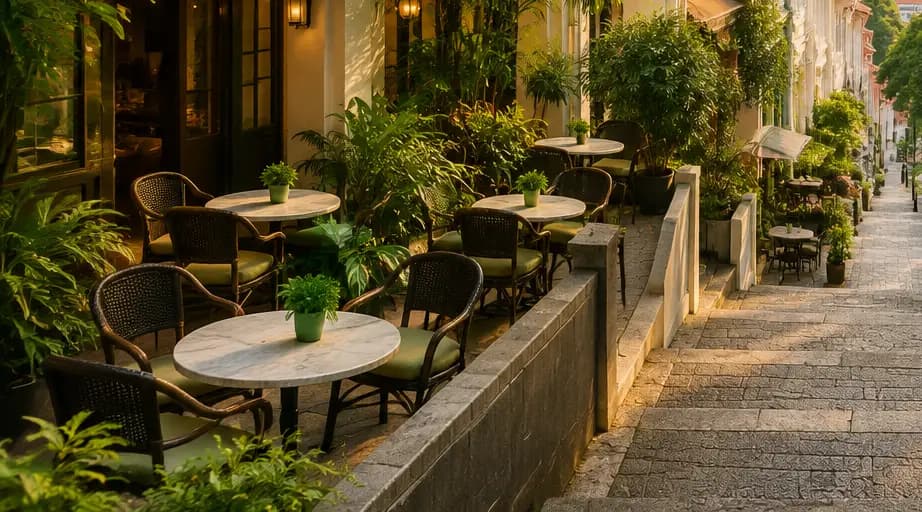
The street is best known for dining and drinking, with restaurants, bars and cafés on the lower floors and offices, studios or serviced uses above. Some buildings are residential or hospitality. Because the Wikipedia-derived account lists the nearby streets as lined with restaurants, bars and galleries, that is the base case, but permitted use is always a lot-level question and tenants change fast, so we make no claims about individual operators.
If you are planning an F&B concept, read the F&B licensing and change-of-use guide before shortlisting. On a hill with narrow lanes, practicalities such as grease traps, extraction routes and deliveries matter as much as zoning. For a flatter, more linear row, compare Tras Street.
Chinatown Conservation Area status and what it means
NLB's account places the shophouses on Ann Siang Road under the Chinatown Conservation Area. In practice, front façades, roof forms, five-foot-ways and key architectural elements are to be retained and restored, and URA conservation permission is required for additions, alterations and new uses. Signage is also regulated, which matters for tenants on a visible hillside frontage. Check the specific guidelines for the building on URA's conservation portal.
Our URA conservation buyer manual covers the approval route in detail. The park, the views and the tight street width also make neighbour and public-realm sensitivities more visible than on a purely commercial street.
Transport and MRT access
Reference sources give Telok Ayer MRT (Downtown Line, DT18) as the nearest station to Ann Siang Hill. Chinatown station (North East and Downtown lines, NE4/DT19) and Maxwell (Thomson-East Coast Line, TE18) are also within walking distance, and Tanjong Pagar on the East-West Line is a short trip beyond. Exact walking times depend on the route and the slope, so test them on foot.
Taxis and ride-hail can reach the lower end of the hill, but the one-way system and the narrow roads limit options at the top. Treat loading and customer drop-off as a design issue for any commercial use. Confirm current MRT lines on the LTA map before promoting an address.
Ann Siang shophouse for sale or rent: price and rent context
As of November 2026 we do not quote a price per square foot or a rent for Ann Siang Hill. Lots are few, tenure and zoning differ, and a single trade can swing any average. What can be said directionally is that the Ann Siang and Club Street cluster is one of the more liquid parts of the conservation belt, a point echoed in our existing area briefing, but liquidity is not a guarantee of price on any given lot.
To get evidence for an Ann Siang shophouse for sale, pull URA transaction records or REALIS data by street, then read land area, tenure, zoning and date for each. For rent, ask for the last few lease terms on the same street rather than relying on headline asking rents, and check whether any rent-free or fit-out periods applied. Our shophouses for rent and commercial shophouses for sale pages show how to start the search.
Dining, retail and lifestyle on the hill
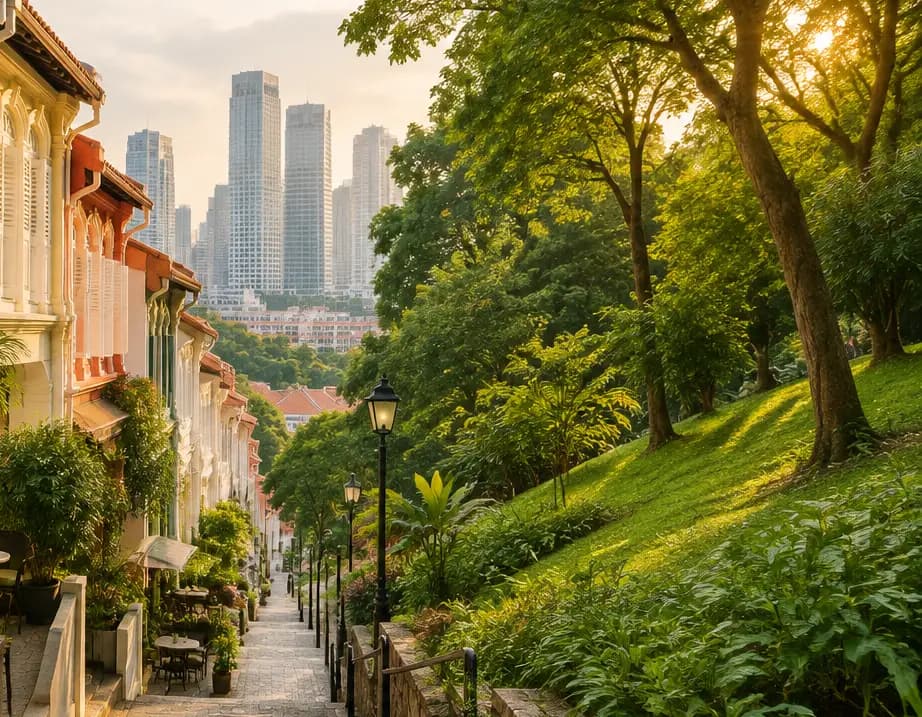
Evenings are the peak: restaurants and bars fill the lanes, and the park offers a small green break above them. Daytime is calmer, with office workers from the CBD and Chinatown passing through. The mix is similar to Club Street, but the hill is more compact and more intimate, which suits concepts that benefit from a destination feel more than passing footfall.
For nearby alternatives, Telok Ayer is the heritage-temple and F&B street to the east, and Chinatown is the wider tourism and trade district to the west. We make no claims about which individual venues are open.
Investment and living angle
The case for Ann Siang Hill is scarcity, a recognisable address and a deep tenant pool for evening dining. The risks are operating complexity on a slope, a market sensitive to F&B cycles and the narrowness of a very small stock. Underwrite your own occupancy, and a realistic exit buyer, rather than the peak weekend atmosphere.
Stamp duty depends on zoning and use. A commercial-zoned shophouse follows a different pathway from a residential one, so confirm the Master Plan zoning on URA SPACE before relying on a particular stamp-duty outcome. Buyer's Stamp Duty applies broadly and ABSD may apply to residential property depending on your profile; rates are set by IRAS and change, so verify current figures. Our commercial versus residential ABSD breakdown and freehold shophouses guide go further.
Due-diligence checklist for an Ann Siang Hill shophouse
Before you make an offer, work through the following.
- Confirm tenure and land area through an SLA title search.
- Check Master Plan zoning and conservation guidelines for the lot on URA SPACE.
- Review approved plans against the built condition, especially rear extensions and attic works.
- Test kitchen extraction, grease trap and deliveries on the specific slope.
- Commission a structural and building survey covering party walls and roof timbers.
- Review existing leases, signage approvals and licences.
- Ask your lawyer to review stamp-duty exposure before the option is exercised.
Nearby neighbourhoods
Club Street is the immediate neighbour. For quieter heritage streets to the south-west, look at Bukit Pasoh, and for the Chinatown core see Kreta Ayer. The full list is on the neighbourhoods hub.
Market commentary on this page is directional and reflects our reading as of November 2026. It is not a valuation, quotation or offer. Verify zoning, conservation status, tenure and approved use on URA SPACE, an SLA title search and the lot's planning history before you bid. See all Singapore shophouse neighbourhoods or the parent hub, District 01–02 CBD.
Frequently Asked Questions
Where is Ann Siang Hill and what is it known for?+
Ann Siang Hill is a small hill and one-way road in Chinatown linking Club Street and Ann Siang Road to South Bridge Road. It is known for restored shophouses and a small park, and today for restaurants and bars.
Who was Ann Siang Road named after?+
Singapore's National Library says Ann Siang Road was named after Chia Ann Siang, a wealthy businessman. Reference accounts also say the hill was originally known as Scott's Hill.
When were the Ann Siang Hill shophouses built?+
Most buildings on Ann Siang Hill and Ann Siang Road were built between 1903 and 1941, according to the National Library's account. Individual dates vary by building.
Are Ann Siang Hill shophouses in a conservation area?+
Yes. They fall within the Chinatown Conservation Area, so façades and key features must be retained and URA conservation permission is required for works and new uses.
Which MRT station is closest to Ann Siang Hill?+
Reference sources give Telok Ayer MRT on the Downtown Line as the nearest. Chinatown and Maxwell stations are also within walking distance. Confirm current lines on the LTA map.
How is Ann Siang Hill different from Club Street?+
Both belong to the same dining cluster. Ann Siang Hill is steeper and more compact, with a small park and tougher servicing, while Club Street is flatter and a little longer.
Is there an Ann Siang shophouse for sale?+
Stock is small and availability changes, so check current listings and URA transaction records. Confirm zoning, tenure and conservation guidelines for the specific lot before you shortlist.
Can I rent an Ann Siang Hill shophouse for a restaurant?+
Possibly, but permitted use depends on the lot's zoning and URA guidelines, and conservation permission is needed before a new use. Review the F&B licensing guide and ask for past lease terms.
Will I pay ABSD on an Ann Siang Hill shophouse?+
It depends on zoning and use. Commercial-zoned property follows a different pathway from residential property, which can attract ABSD. Rates are set by IRAS and change, so verify them before committing.
Is Ann Siang Hill a good investment?+
It offers scarcity and a recognisable address, but the stock is small, the slope complicates operations and the market follows F&B cycles. Underwrite your own occupancy and a realistic exit buyer.