
D01–02 · CBD
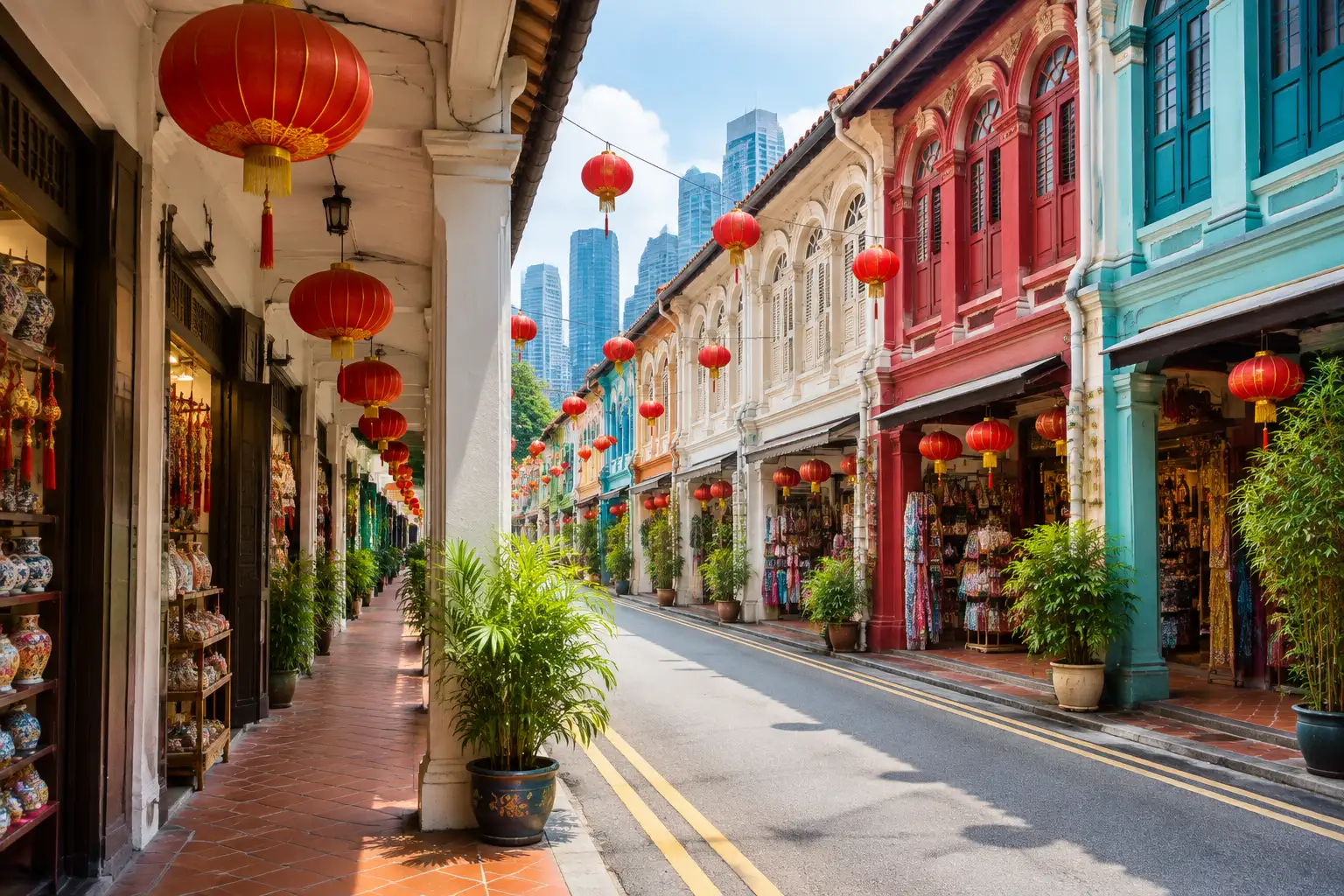
Kreta Ayer shophouses
The historic core of Chinatown's shophouse belt — dense, commercially zoned and heritage-controlled, where trade, temples and tourism share the same five-foot-ways.
The short answer
Kreta Ayer is the heart of Singapore's Chinatown, a district of conserved pre-war shophouses around Kreta Ayer Road and Kreta Ayer Square. It sits inside the Chinatown Conservation Area, mostly in commercial use, and is served by Chinatown MRT. Buyers face façade controls, tight use rules and heavy tourist-driven trading.
Kreta Ayer at a glance
- Postal district
- Chinatown sits mainly in District 2 (Tanjong Pagar–Chinatown), part of the D01–02 CBD hub
- Conservation status
- Within the Chinatown Conservation Area (URA); façade, roofscape and five-foot-way controls apply
- Typical stock
- Two- and three-storey shophouses, with some larger civic and temple buildings nearby, mostly pre-war
- Dominant use
- Retail, F&B, services and tourism trade, with offices or residential above in some lots
- Nearest MRT
- Chinatown (NE4 on the North East Line and DT19 on the Downtown Line)
- Tenure
- Mixed freehold and leasehold; confirm per lot on the title
- Stamp duty lens
- Commercial-zoned lots follow the commercial pathway; any residential-zoned unit follows residential rules
- Best for
- Operators, long-hold heritage investors, buyers who value footfall
Kreta Ayer at a glance
Kreta Ayer is one of the oldest and most recognisable parts of Chinatown. The name comes from the Malay words for "water cart", a reference to the carts that once carried water through the district. Today it is the part of Chinatown where narrow streets, covered walkways and rows of two- and three-storey shophouses sit alongside temples, a historic square and a busy MRT interchange.
This page is a closer look at the Kreta Ayer pocket of Chinatown. It is more specific than the wider Chinatown neighbourhood guide and builds on our Chinatown and Kreta Ayer area briefing. If you are comparing the wider CBD conservation belt, the District 01–02 CBD hub lists every sub-area side by side.
The short version for a buyer: this is a commercial, heritage-controlled, high-visibility location. It rewards operators and investors who understand conservation rules and who are comfortable with a trading environment shaped by tourists as much as by locals.
History of Chinatown shophouses in Kreta Ayer and when they were built
Singapore's colonial town plan, drawn up in the early nineteenth century, allocated the area south-west of the Singapore River to the Chinese community. Kreta Ayer developed as part of that Chinese quarter, and became densely settled with shophouses used for trade and for crowded shared living above the shops. Street names, clan associations and temples established in the nineteenth century still anchor the district's identity.
Kreta Ayer was historically known for its entertainment, street life and busy markets. Kreta Ayer Square has long been a gathering point, and the area is closely associated with Chinese opera, Lunar New Year street celebrations and traditional trades. We do not list specific dates for individual venues here; for firm dates, use the National Heritage Board's Roots.gov.sg and the Singapore Infopedia entries on Chinatown.
Post-war redevelopment and slum clearance reshaped Singapore's centre, and Chinatown was no exception. By the late 1980s the authorities had decided to retain a core of historic shophouses rather than clear them, and the Chinatown Conservation Area was designated as part of the first major conservation programme. Many shophouses were restored in the following years, which is why the streetscape you see today is cleaner and more uniform than the lived-in building stock of earlier decades.
Chinatown shophouse architecture and street stock
Kreta Ayer Road and the small streets around Kreta Ayer Square form the core of the pocket. They connect into the busier Chinatown spines such as New Bridge Road and Eu Tong Sen Street, and sit close to Neil Road and Keong Saik Road on the Tanjong Pagar side. The block pattern is tight, with many short frontages, which means that individual shophouse lots are often narrow and deep.
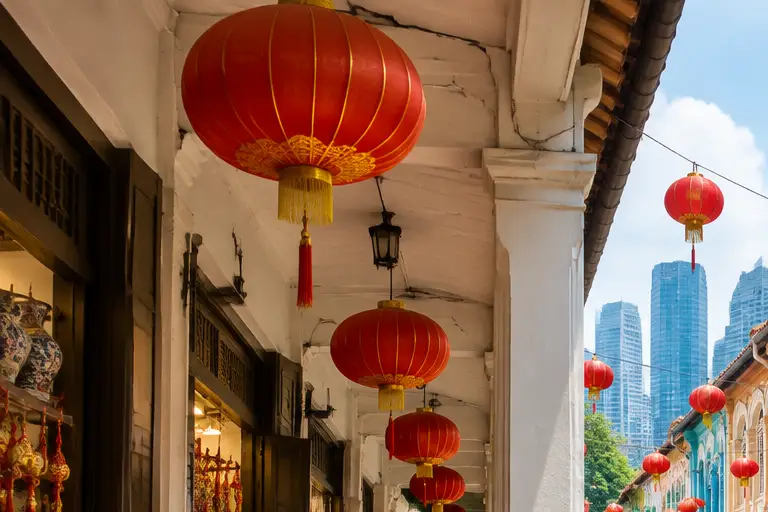
The stock reflects several generations of design. Earlier houses show Early and Transitional influences, with timber windows, ornamental fascia and pitched clay-tile roofs. Later houses lean towards Late Shophouse and Art Deco features: flatter pilasters, simpler parapets and more geometric detailing. In practice you will find a mix in the same row, because shophouses were built and rebuilt lot by lot. What you should expect to see, and expect URA to care about, includes:
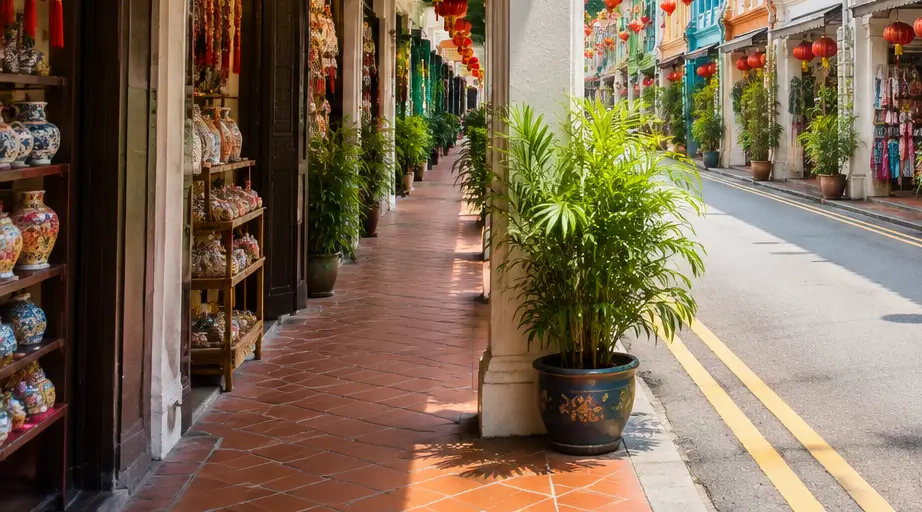
- Continuous five-foot-ways along the ground floor, which must remain open for public circulation.
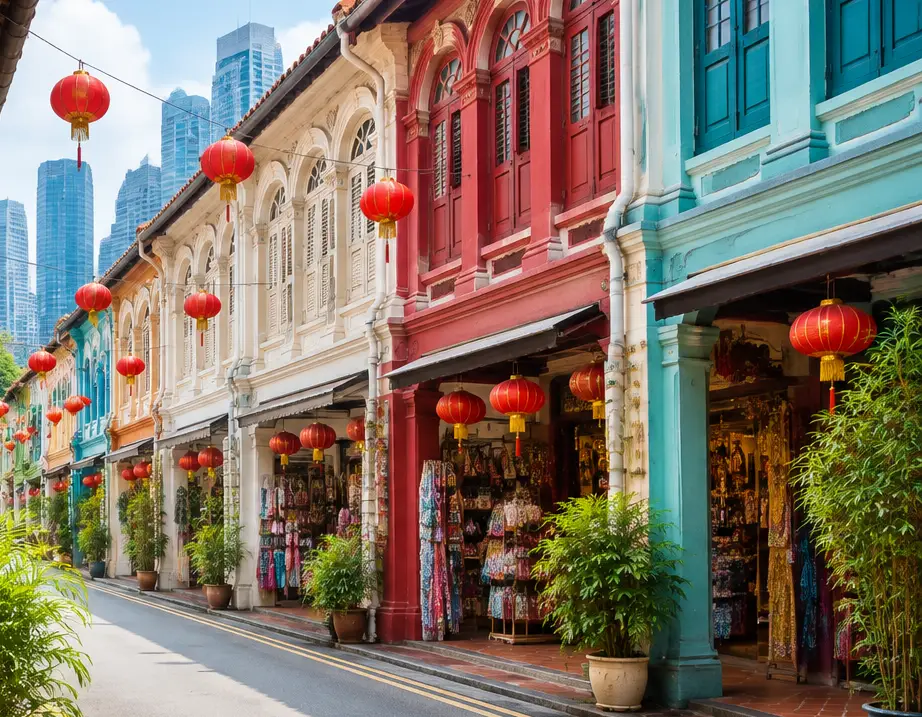
- Upper-floor façades with timber shutters, decorative plasterwork and, in some lots, glazed tiles.
- Pitched roofs with clay tiles, ridge lines and roof forms that are treated as conserved elements.
- Narrow, deep plans with an air well or rear courtyard, which shapes how interiors can be re-planned.
- Shared party walls along the row, which creates structural and neighbour-consent issues for serious works.
- Rear extensions of varying vintage, whose approved status should always be checked against the plans.
Typical uses in Kreta Ayer
Ground floors are mainly retail, food and services. Typical operators include souvenir and gift shops, traditional medical halls, snack and dessert outlets, tea and bakery shops and casual restaurants. Upper floors are used for storage, offices, clan or association space, and in some lots as residential or serviced accommodation, subject to what the zoning and approvals actually allow.
Change of use is the practical gate. Moving a shop to an eating house, or adding customer seating on an upper floor, needs the right approvals and has to meet fire, sanitation and drainage rules in a century-old building. Read the F&B licensing and change-of-use guide before you assume a unit can host a kitchen. Chinatown has a different trading profile from the nightlife strips of Club Street and Ann Siang Hill: it is more tourist- and day-trade-led, and the tenant mix changes accordingly.
Are Chinatown shophouses protected? URA conservation status
Kreta Ayer lies within the Chinatown Conservation Area, one of the conservation areas that URA gazetted under the conservation programme. Within a Conservation Area, front façades, the five-foot-way and the roof form are normally to be retained and restored, and works need approval from URA. Interiors can be adapted within approved parameters, and rear portions may have more flexibility, but the street-facing character is fixed.
For an owner this has three practical consequences. First, supply is permanent: no one can add new shophouses to the street. Second, flexibility is capped: colours, signage, shopfront alterations and roof works are regulated. Third, restoration is specialist work. Our URA conservation buyer manual walks through approvals, qualified-person requirements and common pitfalls. Always confirm the precise conservation category for your lot on URA SPACE rather than relying on a listing description.
Transport and MRT access
Chinatown MRT is the anchor. It is an interchange between the North East Line and the Downtown Line, with exits close to the main shophouse streets. From there you can reach Outram Park, Dhoby Ghaut, Little India and Bugis directly, and the Downtown Line gives a quick connection to Telok Ayer, Bugis and beyond.
Outram Park MRT, on the East-West, North East and Thomson-East Coast lines, is within walking distance of the southern end of Chinatown and makes the area unusually well connected to the airport, Marina Bay and the northern parts of the island. See our Outram neighbourhood guide for the interchange picture. Bus services run along New Bridge Road and Eu Tong Sen Street. Check LTA for current line names and station codes before you quote them in marketing.
For drivers, Chinatown is congested and parking is limited, so most customers and staff arrive on foot or by MRT, taxi or ride-hail. That is a feature of the location, not a bug, but it means loading and servicing arrangements are worth checking before you sign a lease or buy.
Chinatown shophouse for sale: price and rent context
As of November 2026 we do not publish a single headline price per square foot or rental rate for Kreta Ayer. Shophouse lots differ widely in land area, tenure, condition and the approved use of each floor, so an average would be misleading. What can be said directionally is that Chinatown shophouses are priced as commercial heritage assets, and that frontage on a busy street usually commands a premium over a back lane.
To get evidence rather than anecdote, search recent caveats and transactions on URA's REALIS or the public URA property transaction search, filter by the relevant street or postal range, and read the tenure, land area and date of each record. For rental evidence, compare asking and achieved rents on comparable ground floors and look at lease length, rent reviews and who pays for maintenance. If you want to see what is currently available, our commercial shophouses for sale and shophouses for rent pages are good starting points. We avoid quoting yields: they depend too heavily on the individual lease.
Dining, retail and lifestyle in Kreta Ayer
Kreta Ayer is a daytime and evening food-and-shopping destination, with heavy foot traffic around festive periods such as Lunar New Year. The streets are known for traditional food, heritage retail and festival markets, with several temples and clan buildings within walking distance. We make no claims about which individual outlets are open or thriving, because tenancies change quickly and a trading claim could be out of date within weeks.
For visitors the area works well as a walking route that links Chinatown with the quieter streets of Bukit Pasoh and Neil Road. For operators, the point is that footfall is strongly seasonal and tourism-linked, so a business model that relies only on visitors can swing with the calendar.
Investment and living angle
The investment case is a mix of permanent supply, high-visibility location and a trading environment that has survived several property cycles. The risks are conservation-grade maintenance costs, tenant concentration in tourism and the need to manage lease expiries and reviews actively. Freehold lots, where available, are scarce and are discussed in our freehold shophouses guide. The investing in conservation shophouses guide sets out the wider framework.
Stamp duty depends on zoning and use rather than on how a building looks. A shophouse zoned commercial is generally treated as non-residential for stamp duty purposes, whereas a unit that is zoned or approved as residential is treated as residential and may attract Additional Buyer's Stamp Duty. Rates and rules are set by IRAS and change, so check the current position with your lawyer before exercising an option. The commercial versus residential ABSD breakdown explains the distinction.
Living in Kreta Ayer is possible but is not the main reason people buy here. Noise, deliveries and street trading can run into the evening, and residential use is only available where the zoning and approvals allow it. Residents typically value the walkability and the MRT, and accept the noise. If you want a quieter heritage home, compare Spottiswoode or Neil Road instead.
Due-diligence checklist for a Kreta Ayer shophouse
Before you make an offer, work through the following.
- Confirm tenure, land area and any easements through an SLA title search.
- Check Master Plan zoning and the conservation category for the exact lot on URA SPACE.
- Obtain approved plans and compare them with what is physically built, especially rear and upper-floor works.
- Confirm the approved use of each floor and whether an eating-house or other licence has been granted.
- Commission a structural survey covering party walls, roof timbers, drainage and any water ingress.
- Review tenancy terms, rent reviews, repair obligations and any option to renew.
- Ask your lawyer to review stamp-duty exposure for your buyer profile before the option is exercised.
Nearby neighbourhoods
Within a short walk are Tanjong Pagar and Telok Ayer to the south and east, and Outram to the west. For a comparison with other heritage districts, look at Kampong Glam and Little India. The full list lives on the neighbourhoods hub, and our conservation shophouses for sale page shows what is on the market.
Market commentary on this page is directional and reflects our reading as of November 2026. It is not a valuation, quotation or offer. Verify zoning, conservation status, tenure and approved use on URA SPACE, an SLA title search and the lot's planning history before you bid. See all Singapore shophouse neighbourhoods or the parent hub, District 01–02 CBD.
Frequently Asked Questions
When were the shophouses in Chinatown built?+
Most surviving Chinatown shophouses date from roughly the mid-nineteenth century to the 1930s, with different styles marking different decades. Exact dates vary by lot, so check URA records and NHB Roots.gov.sg for a specific building.
Are Chinatown shophouses for sale?+
Occasionally. Whole shophouses trade infrequently and often off-market, so listings are limited. Search URA transaction data for past sales, then check our commercial shophouses for sale page and speak to agents who cover Chinatown.
Where is Kreta Ayer in Singapore?+
Kreta Ayer is part of Chinatown, in the south-west of the Central Area. It is centred on Kreta Ayer Road and Kreta Ayer Square and is served by Chinatown MRT.
What does Kreta Ayer mean?+
Kreta Ayer comes from Malay and refers to water carts. The carts that once supplied water to the district gave the area its name.
Are Chinatown shophouses protected?+
Yes. Kreta Ayer lies within the URA Chinatown Conservation Area, so façades, roof forms and five-foot-ways are controlled and works need URA approval.
Which MRT station is nearest to Kreta Ayer?+
Chinatown MRT, an interchange between the North East Line and the Downtown Line. Outram Park MRT is also within walking distance. Check LTA for current station details.
Can I open a restaurant in a Kreta Ayer shophouse?+
Often yes where the unit is zoned and approved for commercial use, but change of use, licensing, fire and drainage requirements must still be met. Verify the approved use of the specific floor first.
Do I pay ABSD when buying a Kreta Ayer shophouse?+
It depends on zoning and use. Commercial-zoned shophouses are generally treated differently from residential property, but a residential unit may attract ABSD. Rates are set by IRAS and change, so verify before committing.
How much do Kreta Ayer shophouses cost?+
Prices vary widely by land area, tenure, frontage and condition. As of November 2026 we recommend pulling recent transactions for the specific street from URA REALIS rather than relying on averages.
Can foreigners buy shophouses in Kreta Ayer?+
Foreign buyers can generally purchase commercial-zoned shophouses, while residential property is subject to restrictions. Zoning decides which applies, so take legal advice before making an offer.
Is Kreta Ayer the same as Chinatown?+
Kreta Ayer is a historic part of Chinatown rather than the whole district. Chinatown also includes areas such as Telok Ayer and Tanjong Pagar edges, which have different characters.