
D01–02 (Chinatown sits within the Central Region, Outram planning area) · Neighbourhood guide
Chinatown shophouses
Chinatown Singapore shophouses explained: Singapore's oldest and most layered heritage district, with temples, hawker food, souvenir trade, bars, studios and boutique offices.
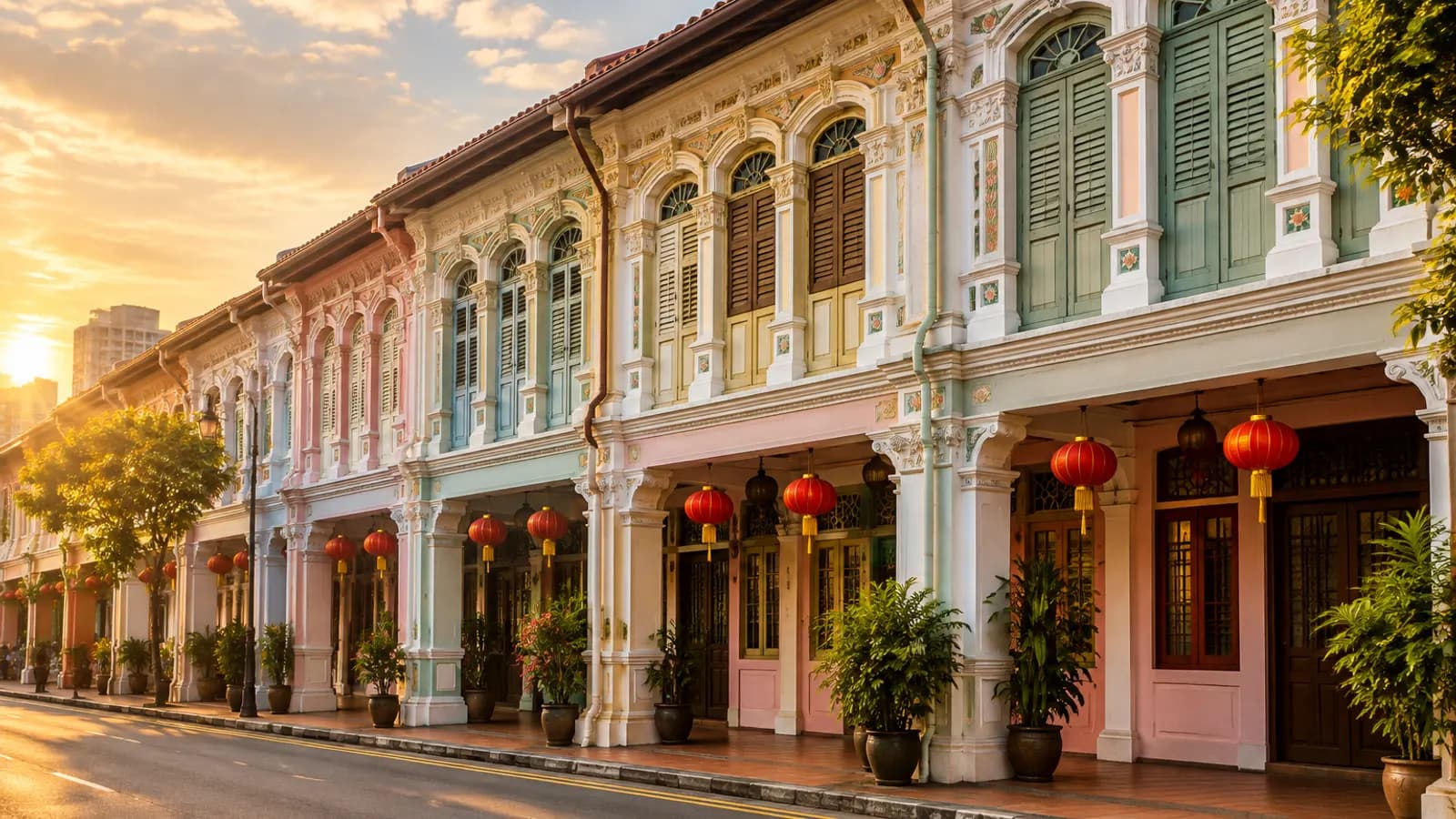
Chinatown shophouses are the conserved terraces of the district south of the Singapore River that Raffles' 1822 town plan set aside for the Chinese community. Today Chinatown Singapore shophouses serve tourism retail, food and drink, small offices and heritage-led hospitality. Value is driven by tight URA conservation controls, strong MRT access and constant visitor footfall.
Editorial review as of 5 November 2026. Related: Chinatown / Kreta Ayer · D01–02 CBD · all neighbourhoods.
| Postal district | D01–02 area; Chinatown falls in the Outram planning area of the Central Region |
|---|---|
| MRT stations | Chinatown (NE4 North East Line / DT19 Downtown Line); also Outram Park (EW16 / NE3 / TE17), Maxwell (TE18) and Telok Ayer (DT18) nearby |
| URA conservation status | Chinatown Conservation Area, among the first conservation areas gazetted in 1989 |
| Typical building form | Two- to three-storey terraced shophouses with five-foot ways; Early, Transitional, Late and Art Deco styles all appear |
| Typical uses | Tourism retail, restaurants, bars, traditional medicine and provision shops, studios, boutique offices, backpacker and boutique accommodation |
| Tenure mix | A mixture of freehold, 99-year and 999-year titles, plus State-owned stock on leases; check each title |
| Key streets | Pagoda Street, Temple Street, Trengganu Street, Smith Street, Mosque Street, South Bridge Road, Club Street, Ann Siang Road, Keong Saik Road |
| Landmarks | Sri Mariamman Temple, Jamae Mosque, Buddha Tooth Relic Temple, Chinatown Heritage Centre, Chinatown Complex Food Centre |
Chinatown shophouse history: from Raffles' town plan to a living heritage district
Chinatown's shophouses survive because Singapore chose, in 1989, to treat streets rather than single buildings as heritage.
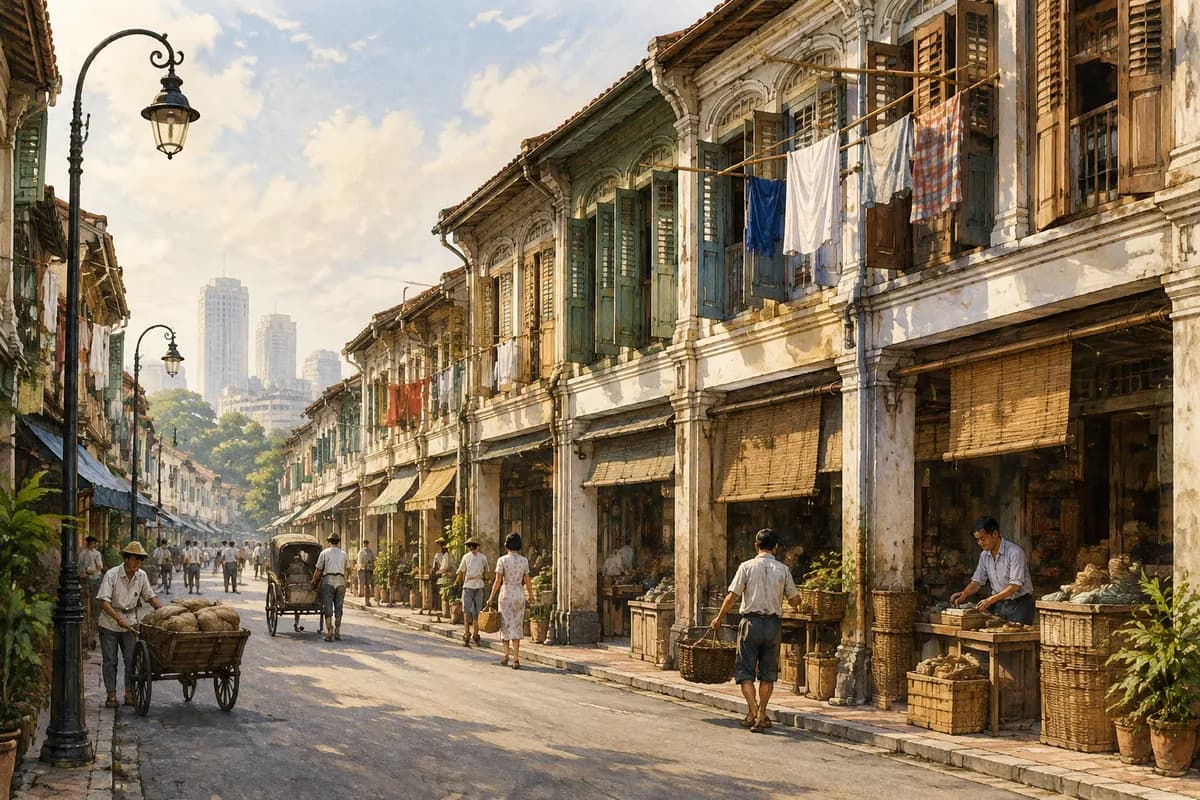
Understanding this history helps a buyer read the streets. The oldest religious buildings, such as Sri Mariamman Temple and the Jamae Mosque on South Bridge Road, date to the 1820s, which shows that the district was never exclusively Chinese in its religious life. Later waves of immigration, clan formation and the growth of trades created the dense pattern of narrow lots that conservation now protects, and it is the reason frontages are so uniform and so small.
Chinatown's shape traces back to the 1822 town plan commonly associated with Raffles and Lieutenant Philip Jackson. The plan allocated different ethnic groups to separate quarters, and the area south-west of the Singapore River became the home of Chinese migrants, who arrived in large numbers as traders, labourers and artisans through the nineteenth century.
The district grew around clan associations, temples, mutual-aid societies and trades that clustered street by street. Many street names still record this: Pagoda, Temple, Sago, Trengganu and Mosque all describe what stood there or who traded there. Kreta Ayer, the name for the central pocket, is usually explained as a reference to the water carts that once supplied the area.
Overcrowding, hawking and rapid redevelopment in the twentieth century put pressure on the old fabric. A pivotal moment came in 1989, when Singapore gazetted its first conservation areas, including Chinatown, Kampong Glam, Little India, Boat Quay and Clarke Quay. That decision is the reason a continuous street grid of pre-war shophouses survives beside the Central Business District today.
Living in Chinatown shophouses in the 1950s
Oral histories and the reconstructed interiors at the Chinatown Heritage Centre describe a very different daily life from today's boutique reuse. In the mid-twentieth century many Chinatown shophouses were crowded, with a trade or workshop at street level and upper floors divided into small rented rooms or cubicles shared by several households. Kitchens, washing areas and toilets were commonly shared, and the five-foot way doubled as workspace, storage and a place for children to play.
Street life spilled outward. Hawkers, letter writers, barbers and traders used the covered walkways and lanes, and festivals, funerals and opera performances were public events. For readers researching a building, this history is useful because it explains why so many interiors were subdivided, why original layouts are often hidden behind later partitions, and why records of past alterations are worth requesting.
It also explains today's conservation ethic. The 1989 conservation designation recognised that the value of Chinatown lay in the continuity of its streets and trades, not only in its facades. Modern owners inherit buildings that carried generations of working families, and many choose to reflect that story in the way they restore and use the space.
Key streets and the shophouse stock
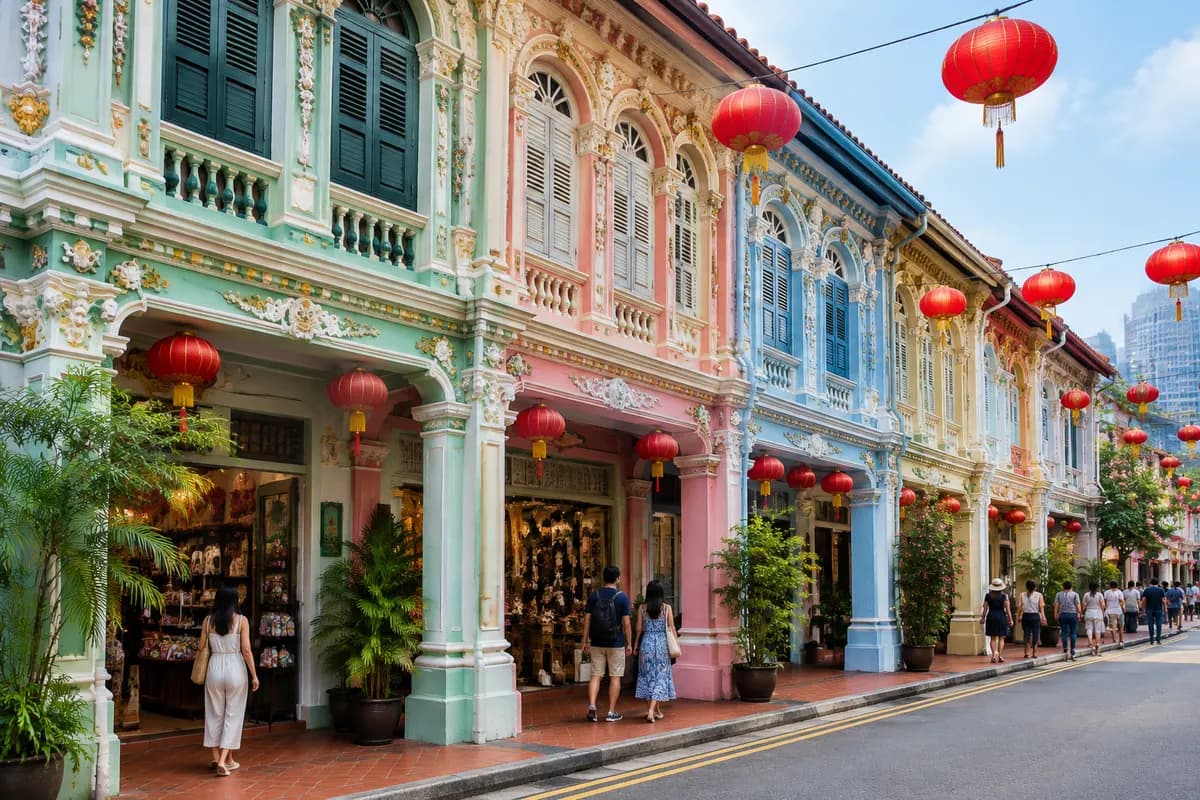
Chinatown is not one street but a cluster of micro-districts with different characters. Pagoda Street, Temple Street and Trengganu Street form the pedestrianised-feeling visitor core, anchored by the Chinatown Heritage Centre and heavy souvenir and snack trade. Smith Street, long known for its food-street role, runs alongside the Chinatown Complex, the large hawker centre that pulls local lunch and dinner crowds.
South Bridge Road is the spine on which several landmark religious buildings sit, including Sri Mariamman Temple, generally described as Singapore's oldest Hindu temple, and the Jamae Mosque. The Buddha Tooth Relic Temple, opened in the 2000s, adds a large modern landmark built in a Tang-style idiom. Mosque Street and Upper Cross Street carry a more mixed trading and office character.
To the south-east the quieter lanes around Club Street, Ann Siang Road and Keong Saik Road have been reinvented as dining and nightlife streets. Their shophouses are typically two to three storeys with narrow frontages, timber windows, pintu pagar doors, decorative tiles and the continuous covered five-foot way. Because frontage widths and floor-to-floor heights are modest, floor plates are small and deep, which shapes how a unit can be used.
- Pagoda, Temple and Trengganu Streets: tourism retail, snacks, souvenirs, heritage attractions.
- Smith Street and Sago Street: food-led, close to the Chinatown Complex Food Centre.
- South Bridge Road: religious landmarks, traditional trades, mixed-use frontages.
- Club Street, Ann Siang Road, Keong Saik Road: bars, restaurants, hotels and studios.
Architecture: what you are actually buying
Look closely at the details when you view a building. Carved timber panels, decorative plaster fruit and bird motifs, glazed ceramic tiles on the five-foot way, and the proportions of the upper-floor windows are all clues to the building's period and to which elements a conservation architect will insist on retaining. Later alterations, such as aluminium windows or concrete additions at the rear, may be removable or may have been approved, so ask for the records.
URA groups conservation shophouses by period style, and Chinatown contains most of them. Early-style shophouses are plain and low, with simple timber detailing. Transitional and Late styles add more ornate plasterwork, Chinese-influenced and Western-influenced motifs, and decorated pilasters. Art Deco and Modern examples from the 1930s onward bring cleaner lines and geometric parapets. Knowing the style matters because it determines which features are protected.
Most Chinatown shophouses are party-wall terraces, so structural work often affects neighbours. Original features such as the front facade, roof form, timber windows and the five-foot way are typically tightly controlled. Rear and interior portions tend to offer more flexibility, which is where change of use, kitchens and new services are usually accommodated.
Buyers should plan for the building's age. Damp, termite damage, uneven floors, aged electrical risers and fire-safety retrofits are common themes. A conservation architect and a structural engineer familiar with these buildings are worth appointing before an offer becomes unconditional, not after.
Shophouse Chinatown rent: uses, tenant mix and residential rent
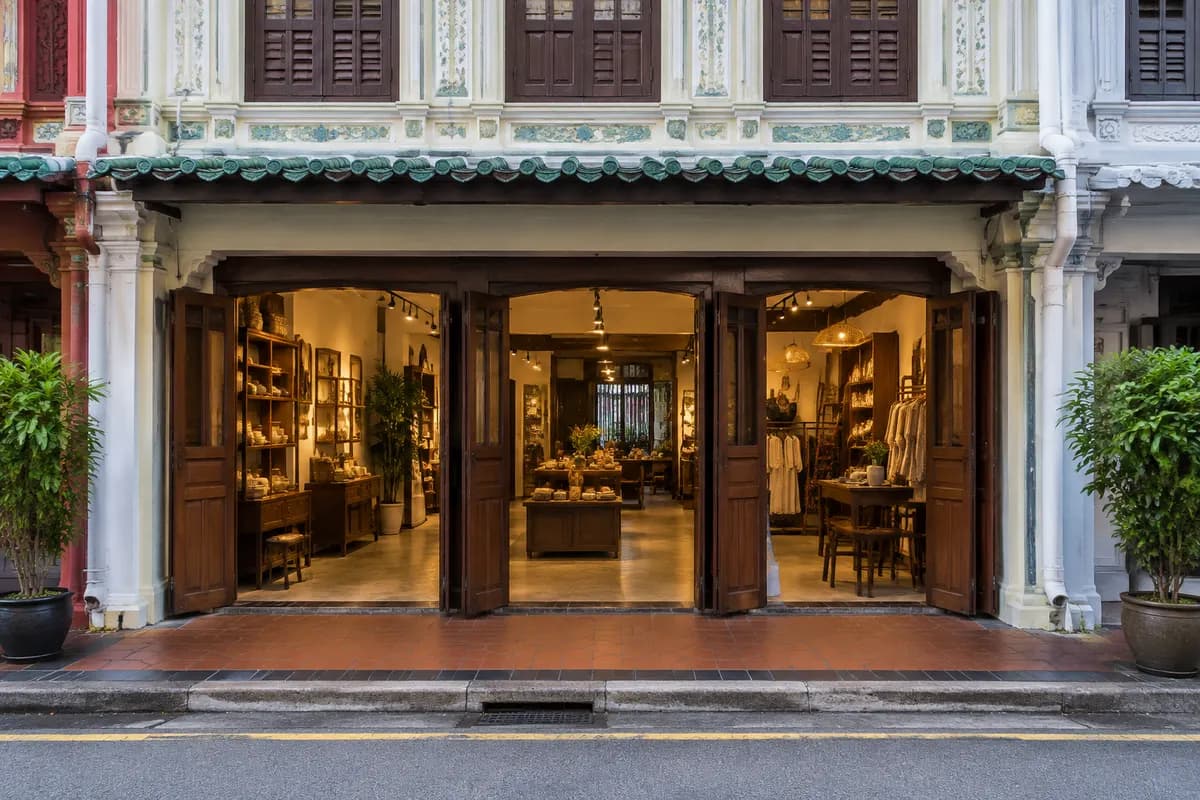
A useful way to read Chinatown is by the tenant's reason for being there. Heritage-trade occupiers such as medicine halls, dried-goods merchants, goldsmiths and clan-linked businesses stay for community, supplier relationships and long familiarity. Visitor-facing retailers stay for footfall. Creative and professional tenants stay for character and the short trip to the CBD. Each group has different tolerance for rent, noise, crowding and refurbishment, so a landlord's best tenant depends on the street and the building.
Chinatown has one of the broadest tenant mixes of any shophouse district. Ground floors serve visitors and locals: souvenir shops, bakeries, dried-goods and traditional medicine retailers, tea sellers, jewellers and clan-linked businesses. Upper floors are used for storage, small offices, studios, backpacker accommodation and, in some cases, residential or serviced living, depending on the use approved for each unit.
Around Club Street, Ann Siang and Keong Saik, the mix tilts toward restaurants, wine and cocktail bars, creative agencies, architecture studios and boutique hotels. These tenants value the character of a restored facade and the proximity to the CBD, and they often take whole buildings rather than single floors.
The key practical point is that approved use is set by planning rules, not by the current tenant's business. Always confirm the authorised use of each storey with URA and check whether a proposed use, such as a bar or restaurant, would require change of use, licensing or a different fire-safety arrangement.
Pagoda Street shophouse for rent and shophouse Chinatown residential rent
Searches for a Pagoda Street shophouse for rent usually mean one of two things: a ground-floor unit on the visitor strip, or a whole building on or near Pagoda, Temple and Trengganu Streets. Ground-floor units are priced and let for retail, with frontage, signage and footfall as the main considerations. Because the street is a heavily visited, pedestrian-oriented environment, check loading rules, trading-hour norms and any landlord restrictions on signage and awnings in the lease.
Demand for a shophouse Chinatown residential rent arrangement is a different case. Whether a storey can lawfully be occupied as residential depends on its authorised use, which differs by building and by floor. Some upper floors are approved for residential or accommodation use, others are strictly commercial. A tenant should ask the landlord for evidence of authorised use and should not assume that an existing occupant's arrangement is compliant. Short-stay and room-letting arrangements are governed by their own rules.
Practical livability also deserves a visit. Many conserved units have narrow stairs, limited natural ventilation outside the air well, and ground-floor noise from trade and festivals. For tenants who value character and a walk to the MRT and hawker food, those trade-offs can be attractive, but a viewing at night and on a weekend is wise. See current shophouses for rent for live availability.
F&B and retail scene
Operators weighing a Chinatown lease should think about customer type first. A bakery or dessert shop on a visitor street sells to people on a short walk, so frontage visibility and queue space matter. A restaurant on Club Street or Keong Saik Road sells a destination experience and benefits from reservations, so a quieter frontage with outdoor seating can be more valuable than a busy corner. Each model produces a different rent affordability and fit-out brief.
Food is Chinatown's strongest draw. The Chinatown Complex Food Centre anchors the everyday hawker scene, while Smith Street and the surrounding lanes serve both visitors and office workers. Beyond hawker food, the district supports traditional bakeries, tea houses, dim sum restaurants and a modern layer of cafes and cocktail bars.
The retail picture is split. Pagoda and Temple Streets rely on visitor spending and are sensitive to tourism cycles, festival seasons such as Chinese New Year and the district's street lighting displays. Local-facing shops, in contrast, depend on residents and office workers from the surrounding CBD, so they follow weekday rhythms.
For an operator, the main constraints are small kitchens, grease and exhaust routing, noise controls and opening hours near residents. Our F&B licensing and change-of-use guide sets out the approvals sequence in more detail.
URA conservation status and what it means in practice
Chinatown is a gazetted conservation area, and its shophouses are conserved under URA guidelines. In practice that means demolition is not allowed, external facades and key architectural elements must be retained or faithfully restored, and any addition, alteration or change of use needs the appropriate approvals. Our URA conservation guidelines buyer manual covers the process step by step.
Conservation brings benefits as well as limits. It protects the streetscape that attracts visitors and tenants, and it limits the risk of a neighbour redeveloping into something out of scale. On the other hand, restoration is expensive, approvals take time, and the footprint available for modifications is constrained.
Check the conservation category and the permitted uses for the specific parcel using URA's online resources. Different parts of the district sit under different planning controls, and a lot's historic classification can change what you may do with the rear or roof.
- Confirm conservation status and category on the URA map before making an offer.
- Ask for approved plans and the last grant of written permission.
- Verify authorised use per storey, not only the current trading use.
- Budget separately for facade restoration and compliance upgrades.
Transport and walkability
Interchange stations matter for tenants. Outram Park links the East West, North East and Thomson-East Coast lines, which gives staff from many parts of the island a route with few transfers. Chinatown station sits under the busiest visitor streets, so exits and surface crowding are part of the experience for customers and for deliveries. Bus services along South Bridge Road and New Bridge Road supplement the rail network, and the CBD's cycling and walking links make short trips easy.
Chinatown is one of the best-connected heritage districts in the country. Chinatown MRT station (NE4 on the North East Line, DT19 on the Downtown Line) sits directly under the district. Outram Park (EW16, NE3, TE17) and Maxwell (TE18) are within walking distance, and Telok Ayer (DT18) and Tanjong Pagar (EW15) serve the south and east fringes.
Because several lines converge, a tenant can reach Raffles Place, Marina Bay, the Orchard area and the northern suburbs with at most one change. That helps both staff recruitment for offices and customer access for F&B.
On foot, the district is compact and walkable, but the pavements around Pagoda, Temple and Smith Streets become crowded at peak times. Deliveries, loading and refuse collection need planning because many streets are narrow, and some are pedestrian-priority at certain hours.
Price and rent context
Chinatown shophouses are positioned as scarce heritage stock within walking distance of the CBD. Their value is shaped by tenure, frontage, the number of storeys, approved use, restoration condition and the strength of the street they sit on. A building on a busy visitor street is priced differently from one on a quieter lane, and a freehold title is generally treated differently from a leasehold one.
Rents follow the same logic. Ground-floor retail on high-footfall streets depends on tourism and trade; upper-floor and whole-building lettings depend on office or hospitality demand. Because these buildings differ so much, averages can mislead, and you should benchmark against comparable parcels rather than the district as a whole.
Editorial review as of 5 November 2026; no figures quoted here—verify current transactions. Use the table below to find live evidence.
| What to benchmark | Where to find it | Why it matters |
|---|---|---|
| Recent shophouse sale transactions | URA REALIS and URA SPACE (non-landed and landed commercial data) | Shows what comparable parcels actually sold for, not asking prices |
| Asking prices and listings | SRX and EdgeProp listings | Reveals current seller expectations and time on market |
| Rental benchmarks | URA rental statistics for retail and office space | Gives a reference for rent per unit area by use and region |
| Property tax and annual value | IRAS property tax information | Affects holding cost and net income |
| Tenure and title | Singapore Land Authority (SLA) title search | Confirms freehold or leasehold and any encumbrances |
Chinatown shophouse for sale: investment angle
In a conserved street, you are buying a protected building and its position, not a development site.
Think of returns as two parts: running income and capital value. Running income depends on tenant quality, lease length and the building's cost base. Capital value depends on tenure, scarcity and how the next buyer views the street. Chinatown's visitor streets can offer strong income when trading is good, while its quieter lanes may offer steadier office or hospitality income. Neither guarantees an outcome, and the evidence should always be checked against current data.
The case for Chinatown rests on a few durable features: protected supply, proximity to the CBD, strong transport and sustained visitor interest. Because conservation rules restrict new supply, the stock does not grow, which supports long-term scarcity. Our investing in conservation shophouses guide explains the return drivers and trade-offs in detail.
The case against is equally real. Retail-heavy streets are cyclical, upkeep costs are high, and approvals may delay a repositioning plan. Tax treatment also differs between commercial and residential-use shophouses; see the commercial vs residential ABSD breakdown before structuring a purchase. If you are comparing tenure, read our freehold shophouses guide.
To see what is on the market, browse commercial shophouses for sale and conservation shophouses for sale.
Seasonality, festivals and the rhythm of trade
Chinatown's calendar is unusually pronounced. The lead-up to Chinese New Year brings the busiest weeks of the year, with street markets, festive lighting and heavy demand for snacks, decorations and gifts. Landlords and tenants should understand that a lease signed in the peak weeks may give a flattering picture of ordinary trading conditions.
Outside festivals, the daily rhythm differs by street. The visitor streets peak at midday and early evening, hawker and local-facing shops follow the lunch and dinner crowd, and the Club Street and Keong Saik lanes come alive after dark. A prospective buyer should visit at several hours on weekdays and weekends, and also in a quieter month, rather than judging a building on one visit.
This matters for underwriting. A shop that relies on festival weeks needs a different cash-flow cushion from an office tenant on a multi-year term, and an operator's trading hours affect neighbour relations and licensing conditions.
Buying and renting checklist
A disciplined checklist avoids the most common Chinatown mistakes, which are paying for a use that is not authorised and underestimating restoration cost. Start with title and use, then move to building condition, then to the commercial case. If you are renting rather than buying, browse shophouses for rent and apply the same lease-level checks.
- Pull the SLA title and confirm tenure, owners and caveats.
- Confirm conservation category and permitted use with URA.
- Inspect structure, roof, damp, termite and electrical capacity.
- Check fire-safety compliance and whether upgrades are outstanding.
- Review existing leases, rent reviews and tenant covenants.
- Model restoration, approvals and vacancy before pricing the offer.
- For tenants: check lease term, fit-out rights, reinstatement and landlord consent for signage.
Risks to weigh
Concentration risk deserves a plain statement. A single shophouse is a single asset in a single street, with one roof, one set of party walls and one tenant mix. Unlike a diversified fund, one bad outcome, such as a long vacancy, a major structural repair or a refused approval, can dominate the result. Holding reserves for such events is as important as the purchase price.
Tourism dependence is the main commercial risk on the visitor streets. A weaker visitor season, construction disruption or changes in footfall patterns can affect retail tenants quickly. Landlords with a single-tenant, single-trade building are the most exposed.
Regulatory and physical risk matter too. Conservation approvals may be slow, hidden defects often emerge once finishes are removed, and party-wall issues can complicate work. Noise and licensing conditions near residents can limit what a bar or late-night operator can do.
Liquidity is the final point. Conservation shophouses trade infrequently and each is different, so selling can take time and valuations are harder than for standardised units. Treat any purchase as a long-hold decision.
Nearby areas to compare
Chinatown's closest neighbours offer different trade-offs. Telok Ayer is more office-driven, with an easier weekday profile. Tanjong Pagar blends dining streets with larger redevelopment nearby. Boat Quay and Clarke Quay are waterfront nightlife precincts across the river.
Further afield, Kampong Glam, Little India and Jalan Besar offer other conservation districts at different positioning, while Geylang is a more distinct, outlying market. The wider area summary is at Chinatown / Kreta Ayer.
Sources
Frequently Asked Questions
Is there a Chinatown shophouse for sale right now?+
Availability changes, and conserved shophouses trade infrequently. Check our commercial and conservation shophouse sale pages, then confirm tenure, conservation status and authorised use before making an offer.
How do I find a Pagoda Street shophouse for rent?+
Start with current rental listings, then check the unit's authorised use, signage rules and loading arrangements. Visitor-strip units are let mainly for retail, so footfall and lease terms matter most.
Can I rent a Chinatown shophouse as a residence?+
Only if the storey's authorised use permits residential occupation. Ask the landlord for evidence and confirm with URA before signing; do not rely on how the unit is currently occupied.
What was it like living in Chinatown shophouses in the 1950s?+
Oral histories describe crowded buildings with a trade at street level and upper floors divided into rented rooms shared by several households, with shared kitchens and washing areas.
Are Chinatown shophouses conserved?+
Yes. Chinatown is a gazetted conservation area, among the first designated in 1989. Facades and key features must be retained, and works or changes of use need URA approval.
Which MRT stations serve Chinatown?+
Chinatown station serves the North East Line (NE4) and Downtown Line (DT19). Outram Park (EW16, NE3, TE17), Maxwell (TE18) and Telok Ayer (DT18) are also within reach.
Can I run a restaurant or bar in a Chinatown shophouse?+
Often yes, but only if the storey's authorised use allows it. You may need URA change-of-use approval, an NEA food licence and fire-safety compliance. Confirm each before committing to a lease or purchase.
Are Chinatown shophouses freehold?+
Tenure varies. Some are freehold, others are 99-year or 999-year leasehold, and some are State-owned and leased. Always run an SLA title search on the specific lot.
Where can I check current prices and rents?+
Use URA REALIS and URA SPACE for transactions, URA rental statistics for rent benchmarks, and SRX or EdgeProp for listings. This page quotes no figures; verify current data.
Is Chinatown too touristy for office use?+
Not necessarily. Small creative firms and boutique offices use upper floors, especially near Club Street and Ann Siang Road, drawn by character and MRT access. Ground-floor noise and crowding vary by street.