
D01–02 · CBD
Tiong Bahru shophouses
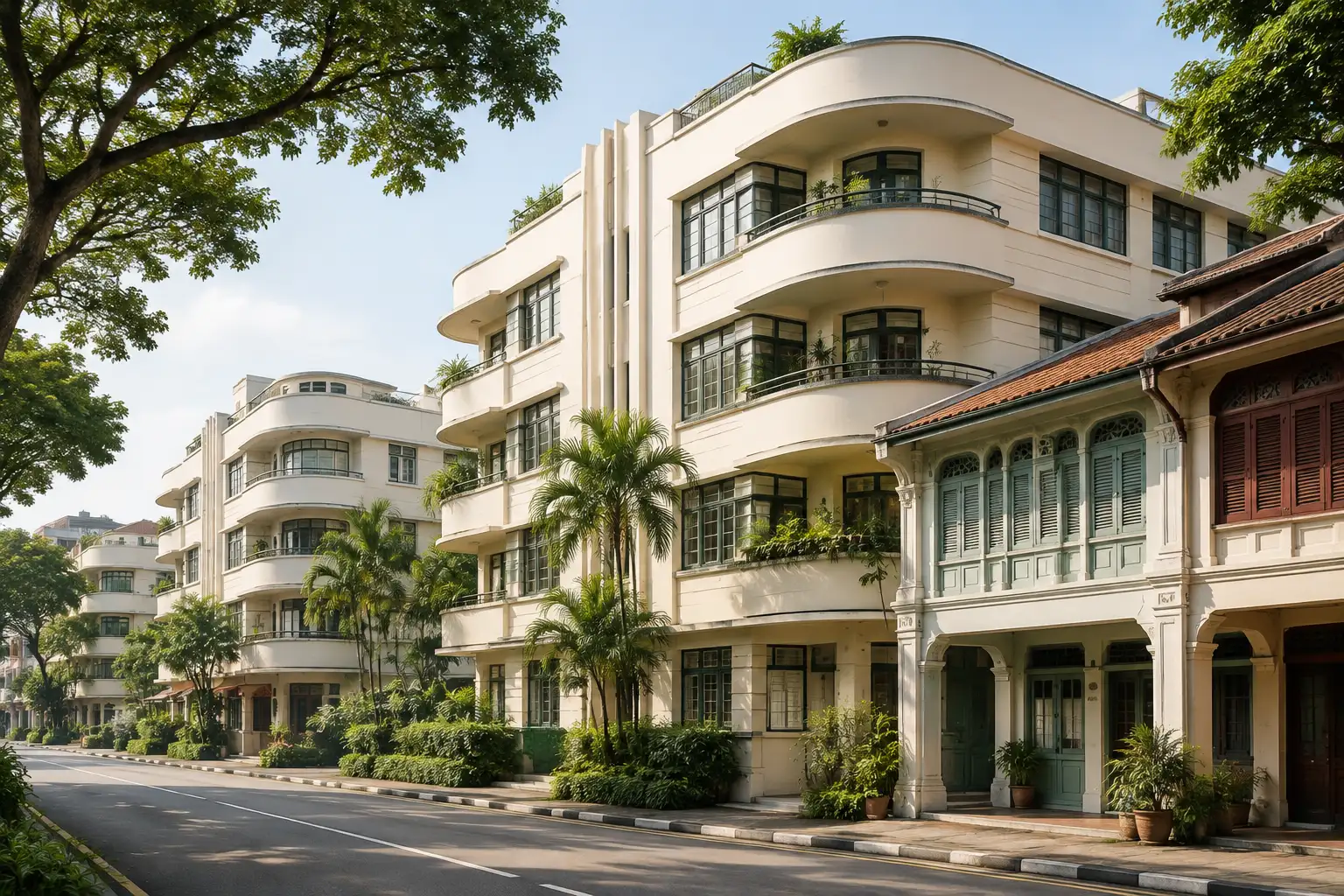
A conserved Art Deco housing estate with a few old shophouse-style rows at its edges — a heritage neighbourhood first, a shophouse market second.
The short answer
Tiong Bahru is a conserved 1930s housing estate known for Streamline Moderne and Art Deco flats built by the Singapore Improvement Trust, not a classic shophouse district. A small number of older shophouse-style rows and ground-floor shop units exist at its edges. Tiong Bahru MRT serves the area. Check zoning and ownership before treating any unit as a shophouse.
Tiong Bahru at a glance
- Postal district
- District 3 (Queenstown–Tiong Bahru)
- Conservation status
- A group of pre-war blocks is conserved under URA; other parts of the estate are not, so check the lot
- Typical stock
- Low-rise Art Deco and Streamline Moderne flats from the 1930s onward, with a few older shophouse-style rows at the edges
- Dominant use
- Residential, with ground-floor shops, cafés and a market and food centre
- Nearest MRT
- Tiong Bahru (EW17 on the East-West Line)
- Tenure
- Mixed; HDB flats and shop units differ from privately owned shophouses, so confirm on the title or with HDB
- Stamp duty lens
- Residential flats follow residential rules; commercial units follow the commercial pathway, subject to zoning
- Best for
- Owner-occupiers, café and boutique operators, heritage-minded buyers
Tiong Bahru shophouse: what you will and will not find
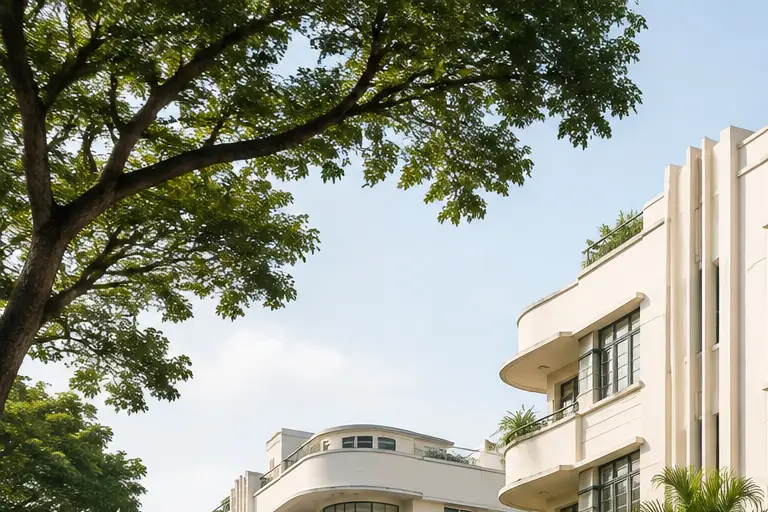
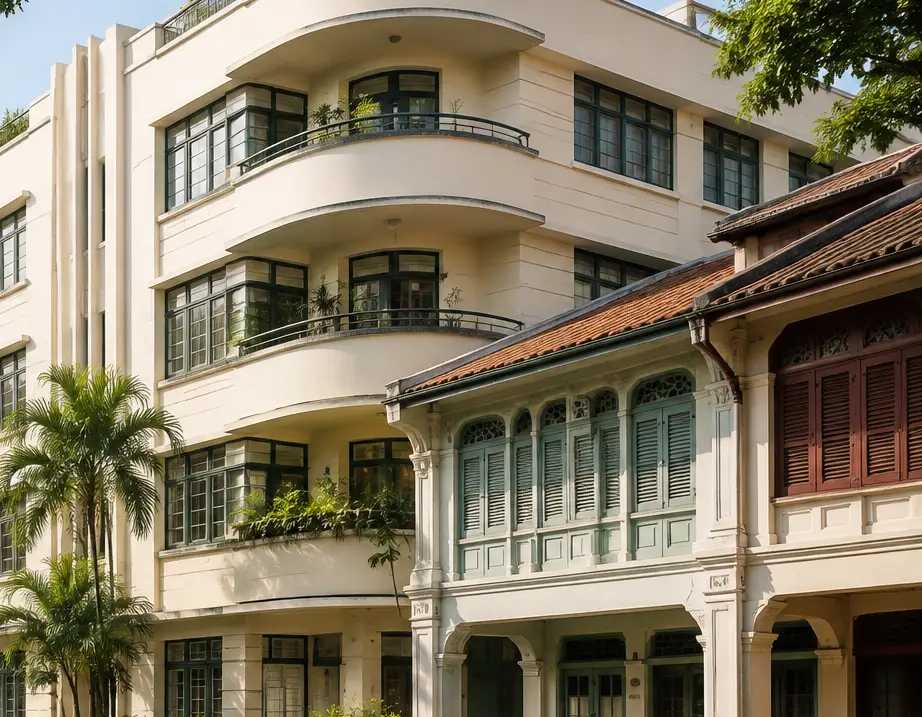
People search for a Tiong Bahru shophouse expecting a row of ornate Peranakan terraces. The reality is different. Tiong Bahru is best known for its pre-war public housing: low-rise blocks with curved corners, balconies, rounded stairwells and porthole windows in a style often called Streamline Moderne, a variant of Art Deco. Those blocks are flats, not shophouses, and the vast majority are owner-occupied homes.
The genuine shophouse angle is narrower. Some older shophouse-style buildings stand on streets around the estate, notably along Tiong Bahru Road and nearby lanes, and several ground-floor units in the flat blocks are shops. Verify what any listing actually is before you analyse it. For the true shophouse belt, compare Tanjong Pagar and our District 01–02 CBD hub.
History of Tiong Bahru and its old buildings
The name Tiong Bahru is generally understood to combine a Hokkien word with the Malay for "new", and it is linked to the area's history as a cemetery site before urban development. For a verified account, consult the National Heritage Board's Roots.gov.sg and the Singapore Infopedia entry, since folk etymologies vary.
The Singapore Improvement Trust, the colonial-era housing authority, developed the estate from the 1930s to relieve overcrowding in the central districts. Its flats were designed with ventilation, light and communal spaces in mind, and the Streamline Moderne styling remains the area's signature. Post-war phases added more conventional blocks, which is why the estate shows several generations of design.
Older shophouse-style buildings on the periphery pre-date or run parallel to the estate and belong to the broader pattern of early town shophouses. Specific dates for individual rows are best checked through URA and NHB records rather than assumed.
Streets, old shophouses and Art Deco stock
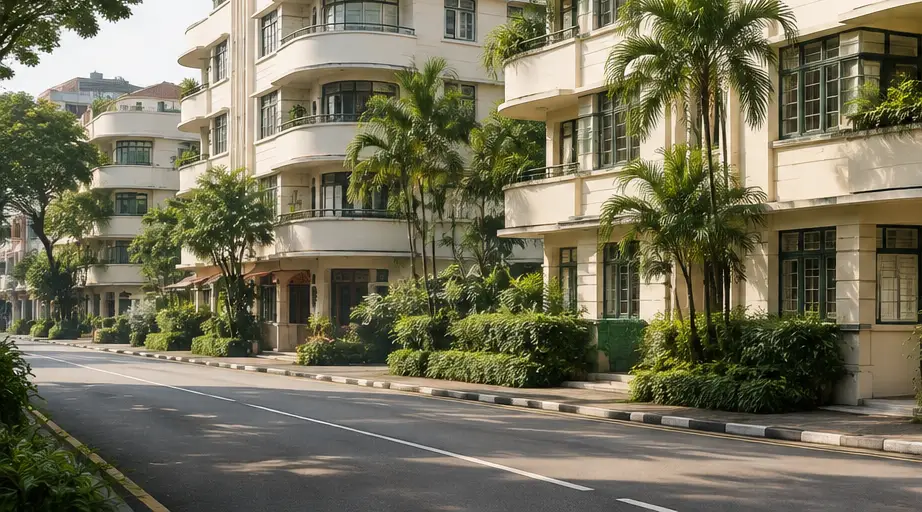
The estate's streets, including Eng Hoon Street, Yong Siak Street, Seng Poh Road and Moh Guan Terrace, are lined mostly with the conserved flats and some ground-floor shops. Tiong Bahru Road, along the estate's edge, includes older shophouse-style rows. If you are searching for old shophouses in Tiong Bahru, start there and confirm the exact building on the street.
Typical features of the housing stock, which will matter if you are comparing it to a shophouse, include:
- Curved corner profiles, rounded balconies and horizontal banding typical of Streamline Moderne.
- Porthole windows, spiral or rounded stairwells and flat roofs rather than pitched clay-tile roofs.
- Ground-floor shop units in some blocks, usually sold or leased through HDB processes rather than as freehold shophouses.
- Older shophouse-style rows with five-foot-ways and pitched roofs on some edge streets.
- Mature trees and small pocket green spaces that give the estate its village-like feel.
Typical uses and Tiong Bahru shophouse for rent context
Tiong Bahru's commercial identity is small-scale. Ground-floor units and edge shophouses host cafés, bakeries, bookshops, boutique retail, clinics and services alongside long-standing family businesses. We make no claims about which businesses are operating, because tenancies change quickly.
Because many shop units sit beneath occupied flats, neighbours, noise and cooking-odour control carry more weight here than on a pure commercial street. Landlords and authorities may impose conditions on opening hours, ventilation and waste handling, so read the lease and approvals closely.
If you are looking for a Tiong Bahru shophouse for rent, expect a small pool. Many ground-floor shops are HDB commercial units with their own leasing rules, and privately owned shophouses rarely come up. Start with our shophouses for rent page, monitor HDB commercial tender announcements, and confirm the approved use before you plan a kitchen. The F&B licensing and change-of-use guide explains the approval path.
URA conservation status in Tiong Bahru
A group of the pre-war Singapore Improvement Trust blocks in Tiong Bahru has been conserved by URA, which means their distinctive façades and architectural features are protected. Conservation here covers specific blocks, not the entire estate, and not every older building on its edges. Always confirm whether a lot is conserved and under what category on URA SPACE.
For shophouse-style buildings on the edge, conservation rules, if they apply, are the same as elsewhere: façades, five-foot-ways and roof forms are normally to be retained, and works require URA approval. Our URA conservation buyer manual explains the process.
Tiong Bahru MRT and transport access
Tiong Bahru MRT sits on the East-West Line and is close to the estate's main streets. It connects to Outram Park, Tanjong Pagar, Raffles Place and, via interchange, to much of the island. Check LTA for current line details and any interchange changes.
Bus services run along Tiong Bahru Road and Seng Poh Road, and the estate is walkable from the station. See our Outram guide for the nearby interchange picture. Parking is limited along the estate's older streets, so most visitors and staff arrive by MRT, bus, taxi or ride-hail. If your business relies on deliveries, check where vehicles can legally stop and when.
Tiong Bahru shophouse for sale: price and rent context
As of November 2026 we do not publish a price per square foot or rent for Tiong Bahru. Public flats, HDB commercial units and privately owned shophouses fall under different rules, and mixing them would mislead. Directionally, the estate's conserved flats have a strong owner-occupier following, while genuine freehold or private shophouses are scarce.
If you are looking for a Tiong Bahru shophouse for sale, first confirm what the unit is. For private shophouses, pull recent transactions from URA REALIS or the public URA transaction search for the relevant street. For HDB flats and shops, check HDB's resale and tender information. Our commercial shophouses for sale page lists comparable assets elsewhere. We avoid quoting yields.
Food, retail and lifestyle
Tiong Bahru is known for its market and food centre on Seng Poh Road, independent cafés and boutiques, and a leafy walkable feel. The market is a long-standing neighbourhood fixture, but we do not make claims about individual stalls or outlets. Weekend footfall tends to be higher than weekdays.
That footfall pattern matters for anyone weighing a shop lease. A café or boutique that depends on weekend strolling traffic needs a different cost base from one serving office workers on weekdays. Walk the streets at several times of day, count how many units are actually trading, and talk to neighbouring operators about deliveries, rubbish collection and noise rules before you commit to a lease or purchase.
For contrast, the nightlife-oriented shophouse strips are at Club Street and Ann Siang Hill. Tiong Bahru is quieter and more residential.
Investment and living angle
Tiong Bahru is a living and lifestyle location more than a shophouse investment market. The case rests on heritage charm, strong transport and a settled community. The risks are limited supply of true shophouses, the different rules for HDB units, and the need to verify each lot.
Stamp duty depends on the property type and zoning. A residential flat follows residential rules, so Buyer's Stamp Duty applies and ABSD may apply depending on your status and holdings; a commercial unit follows the commercial pathway. HDB flats carry their own eligibility rules. Rates and rules are set by IRAS and HDB and change. Read the commercial versus residential ABSD breakdown and the investing in conservation shophouses guide.
Due-diligence checklist for a Tiong Bahru purchase or lease
Before you commit, work through the following.
- Confirm whether the unit is an HDB flat, an HDB shop unit or a privately owned shophouse.
- Check Master Plan zoning and conservation status for the lot on URA SPACE.
- For private shophouses, confirm tenure and land area through an SLA title search.
- Verify the approved use and whether a food licence has been granted.
- Commission a building survey covering structure, drainage and any water ingress.
- Ask your lawyer to review stamp-duty and eligibility exposure for your buyer profile.
Nearby neighbourhoods
Closest in character is Spottiswoode, a quieter heritage pocket. Outram and Kreta Ayer offer a denser shophouse streetscape. See the neighbourhoods hub and our conservation shophouses for sale page.
Market commentary on this page is directional and reflects our reading as of November 2026. It is not a valuation, quotation or offer. Verify zoning, conservation status, tenure and approved use on URA SPACE, an SLA title search and the lot's planning history before you bid. See all Singapore shophouse neighbourhoods or the parent hub, District 01–02 CBD.
Frequently Asked Questions
Are there shophouses in Tiong Bahru?+
A few. Tiong Bahru is mainly a conserved Art Deco housing estate, with some older shophouse-style rows on edge streets and shop units on the ground floors of flat blocks. It is not a classic shophouse district.
Are there old shophouses in Tiong Bahru?+
Some older shophouse-style buildings stand around the estate's edges, including along Tiong Bahru Road. Confirm the exact building and its conservation status on URA SPACE.
Is there a Tiong Bahru shophouse for sale?+
Rarely. Privately owned shophouses seldom come to market here, and many ground-floor shops are HDB units with different rules. Check URA transactions and HDB information for the specific unit.
Is there a Tiong Bahru shophouse for rent?+
The pool is small. Ground-floor units are often HDB commercial premises leased under HDB rules, and private shophouses seldom appear. See our shophouses for rent page and confirm the approved use.
What architectural style is Tiong Bahru?+
Mainly Streamline Moderne, a variant of Art Deco, seen in curved corners, balconies, porthole windows and rounded stairwells on the pre-war flats built by the Singapore Improvement Trust.
Is Tiong Bahru a conservation area?+
A group of pre-war blocks is conserved by URA, but not every building in the estate. Check the lot on URA SPACE.
Which MRT station is Tiong Bahru?+
Tiong Bahru MRT on the East-West Line. Check LTA for current details.
Do I pay ABSD on Tiong Bahru property?+
Residential property may attract ABSD depending on your residency and holdings, while commercial units follow different rules. Rates are set by IRAS and change, so verify before committing.
Can I open a café in Tiong Bahru?+
Only where the unit's approved use and lease allow it. HDB shop units and private shophouses have different rules, so confirm with the landlord and regulators before you plan a kitchen.