
D01–02 (Tanjong Pagar area, Central Region) · Neighbourhood guide
Tanjong Pagar shophouses
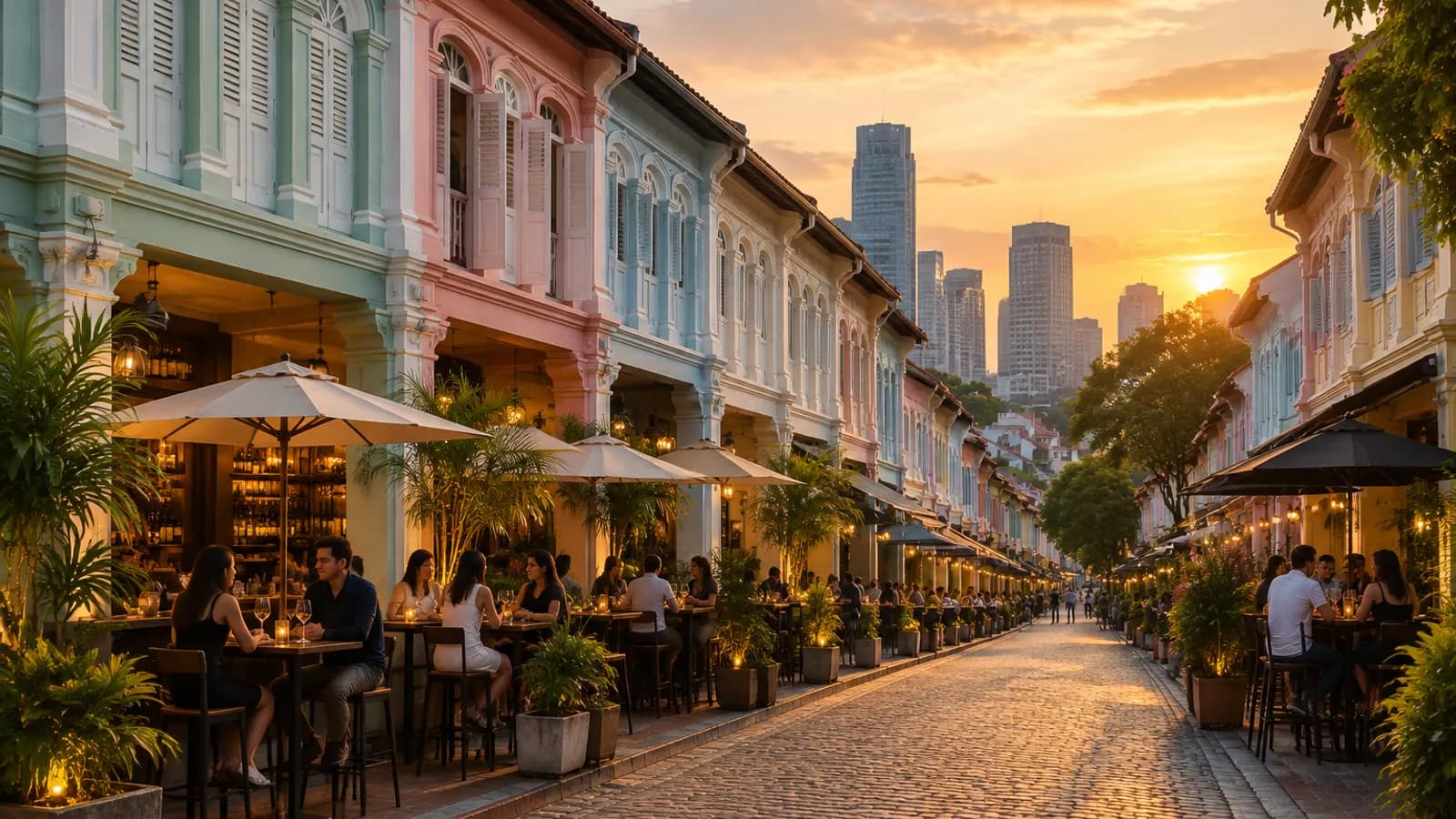
Tanjong Pagar shophouses: a former port and gambier district whose terraced shophouses now host design studios, wine bars, restaurants and boutique offices beside the CBD.
Tanjong Pagar shophouses are conserved terraces on the CBD edge, shaped by the port and railway. The Tanjong Pagar Conservation Area, gazetted in 1989, covers streets such as Duxton Hill, Neil Road and Craig Road. Buyers and tenants get CBD access, conserved facades and boutique tenants, with strict URA rules.
Editorial review as of 5 November 2026. Related: Tanjong Pagar · D01–02 CBD · all neighbourhoods.
| Postal district | D01–02 area, Tanjong Pagar planning pocket in the Central Region |
|---|---|
| MRT stations | Tanjong Pagar (EW15 East West Line); Outram Park (EW16 / NE3 / TE17); Maxwell (TE18); Chinatown (NE4 / DT19) within reach |
| URA conservation status | Tanjong Pagar Conservation Area, among the first conservation areas gazetted in 1989 |
| Typical building form | Two- to three-storey terraced shophouses, many in Late and Transitional styles, with five-foot ways |
| Typical uses | Restaurants, wine bars, cafes, design and architecture studios, boutique offices, hospitality and small retail |
| Tenure mix | Mix of freehold, 99-year and 999-year titles, plus State-owned stock; verify each lot |
| Key streets | Duxton Hill, Duxton Road, Neil Road, Craig Road, Tanjong Pagar Road, Tras Street, Jiak Chuan Road |
| Notable nearby places | Former Tanjong Pagar Railway Station, Duxton Plain Park, Pinnacle@Duxton, Tanjong Pagar Centre |
Tanjong Pagar shophouse history: gambier, the port and the railway
The port built Tanjong Pagar's shophouses; conservation is why the working streets behind the docks are still standing.
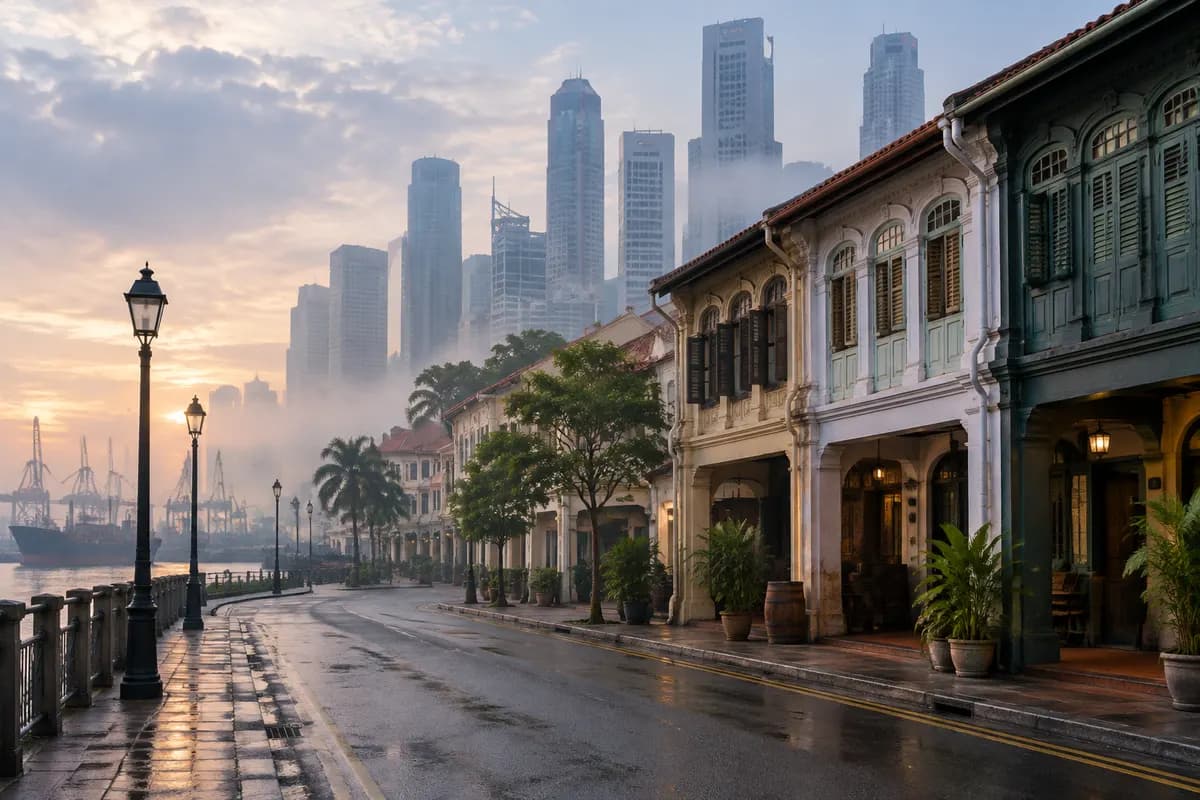
Tanjong Pagar is commonly translated as the cape of stakes, a name linked to the fishing stakes that once lined the shore. In the early nineteenth century the area was associated with gambier and pepper planting before the colonial port expanded westward. The port, rather than a market square or temple, defined the district's identity.
By the 1860s the deep-water wharves at Tanjong Pagar were being developed, drawing coal handlers, dockworkers, clerks, shipping agents and shopkeepers. The shophouses on the streets behind the docks housed those families and trades, with shops below and living quarters above. The result was a dense, working neighbourhood rather than a ceremonial one.
The railway reinforced this role. The Tanjong Pagar Railway Station was the southern terminus of the line from Malaya, and it ceased train operations in 2011. Meanwhile, Singapore's 1989 conservation designations protected the area's core shophouse streets, so that the working-class fabric survived while the port moved to newer terminals and the CBD expanded next door.
Duxton Hill shophouses and the key streets
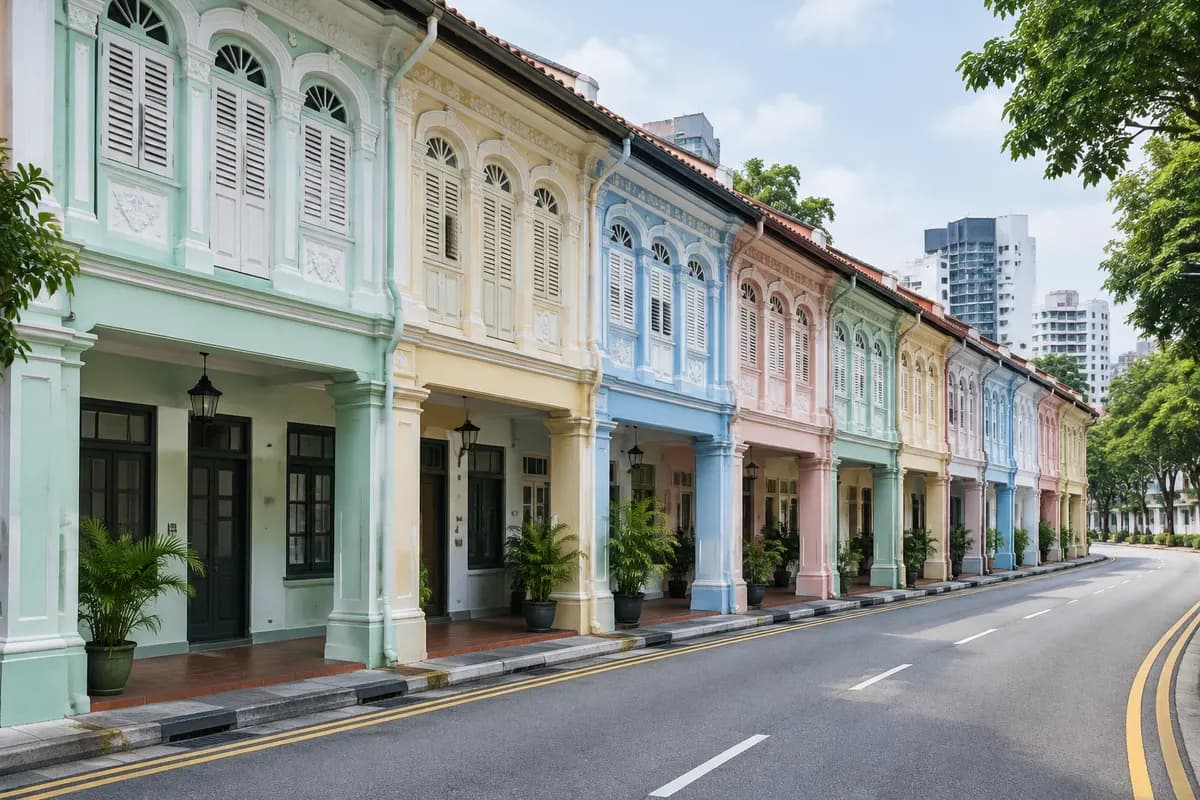
Duxton Hill is the best-known pocket. It is a small hill lined with restored, brightly painted terrace shophouses that now carry wine bars, restaurants and small studios. Neil Road and the nearby cross streets continue the terraces, mixing quieter residential-style fronts with commercial ground floors and a more everyday feel than Duxton Hill.
Craig Road, Duxton Road and Tanjong Pagar Road add further runs of conserved terraces. Tanjong Pagar Road in particular combines conservation shophouses with larger modern towers nearby, which is why tenants can sit in a heritage building while working with CBD-grade neighbours. Tras Street and surrounding lanes are a mix of office, dining and small retail.
Many Tanjong Pagar terraces are continuous rows of near-identical bays, which makes party-wall conditions and uniform facade restoration important. Buyers should compare rows rather than single lots, since a consistent restoration standard in the row supports the streetscape and the buildings' appeal.
- Duxton Hill: dining and wine-bar cluster in restored terraces.
- Neil Road: longer terrace runs with a calmer, local character.
- Craig Road and Duxton Road: boutique offices and small hospitality.
- Tanjong Pagar Road: border between heritage terraces and CBD towers.
Architecture and building condition
The area's shophouses span several URA style categories, with many terraces showing the decorative plaster, pilasters and louvred timber windows typical of the Late and Transitional periods. Because they were built as working-class housing and shops, many have narrow plots and deep floor plates, with a courtyard or air well where light and ventilation were originally provided.
That air well matters. It is often the feature that determines how well a unit works as a modern office or restaurant, since it supplies daylight and natural ventilation. Any plan to cover, relocate or reduce it must be checked carefully against conservation rules and fire-safety requirements.
Condition varies from lovingly restored to tired. Budget for roof and rainwater goods, damp control in lower walls, replacement of aged services and structural monitoring of party walls. A building survey before exercising an option is more useful than any amount of paperwork afterwards.
Tanjong Pagar shophouse restaurant and tenant mix
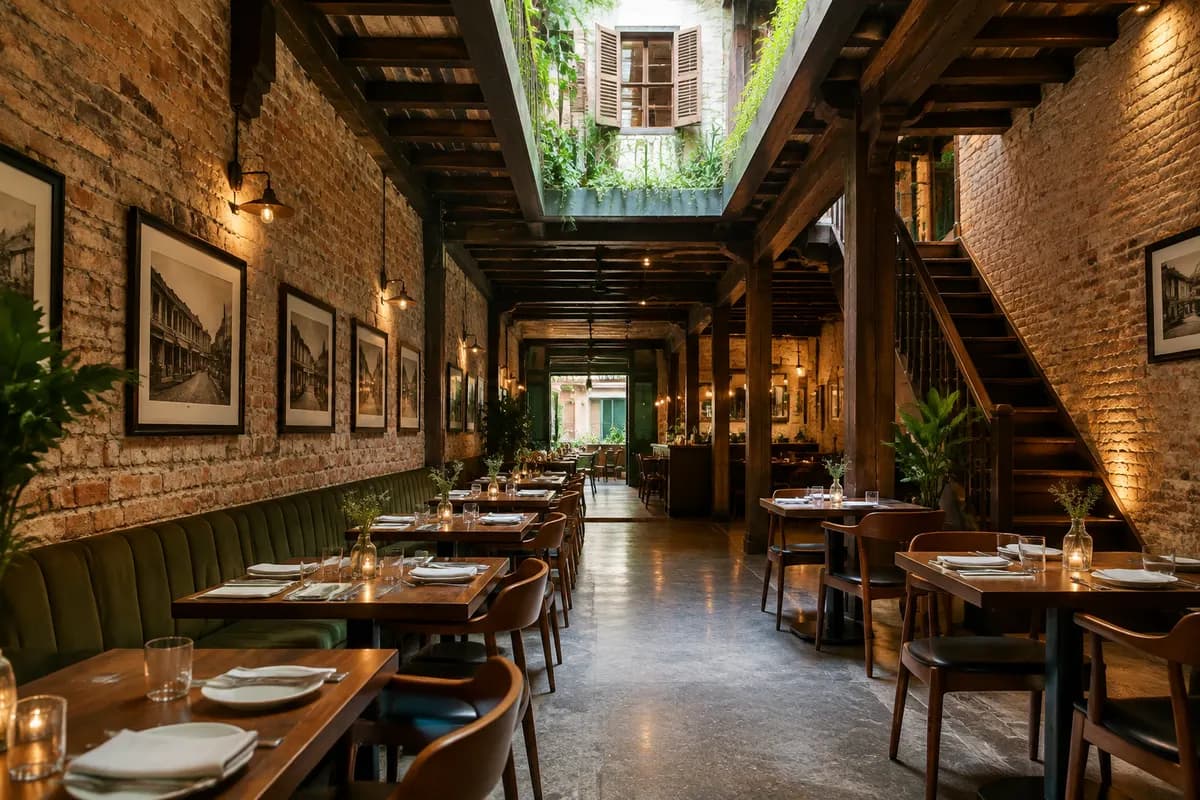
Tenant demand here is shaped by two crowds. The first is the CBD office population that lunches and drinks in the lanes. The second is a creative and hospitality crowd that deliberately chooses conserved terraces for their distinctiveness. Landlords who understand which crowd they are serving can set rent, fit-out and lease terms accordingly, and can avoid the mismatch of a lavish restoration aimed at a tenant who only wants a quick, low-cost fit-out.
Tanjong Pagar skews more toward workplace and hospitality than Chinatown's visitor retail. Financial-sector spillover, professional services and creative firms use upper floors, while ground floors host cafes, restaurants and bars that serve the office crowd at lunch and after work.
Boutique hospitality is also present, from small hotels to serviced residences in converted terraces. The fine grain of the buildings suits operators that want a distinctive address rather than large floor plates, and that value is why whole-building tenants are common.
As elsewhere, the authorised use of each storey should be checked rather than assumed. A building that has been trading as a bar for years may not have had a formal change of use, and a buyer inherits that compliance gap.
F&B and retail scene
Duxton Hill and the surrounding streets are known for evening-led dining and drinking, while Tanjong Pagar Road and Tras Street serve weekday lunch traffic. The district also benefits from large nearby office populations, so demand is less tied to tourism than in Chinatown's souvenir streets.
Retail is secondary. Small boutiques, lifestyle stores and service businesses exist, but the area is best understood as a dining and office-support precinct. Operators should consider seasonality around the office calendar and the effect of weekday versus weekend trade.
The practical constraints are familiar: grease and exhaust routing, residential neighbours in some terraces and tight service access. Review the F&B licensing and change-of-use guide before committing to a kitchen fit-out.
URA conservation status and what it requires
Tanjong Pagar's core terraces sit within the Tanjong Pagar Conservation Area, one of the first conservation areas gazetted in 1989. Conservation shophouses in this area cannot be demolished, and their principal facades, roof forms and characteristic features must be conserved under URA rules. Our URA conservation guidelines buyer manual explains the approval path.
Not every building in the wider Tanjong Pagar area is conserved. Modern towers, HDB blocks and redeveloped lots sit beside the terraces, so do not assume a building is conserved because it is old or nearby. Confirm lot-by-lot using URA's online map and planning tools.
Plan any alteration with a qualified person early. Interior reconfiguration, new openings, rooftop additions and services all touch permitted-works rules, and sensitive elements such as the front facade, timber windows and the five-foot way are the hardest to alter.
- Check whether the specific lot is in the conservation area or only nearby.
- Ask for approved plans, past permissions and any outstanding enforcement.
- Appoint a conservation-experienced architect before an offer is unconditional.
Transport and walkability
Tanjong Pagar MRT (EW15) on the East West Line is the area's main station, and it offers direct access to Raffles Place, City Hall and the west. Outram Park (EW16, NE3, TE17) adds the North East and Thomson-East Coast lines, while Maxwell (TE18) and Chinatown (NE4, DT19) are walkable for tenants on the northern edge.
Walking from the terraces to the CBD towers takes minutes, which is a major reason office tenants choose the district over farther fringe locations. The Duxton Plain Park walkway and the tree-lined local streets give the area a calmer pedestrian environment than the busiest parts of Chinatown.
Vehicular access is tighter. Many terraces were built before cars, so loading, taxi drop-off and parking should be tested at the specific address at the times your business needs them.
Price and rent context
Market positioning also depends on how the building is configured. Whole buildings suit owner-occupiers, family offices and operators who want control of the entire frontage and the upper floors, and these buyers often view the property as a long-term base rather than a yield play. Split-use buildings suit investors seeking diversified income. Both groups look at the same street but weigh the same facts differently, which is why comparing recent deals requires attention to buyer type, not just location.
Tanjong Pagar shophouses are positioned as CBD-edge heritage assets: more commercial and workplace-driven than the visitor core of Chinatown, and generally closer to the office market in how they are underwritten. Value drivers include tenure, number of storeys, frontage, approved use, restoration quality and whether a building can be let as a whole.
Because the stock is small and each building is different, headline district averages are rarely useful. A freehold terrace on Duxton Hill and a leasehold unit on a side lane are different products, and recent deals should be compared on like-for-like attributes.
Editorial review as of 5 November 2026; no figures quoted here—verify current transactions.
| What to benchmark | Where to find it | Why it matters |
|---|---|---|
| Comparable sale transactions | URA REALIS and URA SPACE | Shows actual completed deals for similar conserved terraces |
| Current asking levels | SRX and EdgeProp | Indicates seller and landlord expectations today |
| Office and retail rent benchmarks | URA rental statistics | Gives context for office versus ground-floor retail rent |
| Property tax and annual value | IRAS | Feeds into holding costs and net operating income |
| Tenure and encumbrances | SLA title search | Verifies freehold or leasehold status and caveats |
Tanjong Pagar shophouse for sale and for rent: investment angle
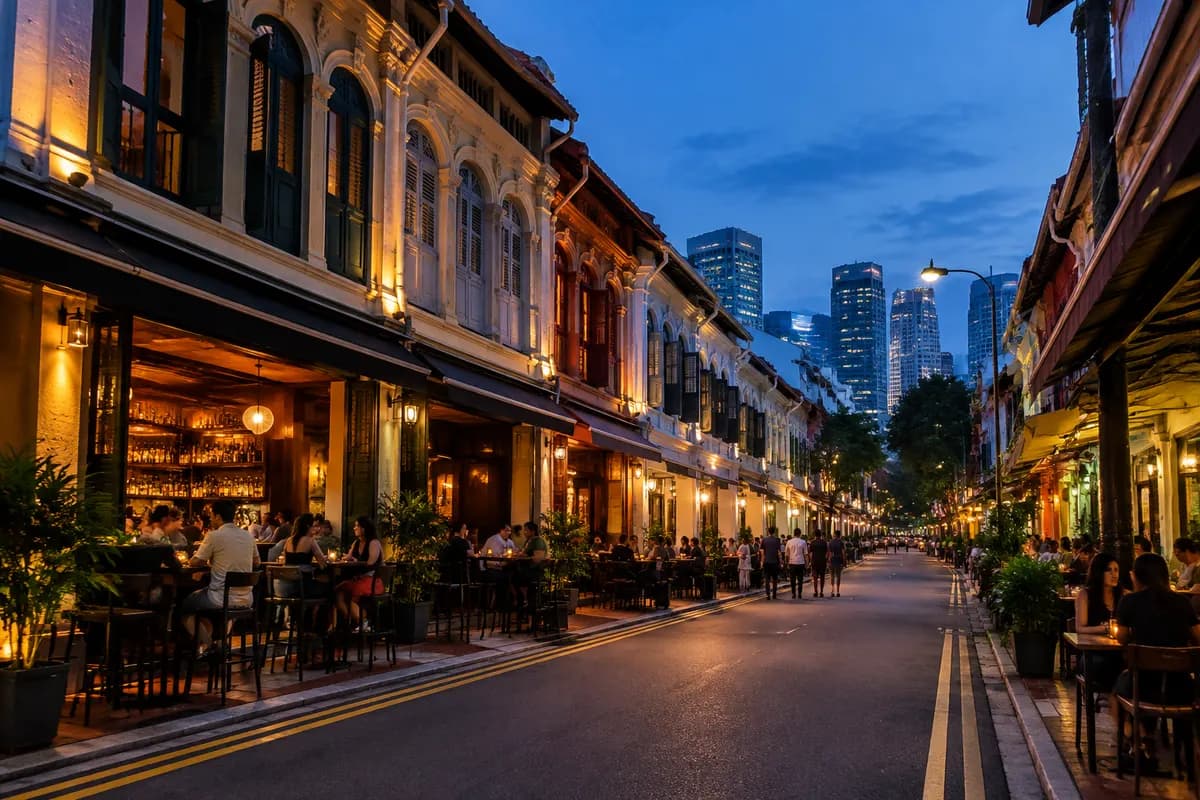
Tanjong Pagar's appeal is a combination of conservation scarcity and workplace demand. Buildings that can be let to professional or creative firms offer a different income profile from retail-led heritage streets. Our investing in conservation shophouses guide sets out how to think about income, capital value and holding costs.
Tenure deserves early attention. Our freehold shophouses guide explains why tenure is a key pricing driver, and the commercial vs residential ABSD breakdown covers how the permitted use can change the stamp duty picture. Use commercial shophouses for sale and conservation shophouses for sale to see the current inventory.
A realistic underwriting model should include restoration and compliance spend, vacancy between tenants, property tax, and the possibility that the best tenant for the building requires fit-out contributions.
Living and working beside public housing and towers
Tanjong Pagar is unusual because heritage terraces sit close to very different neighbours. Pinnacle@Duxton, the high-rise public housing development completed in 2009 on the site of the earlier Duxton Plain estate, and the modern office towers around Tanjong Pagar Road create a daily population that includes residents, office workers and visitors. That mix underpins steady weekday demand and a local customer base that does not depend on tourism.
It also means that noise and operating-hour rules matter. Bars and restaurants in terraces near residential blocks may face more neighbour sensitivity than operators on purely commercial streets, and landlords should expect licensing authorities to consider the surrounding context.
Duxton Plain Park, a linear green space, softens the area's streetscape and supports pedestrian movement between the terraces and the MRT. For office tenants, this makes the district feel less like a transit corridor and more like a neighbourhood, which can aid staff retention and client perception.
When comparing lots, note how far each is from the residential blocks, how the street is lit at night and whether service access passes residential entrances. These small details influence both rent achievable and tenant satisfaction over a long lease.
Club Street shophouse for sale and the Ann Siang corner
Club Street and Ann Siang Road sit on the Chinatown side of the Tanjong Pagar border, but buyers searching for a Club Street shophouse for sale usually compare it with Duxton Hill and Neil Road. The street was historically associated with clan associations and trade clubs, which is one explanation commonly given for its name, and it has since become one of the CBD edge's best-known dining and bar streets. Shophouses here are narrow, with strong evening trade.
Because it is a destination street, rents and prices are usually discussed in terms of the dining and nightlife premium, and the buildings are prized by hospitality operators that want an atmospheric frontage. The trade-off is noise sensitivity, tight service access, and regulatory attention to opening hours. Confirm authorised use and any licensing history for the building you are considering.
Sales on Club Street are infrequent. Use conservation shophouses for sale to monitor stock, and check URA REALIS and URA SPACE for completed deals on comparable frontages.
Amoy Street conservation shophouses, Amoy Street shophouse for sale and office use
Amoy Street conservation shophouses form a compact, continuous run of terraces between Telok Ayer Street and the Tanjong Pagar side of the CBD. The street is strongly weekday-driven, with lunchtime food operators on the ground floor and professional firms above. For owners, that pattern makes the Amoy Street shophouse for sale market closer to the office market than to the visitor retail market.
Many searchers want a shophouse at Amoy Street for office use. Whether a given storey is approved as office, and whether an F&B ground floor beneath it has an approved kitchen and ventilation arrangement, are the central checks. Office conversion of a conserved interior must respect protected features, and fire-safety requirements usually shape what is feasible in a deep, narrow floor plate.
Compare Amoy Street with Telok Ayer, which shares the same walking catchment and has a very similar tenant profile.
Keong Saik Road shophouses: hotels, restaurants and studios
Keong Saik Road lies on the boundary between Chinatown and Tanjong Pagar. In earlier decades the street was historically associated with the district's entertainment trades, and it has since been reinvented with boutique hotels, restaurants, cafes and design studios occupying restored terraces with colourful facades. Today, Keong Saik Road shophouses attract hospitality operators who prize a continuous, photogenic streetscape.
For landlords, the key questions are authorised use for hospitality and accommodation, how the building handles back-of-house services, and how neighbours and residents are affected by opening hours. Whole-building lettings to a single hotel or restaurant group are common, so a building's suitability for large-scale refurbishment is part of its value.
Allow for the fact that a street's popularity can change which tenants can afford the rent. Review recent lease expiries and ask what happened to previous tenants.
Bukit Pasoh shophouses and Bukit Pasoh shophouse for sale
Bukit Pasoh Road is a short, quieter street between Chinatown and Tanjong Pagar. It was historically known for clan associations and Chinese opera and martial-arts schools, and many terraces retain a sense of that institutional past. Bukit Pasoh shophouses today include boutique hotels, restaurants, professional offices and private clubs.
Anyone seeking a Bukit Pasoh shophouse for sale should expect a small, specialised market. Buildings are often occupied by owner-operators or long-term tenants, so listings are rare, and each building's history, use and condition differ. A discreet approach through agents who track off-market interest is common, but all of the normal diligence still applies.
Because the street is calmer than Club Street or Keong Saik Road, it suits tenants who value privacy, such as boutique firms and members' venues. Check access, parking and service arrangements, which are limited by the narrow carriageway.
Neil Road shophouses for sale and Duxton Hill shophouses
Neil Road shophouses for sale appeal to buyers who want long terrace runs with a more local character. Neil Road and the connecting streets such as Duxton Road combine small businesses, cafes, studios and some residential-style occupation, with less of the nightlife intensity of Club Street. That can mean steadier, daytime-oriented tenants and a calmer streetscape.
Duxton Hill shophouses sit on a short hill and are probably the best-known terraces in the district, with painted facades and a concentration of restaurants and wine bars. Because the terraces are relatively uniform and continuous, a buyer often compares the quality of the restoration and the tenant on each building before comparing street position.
For both Neil Road and Duxton Hill, review the status of party walls, drainage and the rear service lane. These are the unglamorous elements that most often drive unexpected cost.
Redevelopment pressure and the conservation boundary
Because Tanjong Pagar borders the CBD, the pressure to redevelop is real on non-conserved lots, and large towers have risen close to the terraces. Conservation status is what separates a protected shophouse from a site that might be redeveloped, so the distinction is central to understanding long-term value and neighbourhood change.
A buyer of a conserved terrace is effectively buying a protected building and its position, not a development site. That affects how you should value it: the upside is in income, restoration and positioning, rather than in redevelopment potential.
Look at what stands beside any lot you consider. A neighbouring development can bring construction disruption, new views or loss of light, and can also bring new tenants and footfall. Check URA's planning information for the surrounding sites.
Buying and renting checklist
Treat the checklist as a sequence: title and planning first, building condition second, then tenant and income. For tenants, the same discipline applies to lease terms and fit-out rights; see shophouses for rent for current availability.
- Confirm the lot is inside the conservation area and note its category.
- Verify authorised use for every storey with URA.
- Test the air well, roof and rear extension for compliance and condition.
- Check loading, delivery and waste access at your operating hours.
- Read lease clauses on reinstatement, signage and rent review.
- Obtain a structural and services survey before committing.
Risks and nearby alternatives
The main risks are concentration and dependence on the office cycle. A building let to a single hospitality tenant can face a long vacancy if that operator leaves, and workplace demand can shift with hybrid-working patterns. Physical risks mirror other conserved districts: age, damp, party walls and approval timelines.
For comparison, Telok Ayer sits closer to Raffles Place and has a more office-led profile, while Chinatown leans toward visitor trade. Boat Quay and Clarke Quay offer waterfront nightlife settings, and Kampong Glam and Little India represent other conservation districts outside the CBD fringe.
Sources
Frequently Asked Questions
Is there a Tanjong Pagar shophouse for sale?+
Stock is limited and changes often. Check our commercial and conservation shophouse sale pages, then verify tenure, conservation status and authorised use before offering.
How do I find a Tanjong Pagar shophouse for rent?+
Browse current rental listings, then check authorised use per storey, lease terms on reinstatement and signage, and whether the building can support your fit-out and approvals.
Can I open a restaurant in a Tanjong Pagar shophouse?+
Often, if the storey is approved for F&B use. You may need change-of-use approval, an NEA licence and compliant exhaust and fire-safety arrangements. Confirm before signing.
Are Amoy Street, Club Street and Keong Saik Road part of Tanjong Pagar?+
They sit around the Chinatown, Telok Ayer and Tanjong Pagar boundaries. Buyers often compare them together, but conservation area and planning details differ by lot, so check URA's map.
What is Bukit Pasoh known for?+
Bukit Pasoh Road was historically known for clan associations and opera and martial-arts schools. Its terraces now host boutique hotels, restaurants and offices.
Is Tanjong Pagar a conservation area?+
Yes. The Tanjong Pagar Conservation Area was among the first conservation areas gazetted in 1989. Not every nearby building is conserved, so confirm each lot on URA's map.
Which MRT station is closest to Tanjong Pagar shophouses?+
Tanjong Pagar station (EW15) on the East West Line is the main one. Outram Park (EW16, NE3, TE17), Maxwell (TE18) and Chinatown (NE4, DT19) are also walkable depending on the street.
What are Tanjong Pagar shophouses mostly used for?+
Restaurants, wine bars and cafes on ground floors, with design studios, professional firms and boutique offices above. Some terraces serve as boutique hospitality.
Is Duxton Hill the only shophouse street in Tanjong Pagar?+
No. Neil Road, Craig Road, Duxton Road and Tanjong Pagar Road also have conserved terraces. Duxton Hill is simply the best known for dining.
Are Tanjong Pagar shophouses freehold?+
Tenure varies by lot. There are freehold, 99-year and 999-year titles, plus State-owned stock. Run an SLA title search on the specific property.
Where do I check current prices and rents?+
Use URA REALIS and URA SPACE for transactions, URA rental statistics for rents, and SRX or EdgeProp for listings. No figures are quoted on this page.