
D06 · Neighbourhood guide
Clarke Quay shophouses
A candid guide to Clarke Quay shophouses and the riverside entertainment precinct around them: what is actually there, how it is owned and let, and where individual riverside shophouse opportunities really sit nearby.
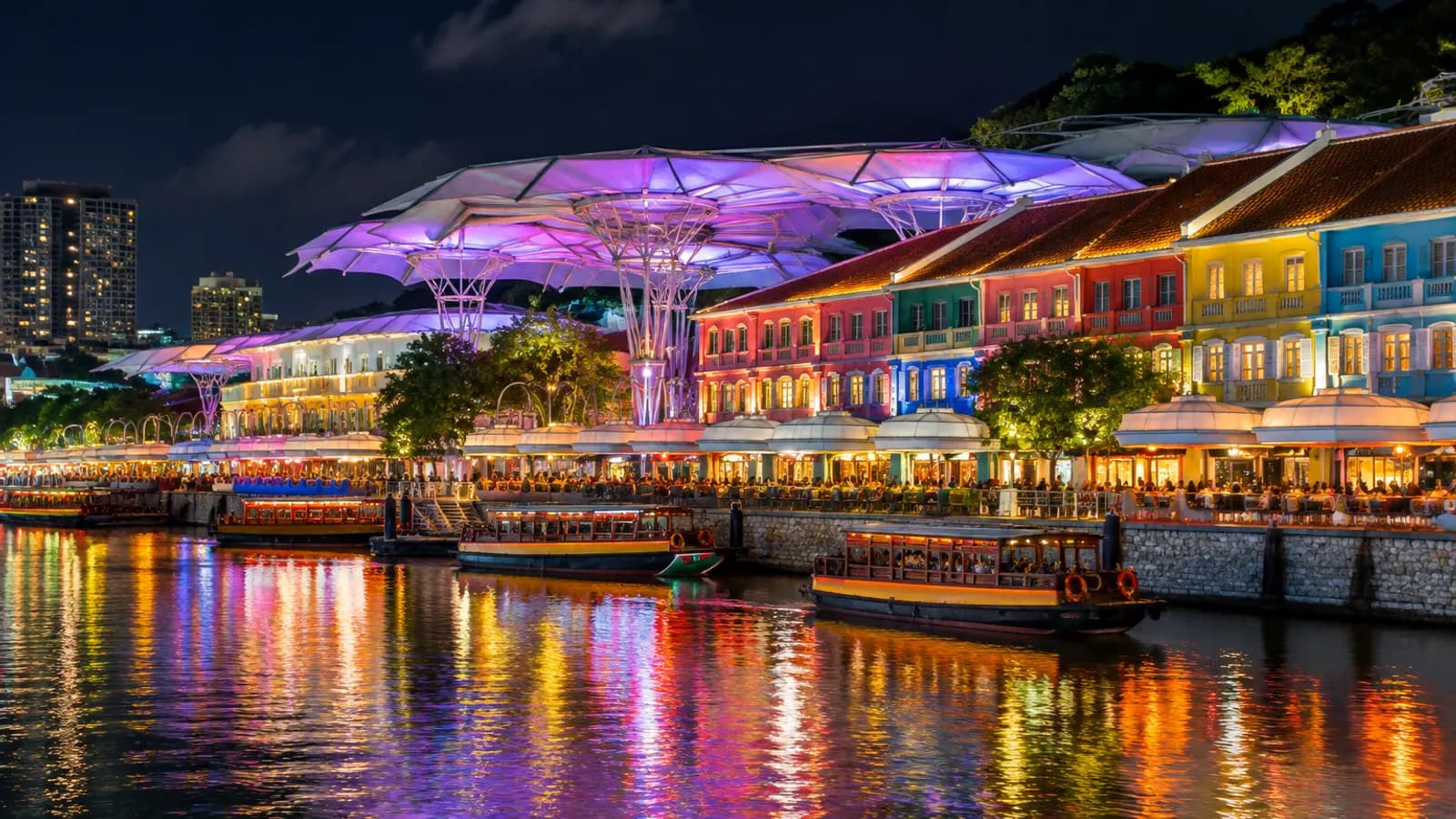
Clarke Quay shophouses are conserved riverside warehouses and shophouse-style blocks, now an entertainment precinct for dining, nightlife and events. Unlike most shophouse neighbourhoods, much of the core appears to be managed as a single precinct rather than sold lot by lot, so individual purchase opportunities are limited. Leasing is the more realistic route.
Editorial review as of 5 November 2026. Related: Boat Quay (nearest existing area page) · D01–02 CBD · all neighbourhoods.
| Postal district | D06 (City Hall / Clarke Quay), adjoining the CBD cluster |
|---|---|
| Nearest MRT | Clarke Quay (NE5, North East Line); Fort Canning (DT20, Downtown Line) and City Hall (NS25 / EW13) are within walking distance |
| URA conservation status | Part of the Singapore River area's conserved historic fabric; confirm the exact conservation designation for any building with URA |
| Typical building form | Converted nineteenth-century riverside warehouses and godowns plus shophouse-style blocks, with a modern roofed canopy element in parts of the precinct |
| Dominant uses | Restaurants, bars, clubs, events and tourism-facing retail; hotels and offices nearby |
| Ownership pattern | Core precinct is understood to be largely institutionally managed; verify the current owner and any strata or lease structure for any specific unit |
| Named for | Sir Andrew Clarke, second Governor of the Straits Settlements (1873–1875) |
| Setting | North-west bank of the Singapore River, between the civic district and Robertson Quay, below Fort Canning Hill |
Who Clarke Quay is named for, and how the river quay developed
Clarke Quay looks like a shophouse district but behaves like a managed destination, and that difference is the whole investment story.
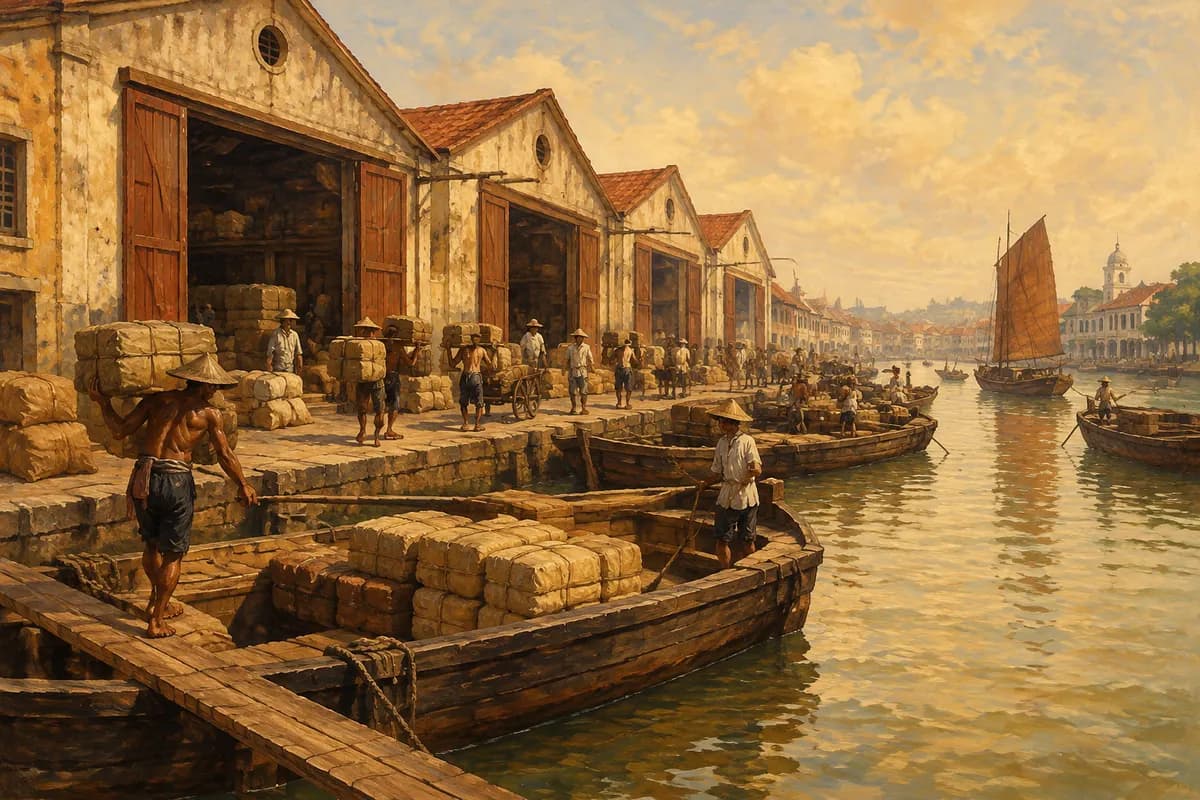
Clarke Quay takes its name from Sir Andrew Clarke, who served as the second Governor of the Straits Settlements in the 1870s. Like Boat Quay downstream, it was a working stretch of the Singapore River, but it was developed a little later and on the opposite, north-western bank. The quay served the river trade, with godowns, or warehouses, lining the water for storing goods brought upriver by lighter.
In the nineteenth century the Singapore River was the busiest commercial artery in the settlement. Rice, spices, textiles, rubber and other commodities passed through riverside warehouses, with merchants and boatmen operating from the quays. Clarke Quay formed part of that continuous trading landscape, and the surviving warehouse blocks are physical evidence of how goods were once handled here.
As with the rest of the river, trade declined as shipping moved elsewhere and the river itself became badly polluted. The Singapore River clean-up in the late 1970s and 1980s relocated riverside trades and street vendors. That clean-up made it possible to think of the quays as places for leisure, and it is the starting point for every conversation about how Clarke Quay became an entertainment destination.
For comparison, Boat Quay on the opposite bank retained a street of individually owned shophouses, while Clarke Quay developed more as a coordinated precinct. That difference in ownership and planning shapes almost everything an investor or tenant needs to know about it.
From godowns to festival village to entertainment precinct
The late twentieth-century conservation drive turned the old warehouses into a new product. The quay was revitalised as a festival village in the 1990s, with the historic buildings repurposed for restaurants, shops and entertainment. Later, the precinct was redeveloped and reimagined with a distinctive roofed canopy and an updated tenant mix, positioning it as a contemporary riverside dining and nightlife destination.
That history matters for buyers. The visible shophouse-like fabric here is real conserved heritage, but it was brought back into use as part of a deliberate master-planned scheme rather than by many private owners restoring separate houses one by one. The architecture can look similar to other shophouse districts, but the commercial structure behind it is different.
Today, the quay is best understood as a managed destination. Tenant selection, marketing, events programming and common-area upkeep are handled with the precinct as a whole in mind. If you are evaluating a space, you should ask who the landlord is, what the lease and common-area obligations are, and how the precinct's overall positioning could evolve over time.
Ownership reality: why Clarke Quay shophouses are mostly a leasing market
Many readers arrive at this page expecting a list of Clarke Quay shophouses for sale. The honest position is that the core precinct is understood to be under largely institutional ownership and management, so there is rarely a stream of individual freehold or leasehold shophouses to purchase. We are not able to confirm the present ownership of every building, so treat this as a framework and verify each unit's title with the Singapore Land Authority.
For tenants, that is not a drawback so much as a different process. Leasing typically means dealing with a professional landlord or leasing agent, using standardised commercial lease terms, and meeting tenant-mix and design standards set by the precinct. Negotiating flexibility can be narrower than with a private shophouse owner, but covenant strength and common-area services are usually stronger.
For buyers who specifically want a conserved shophouse in the river district, the practical answer is to look at adjacent areas with privately held stock. Our Boat Quay area page, the Chinatown cluster and Telok Ayer are better starting points, and the commercial shophouses for sale hub shows live inventory.
Architecture: riverside shophouse and warehouse stock beside the hotels
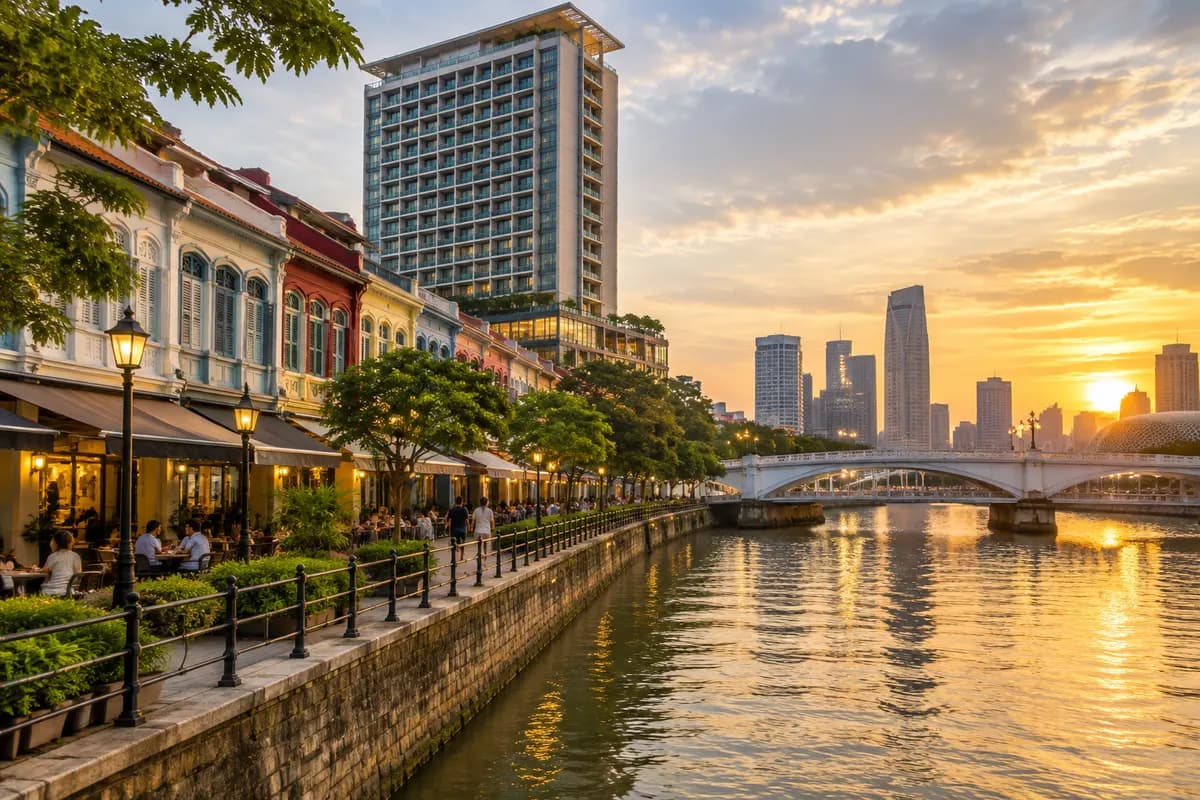
Around the precinct, riverside shophouse and warehouse stock sits alongside hotels, serviced residences and office buildings on the Singapore River. Visitors who search for a riverside hotel near Clarke Quay will find that the heritage buildings and modern towers share the same promenade, so the shophouse-style blocks function as the low-rise, character edge of a larger riverside district.
The built fabric at Clarke Quay is a mix of former godowns and shophouse-style blocks. Warehouses are typically long, robust buildings with thick masonry walls, high ceilings and big openings oriented to the river, which suit large dining rooms, event spaces and nightlife venues better than the narrow, deep layouts of a typical shophouse.
Where shophouse forms appear, they follow the familiar conserved vocabulary: party walls, timber windows and shutters, decorative plasterwork and, in some places, covered walkways. Conservation controls apply to the historic fabric, so external changes and structural alterations require the right approvals regardless of who owns the building.
Modern interventions sit alongside the heritage layers. The precinct's canopy, services upgrades and river-edge works are part of a managed scheme, and they influence climate comfort, noise and the guest experience. When inspecting a unit, understand which elements are the tenant's responsibility and which are controlled by the landlord.
- Large floor plates and high ceilings suit venues, unlike narrow shophouse plots.
- Heritage fabric remains subject to conservation approvals.
- Canopy and common-area works are landlord-controlled, which affects fit-out freedom.
Uses and tenant mix: the Clarke Quay entertainment precinct
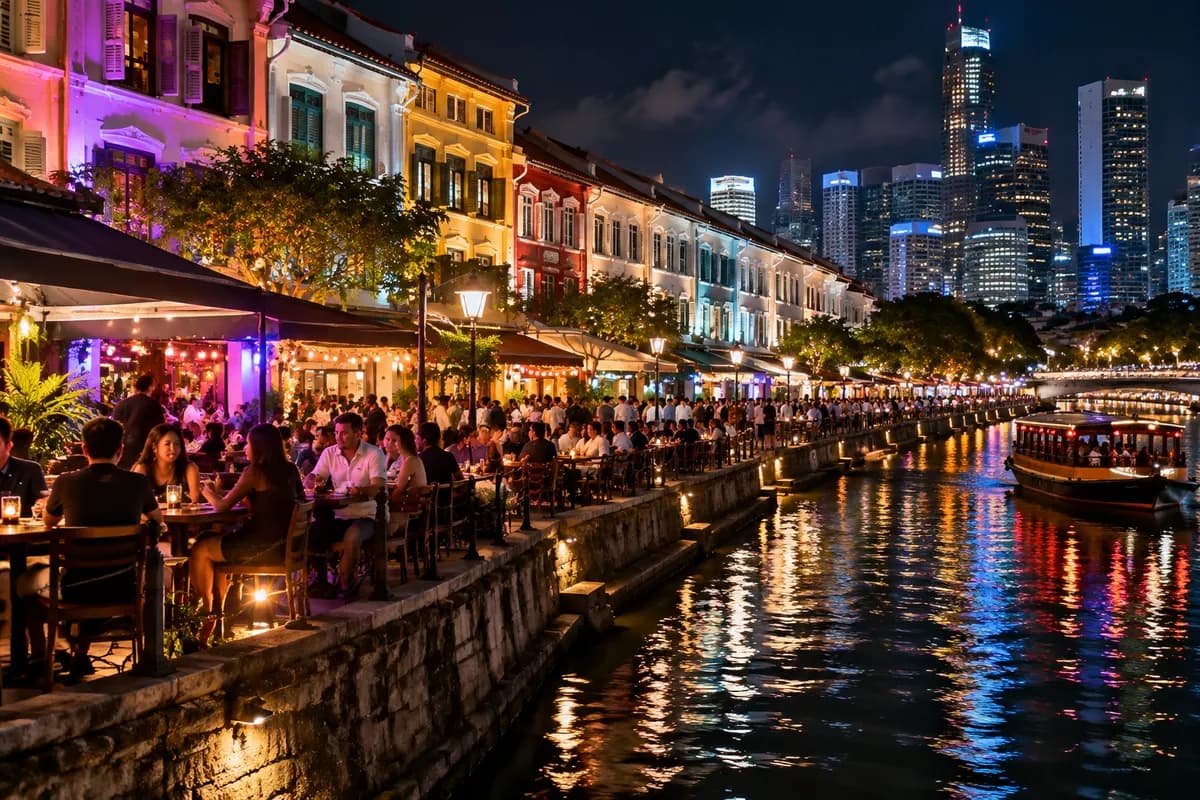
Clarke Quay's identity is nightlife and dining along the river. Restaurants, bars, clubs and event-led venues form the core, supported by tourism-oriented retail and services. The precinct is also a regular host for events, and the riverside setting is part of the draw for visitors and corporate groups.
This mix is quite different from the more neighbourhood-oriented shophouse districts such as Tanjong Pagar or Jalan Besar, where independent operators and daytime trade matter more. In Clarke Quay, evening and weekend trade dominates, and the tenant roster is shaped by the landlord's curation.
Operators should consider the demand profile carefully. Footfall can be strong in the evenings and on weekends and weaker on weekday afternoons. Cost of occupancy, licensing for late-night operation and noise management are central to the business case, so test your operating model against realistic trading patterns rather than peak nights alone.
If your concept needs licensed premises or a change of use, read our F&B licensing and change-of-use guide before negotiating, and confirm what the existing approvals cover.
URA conservation and planning context
The Singapore River quays were among the historic areas brought under Singapore's conservation programme following the first gazettal of conservation areas in 1989. We recommend confirming the specific conservation designation and category for any Clarke Quay building directly with URA, because the precinct includes a mixture of conserved buildings and newer elements.
Conservation guidelines govern what may be altered, how façades must be treated and how new additions relate to the old fabric. These controls apply to landlords and tenants alike, so tenants carrying out fit-out should confirm which works need approvals and who is responsible for obtaining them under the lease.
For a full explanation of the framework and the categories involved, see the URA conservation guidelines buyer manual. It is written for buyers, but the principles are just as relevant to tenants planning interior works.
MRT, transport and walkability
Clarke Quay MRT (NE5) on the North East Line sits directly at the precinct, which makes access easy for visitors from across the island. Fort Canning (DT20) on the Downtown Line is a short walk uphill, and City Hall (NS25 / EW13) provides a major interchange within walking distance across the civic district.
On foot, the riverside promenade links Clarke Quay with Boat Quay downstream and Robertson Quay upstream, which makes the whole river a connected leisure corridor. Pedestrian bridges allow circular routes, and many visitors combine dining at one quay with drinks at another.
Taxi and private-hire pick-up and drop-off patterns matter for late-night venues. Check the nearest practical drop-off points, any managed arrangements within the precinct, and servicing routes for deliveries, because logistics shape both customer experience and operating cost.
Price and rent context: positioning without figures
Editorial review as of 5 November 2026; no figures quoted here—verify current transactions. Clarke Quay is positioned as a premium, tourism-facing entertainment destination. Value and rental levels are driven by the precinct's visibility, location beside the river and the civic district, landlord curation and the strength of evening trade rather than by neighbourhood residential demand.
Because leasing is the main route, the most relevant evidence is rental data, lease terms and landlord incentives rather than sale transactions. Rent structures may include base rent plus turnover components, service charges, marketing contributions and fit-out conditions, all of which affect true occupancy cost.
Use the table to plan your research. Ask for a clear breakdown of every charge, and compare against nearby alternatives, since a lower headline rent in a privately held shophouse may come with higher fit-out and compliance risk.
| What to benchmark | Where to find it | Why it matters |
|---|---|---|
| Rental levels for shop and F&B space in the central area | URA rental statistics for shop space; EdgeProp and SRX rental listings; leasing agents | Gives a market reference for rent before negotiating with a precinct landlord |
| Total occupancy cost per unit | Draft lease: base rent, turnover rent, service charge, marketing levy, utilities | Headline rent understates true cost in managed precincts |
| Ownership and title of the specific unit | SLA title search through your lawyer | Confirms who the landlord is and what interest, if any, is saleable |
| Comparable shophouse sales nearby | URA REALIS or URA SPACE; SRX and EdgeProp transaction data | Indicates the alternative of buying a privately held shophouse in adjacent areas |
| Property tax implications | IRAS property tax pages and annual value enquiry | Landlords pass through or price in tax; owner-buyers bear it directly |
| Planning and permitted use | URA planning enquiry for the specific address | Late-night and event uses depend on approved use and licensing |
Investment angle: what is realistic for private buyers
For private investors, the realistic angle is indirect. Because the core precinct is understood to be professionally managed, direct acquisition of individual units is unlikely to be the main opportunity. Exposure could come through nearby privately held shophouses, or through listed or institutional vehicles, which is a separate analysis beyond a neighbourhood guide.
If you are drawn to the river district because of its entertainment profile, compare the alternatives. Our guide to investing in Singapore conservation shophouses explains the structure of the asset class, while the freehold shophouses guide covers tenure. Check the commercial vs residential ABSD breakdown before any purchase.
Browse the conservation shophouses for sale hub for privately held inventory in other heritage districts, and compare their tenant mix and income stability with a destination precinct.
Leasing checklist for Clarke Quay operators
Begin with the landlord and the lease form. Ask for the standard lease early, and read it for term, renewal options, rent review mechanism, turnover rent, service charges, marketing contributions, permitted use, exclusivity, trading-hour obligations and reinstatement. Precinct leases are often less negotiable on structure than private shophouse leases, so understand the fixed points and focus on the variable ones.
Then examine the unit. Confirm the approved use, existing licences, fire and ventilation provisions, grease-trap and kitchen exhaust capacity, noise insulation and the location of back-of-house access. A venue that looks good in photographs can fail on exhaust, acoustics or servicing.
Finally, model the business at realistic trading levels. Include seasonal and weekday variation, staffing for late hours, licensing costs and the risk of a slow opening period. Use the shophouses for rent hub to benchmark alternatives in other districts.
- Identify the landlord and confirm authority to grant the lease.
- List every recurring charge beyond base rent.
- Check approved use, licences and capacity for late-night operation.
- Review fit-out approvals and reinstatement obligations.
- Test the plan against weekday as well as weekend trading.
Risks and nearby alternatives
The main risks are concentration in nightlife, landlord dependence, regulatory change affecting late-night operations, and the fact that a destination precinct's fortunes follow how well it is curated and promoted. Competition from other entertainment areas, and shifts in tourism and nightlife habits, can change the relative appeal over time.
Readers wanting privately held stock should look nearby. Boat Quay is the closest river shophouse row, while Chinatown, Telok Ayer and Tanjong Pagar offer individually traded conservation shophouses. For a different flavour altogether, see Kampong Glam and Little India.
Sources
Frequently Asked Questions
Can I buy a shophouse at Clarke Quay?+
Possibly, but opportunities appear limited because the core precinct is understood to be largely institutionally managed rather than sold unit by unit. Verify the title and owner of any specific building with an SLA search. Privately held shophouses are more common in nearby Boat Quay, Chinatown and Telok Ayer.
Which MRT station serves Clarke Quay?+
Clarke Quay MRT (NE5) on the North East Line serves the precinct directly. Fort Canning (DT20) and City Hall (NS25 / EW13) are within walking distance.
What postal district is Clarke Quay in?+
Clarke Quay falls in postal district 06, which covers the City Hall and Clarke Quay area. Boat Quay, just across the river, is in a different district, so check the district when comparing records.
Are the Clarke Quay buildings conserved?+
The riverside warehouses and historic blocks are part of the Singapore River's conserved fabric. Confirm the specific conservation designation and category for any building directly with URA, as the precinct also includes newer elements.
Who is Clarke Quay named after?+
Sir Andrew Clarke, the second Governor of the Straits Settlements, who served from 1873 to 1875.
Are there riverside shophouses near hotels around Clarke Quay?+
Yes, in general terms: conserved riverside shophouse and warehouse-style stock sits close to hotels, serviced residences and offices along the Singapore River. Check each building's owner, tenure and approved use, since the precinct is largely managed rather than sold by unit.
Is Clarke Quay better for renting or buying?+
For most readers, renting is the realistic route here because the precinct is managed as a destination. If your aim is to own a conserved shophouse, compare Boat Quay, Chinatown and Telok Ayer, where individually traded stock is more common.