
D08 · Neighbourhood guide
Jalan Besar shophouses
A guide to Jalan Besar shophouses, the city-fringe district where hardware shops, hotels, cafes and creative studios share conserved streets, and where adaptive reuse is reshaping the market.
Jalan Besar shophouses sit in a city-fringe district in postal district 08, running from Jalan Besar Road through Kitchener, Tyrwhitt, Cuff and Dorset Roads toward Lavender and Bendemeer. It combines long-standing hardware, lighting and automotive trades with newer cafes, bars, boutique hotels and creative studios, within URA conservation controls.
Editorial review as of 5 November 2026. Related: Jalan Besar · D07–08 City Fringe · all neighbourhoods.
| Postal district | D08 (Jalan Besar / Lavender / Farrer Park fringe) |
|---|---|
| Nearest MRT | Jalan Besar (DT22 Downtown Line), Bendemeer (DT23 Downtown Line), Lavender (EW11 East West Line), Farrer Park (NE8 North East Line), Little India (NE7 / DT12) |
| Heritage anchors | Jalan Besar Stadium, Kitchener Road and Tyrwhitt Road shophouse terraces, Jalan Besar Road frontages |
| URA status | Conserved shophouse streets under URA conservation controls; verify the grade and status of each lot on the URA record |
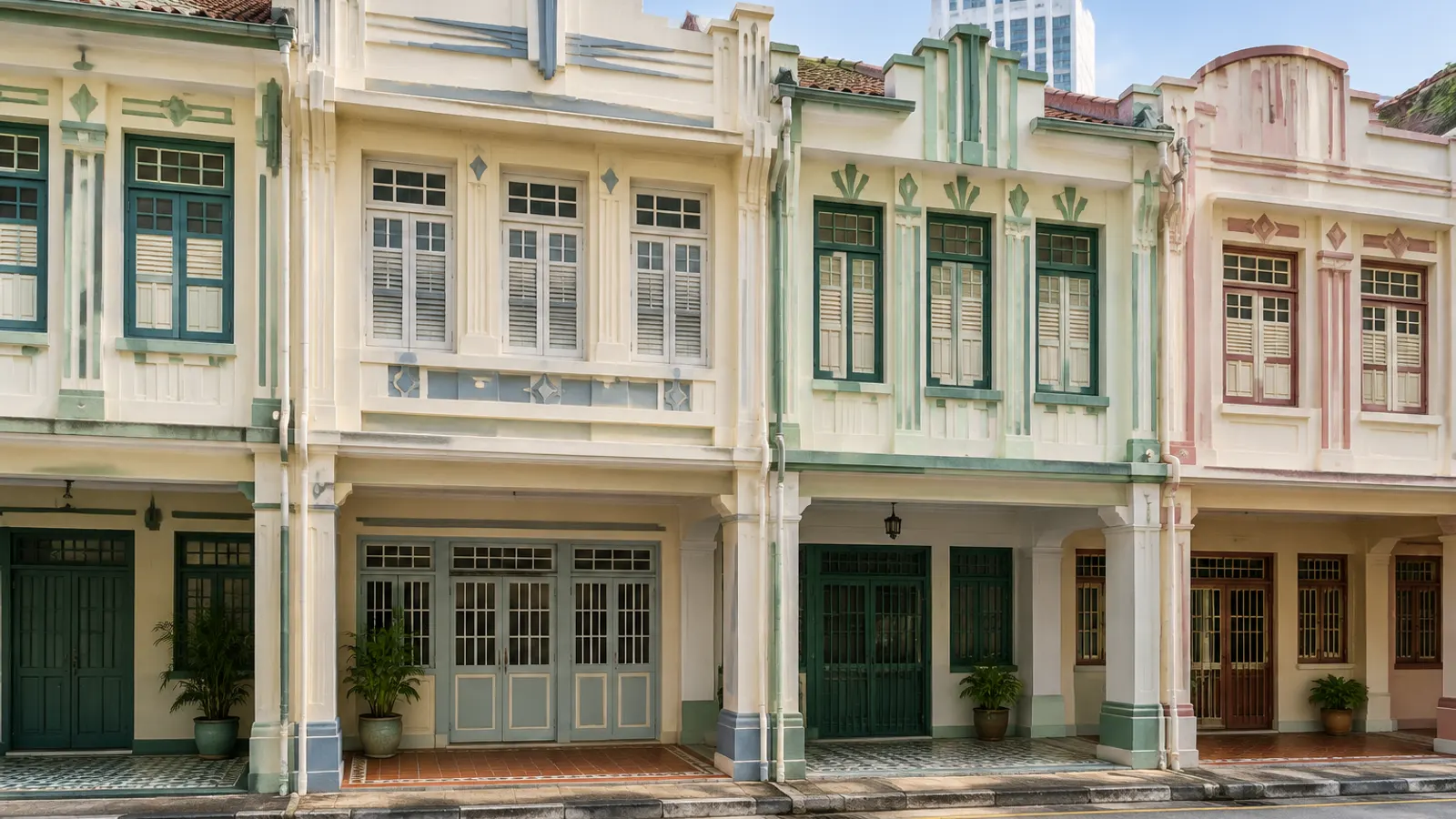
| Typical building form | Two- to three-storey terraces with five-foot ways, many Art Deco and Early Modern façades alongside earlier ornamented terraces |
| Typical uses | Hardware, lighting and sanitary trade, motor and bicycle trade, cafes, bars, boutique hotels, studios, offices |
| Tenure | Mixed; verify freehold or leasehold title lot by lot via an SLA title search |
| Who buys or rents | Owner-operators, hospitality and F&B groups, creative businesses, long-hold investors |
Why Jalan Besar shophouses are a distinctive market
Jalan Besar rewards operators who blend into a working neighbourhood rather than compete with a showpiece precinct.
Jalan Besar is Malay for big road, and the name still describes the principal street that runs through the district. Unlike Chinatown or Kampong Glam, it does not have a single heritage landmark that defines it. Its identity comes from the combination of everyday trade, interwar shophouse terraces and a newer wave of adaptive reuse, in which former workshops, lighting shops and family businesses are being joined by roasteries, bars, design studios and boutique hotels.
That mixed character makes it one of the more interesting city-fringe markets for shophouse buyers and tenants. Rental and capital values are generally less shaped by tourism than in Kampong Glam or by office workers than in Telok Ayer, and more by a local, creative and neighbourhood clientele that has grown with the area's accessibility by the Downtown Line. The district rewards operators who understand how to blend into a working neighbourhood rather than compete with a showpiece precinct.
This page is an editorial primer covering history, the key streets and their building stock, uses, regulations, transport and risks. It complements our Jalan Besar area overview and the D07–08 City Fringe district guide, and should be read with the URA conservation guidelines buyer manual.
History: from the big road to a creative fringe
Jalan Besar Road was one of the principal arteries of the early town's northern fringe, connecting the area around Rochor with the northeast. In the nineteenth and early twentieth centuries the district was a mixture of residential, trading and entertainment uses. Shophouses lined the road and its side streets, and the area developed a reputation for small businesses, traders and a diverse community. Street names such as Kitchener Road, Tyrwhitt Road, Cuff Road and Dorset Road reflect the colonial-era naming conventions of the neighbourhood.
Jalan Besar Stadium, which opened in 1929, became one of the district's best-known institutions and has hosted football matches and other events for generations. Around it, the surrounding shophouses supported small trades. By the mid-twentieth century, the area was known for a concentration of businesses in hardware, lighting, bathroom fittings, motor parts and related trades, a character that persists in parts of Jalan Besar Road and the adjoining streets.
From the late twentieth century, Singapore's conservation programme, which began with the first conservation areas gazetted in 1989, extended gradually to additional shophouse districts. The arrival of the Downtown Line with Jalan Besar and Bendemeer stations in 2013 transformed accessibility, and the following decade saw a visible increase in cafes, bars, hostels and design-led reuse of the older terraces. The district today sits between the older trade economy and a newer lifestyle economy.
- Nineteenth to early twentieth century: Jalan Besar Road develops as a trading and residential artery with shophouse terraces.
- 1929: Jalan Besar Stadium opens.
- Mid-twentieth century: concentration of hardware, lighting and motor trades.
- 1989 onwards: Singapore's conservation programme begins and later extends to further shophouse districts.
- 2010s: Downtown Line stations improve access; adaptive reuse accelerates.
Kitchener Road, Cuff Road and the Serangoon Road fringe: shophouse stock
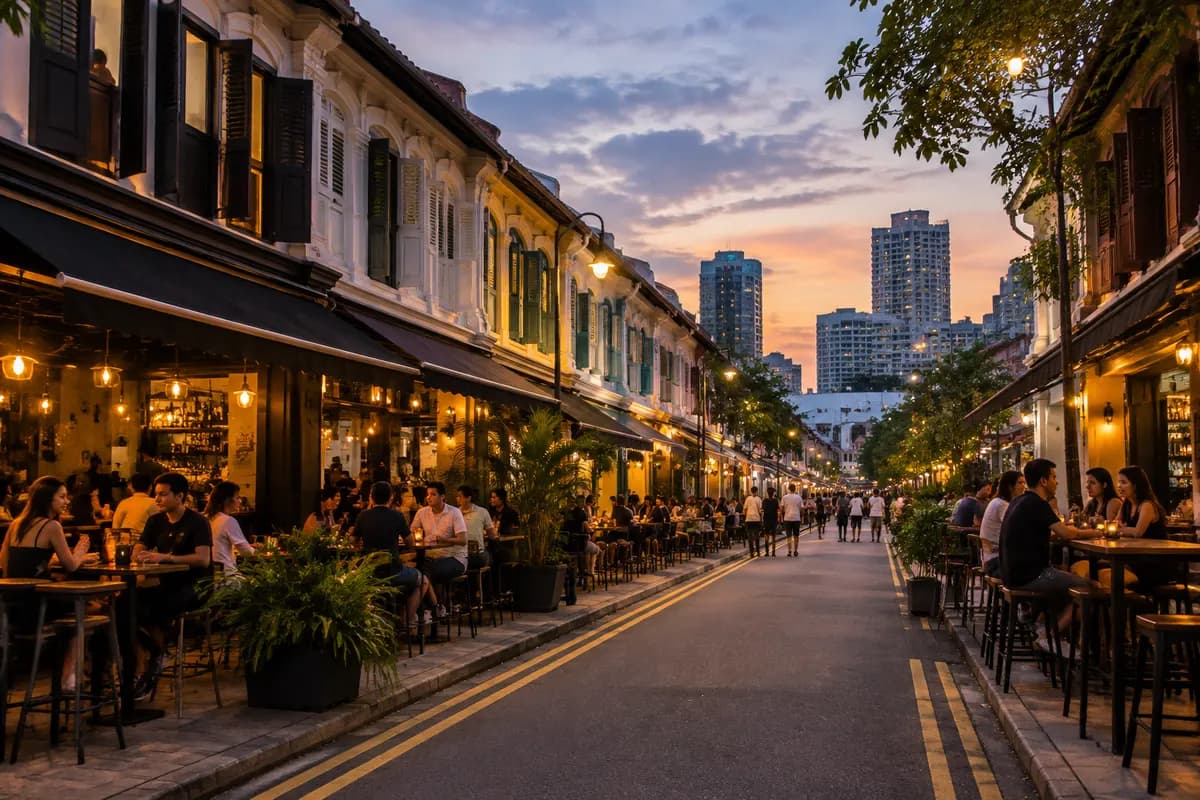
Kitchener Road and Cuff Road are the names most often searched by people looking for a Jalan Besar shophouse for sale or for rent, because they hold the densest cafe and bar clusters. On the western edge, the district blends into the Serangoon Road fringe and Little India, so a unit near that boundary can draw on both neighbourhoods' foot traffic.
Jalan Besar Road is the main commercial axis, with continuous shophouse frontages and a heavy presence of lighting, hardware and trade shops. Kitchener Road and Tyrwhitt Road offer some of the district's most attractive terraces, with distinctive proportions, plasterwork and shutters, and these streets have attracted cafes, bars and small hotels. Cuff Road, a short and compact lane, has a pronounced cluster of food and beverage outlets and creative uses, and Dorset Road has a mix of eateries, trade shops and boutique accommodation.
Further afield, the Petain Road and Balestier fringe, covered in our Petain Road and Balestier area guide, extends the district's shophouse fabric toward Lavender and Whampoa, and the stretch toward Lavender and Bendemeer carries many Art Deco and Early Modern shophouses with simplified façades and strong horizontal lines. Dunlop Street and Syed Alwi Road, which link toward Little India and Mustafa Centre, form a bridge with the neighbouring district.
Architecturally, Jalan Besar's stock is notable for its interwar and Art Deco character. Many shophouses show geometric forms, rounded corners and simple concrete details rather than the ornate plasterwork of earlier periods, which suits contemporary interior and branding approaches. As elsewhere, tight floor plates, shared party walls and long rear air-wells constrain layouts, and a structural survey is essential.
| Street | Character | Typical occupier |
|---|---|---|
| Jalan Besar Road | Main axis with lighting, hardware and trade shops | Trades, hotels, eateries, services |
| Kitchener Road | Attractive terraces and a growing lifestyle presence | Cafes, bars, boutique hotels, studios |
| Tyrwhitt Road | Compact lane with a creative and hospitality mix | Cafes, bars, boutique stays, creative uses |
| Cuff Road | Small lane with a dense F&B cluster | Restaurants, cafes, bars, specialist retail |
| Dorset Road | Mixed eateries, trades and boutique accommodation | Food, hospitality, services |
| Petain Road / Balestier fringe | Interwar terraces toward Lavender and Whampoa | Cafes, studios, trades, services |
Adaptive reuse and the Jalan Besar cafe, bar and creative scene
Adaptive reuse is the story of Jalan Besar over the past decade. Former workshops, lighting showrooms and family retail units have been converted into specialty coffee roasters, bakeries, bars, restaurants, design studios, co-working spaces and boutique hotels. The shophouses' simple interwar façades and generous ground-floor volumes lend themselves to such conversions, and the district's relatively modest scale has encouraged independent operators over large chains.
The same trend has also tested the district's fabric. Conversions need approval for change of use, and upper floors adapted for accommodation or assembly uses face stricter fire safety and licensing requirements. Owners who retained original features such as shutters, tiles and timber have often found that those elements are part of the appeal. At the same time, noise and operating hours near residential units have been a recurring theme, and responsible operators engage with neighbours.
For buyers, the creative scene is a demand driver but also a variable. Trendy clusters can shift, and the performance of a unit depends on whether it fits within a durable cluster rather than a temporary fashion. Our F&B licensing and change-of-use guide explains the approvals involved in converting shophouse space.
Lavender Street shophouse for sale and room rentals: uses and tenant mix
Towards Lavender, searches for a Lavender Street shophouse for sale tend to relate to the Jalan Besar and Lavender MRT (EW11) catchment, where terraces serve trade, services and small hospitality. Similarly, enquiries for a Lavender shophouse room for rent generally concern upper-floor space; whether a room can lawfully be let depends on the approved use of the building and on rules governing shared or short-term accommodation, so confirm both before agreeing a tenancy.
The tenant mix divides into three groups. The first is the traditional trades: lighting, sanitary ware, hardware, tiles and motor parts, which remain visible particularly along Jalan Besar Road and its immediate side streets. The second is hospitality: cafes, bars, restaurants and boutique hotels, concentrated around Kitchener Road, Tyrwhitt Road, Cuff Road and Dorset Road. The third is creative and professional: design studios, small offices and workspace operators who use upper floors.
These groups have different lease expectations. Trade tenants tend to want long, stable tenancies and may own their stock and customers locally, while hospitality tenants need a longer term to amortise fit-out but also have higher failure rates in competitive clusters. Creative and professional tenants often favour flexibility and lower rent over frontage, and their demand is sensitive to the broader economic cycle.
Residential use is a separate regulatory category. Some shophouses in the district retain approved residential use on upper floors, and the treatment for stamp duty and financing differs, as discussed in the commercial vs residential ABSD breakdown. Confirm approved use through URA records and a qualified person before relying on any assumed conversion.
URA conservation status and what it means in practice
Jalan Besar's shophouse streets are conserved, and individual buildings are controlled under URA's conservation guidelines. As in the earlier districts, façade, roof form, five-foot way and key decorative elements are to be retained or restored using approved methods, and external alterations require approval. Because much of the stock is interwar and Art Deco in style, restoration standards for materials such as plaster finishes, steel windows and tiled elements differ from those for earlier Chinese Baroque terraces.
Verify the exact status and grade of each lot on the URA record rather than assuming from the street. Not every building in the district is conserved to the same degree, and some blocks lie on the fringe of conservation boundaries or are covered by different planning parameters. Permitted rear additions, roof alterations and use changes depend on both the building's status and the zoning.
The URA conservation guidelines buyer manual covers grades, approvals and the team you need, and the conservation shophouses for sale hub shows how those controls interact with the market.
MRT, transport and walkability
Jalan Besar station (DT22) on the Downtown Line sits at the heart of the district, and Bendemeer (DT23) serves the eastern part. Lavender (EW11) on the East West Line and Farrer Park (NE8) on the North East Line provide further access, and Little India (NE7 and DT12) is a short walk or one stop away. This density of stations is a significant advantage for a fringe district and makes commuting for staff and customers straightforward.
Within the district, walking is pleasant on the quieter side streets but less so on the busy arterial roads, where traffic is heavy. Many of the best-known cafes and bars are within a few minutes' walk of Jalan Besar station, but trade is spread across several streets, so footfall is less concentrated than in a single-lane precinct such as Haji Lane. Operators should test footfall at different times and consider how visible their frontage is from the main road.
Parking and servicing are constrained, as in other shophouse districts. Loading is typically on-street or in rear lanes, and waste collection and deliveries need to be planned. Access to the CBD and Orchard is straightforward via the Downtown Line and East West Line, which supports both hospitality and small-office tenants.
Price and rent context: how the area is positioned
Editorial review as of 5 November 2026; no figures quoted here—verify current transactions. This section describes positioning without citing prices, because values depend on frontage, size, tenure, grade, use and lease profile.
Qualitatively, Jalan Besar occupies a middle position among city-fringe shophouse districts. It is generally seen as more accessible than the core CBD heritage precincts, with a more local and creative demand profile than the tourist-heavy areas, and its attraction for investors rests on the combination of MRT access, a still-evolving tenant base and character stock. Value is driven by corner and main-road frontage, proximity to the stations, approved use, lease strength and building condition.
Evidence should come from primary sources and be compared like for like. The table below shows where to pull it.
| What to benchmark | Where to find it | Why it matters |
|---|---|---|
| Recent shophouse sales | URA REALIS (subscription) or URA SPACE; SRX and EdgeProp market data | Sets the range for comparable lots and tenure |
| Retail, F&B and office rents | URA commercial rental statistics; agents' achieved-rent data | Shows achievable income by use type |
| Tenure and encumbrances | SLA title search | Freehold and leasehold are priced differently |
| Approved use and conservation status | URA records; written confirmation from a qualified person | Determines permitted uses and financing |
| Tax and duties | IRAS property tax and stamp duty pages | Defines acquisition and holding cost |
| In-place tenancies | Tenancy agreements and rent roll | Sets current income, break rights and review terms |
Jalan Besar shophouse for sale: investment angle
Accessibility is Jalan Besar's quiet advantage: few conserved districts sit on this many MRT lines.
The investment thesis for Jalan Besar is built on accessibility, a transitional tenant base and the comparatively wide range of uses its buildings accommodate. Investors can hold trade-oriented units for stable income, or reposition buildings for hospitality and creative uses where approvals allow. The depth of the MRT network supports demand from both customers and staff.
The corresponding risks are the churn of fashionable F&B, the need for capital expenditure on older fabric, and the dependency on a few clusters that may shift. Underwriting should test downside scenarios, including longer vacancies between tenants and the cost of restoration or fit-out contributions. The guide to investing in Singapore conservation shophouses sets out a framework, and the freehold shophouses guide explains how tenure affects value and exit.
For stamp duty and financing, read the commercial vs residential ABSD breakdown before making an offer. Browse commercial shophouses for sale for current opportunities and shophouses for rent if you are leasing.
Jalan Besar shophouse for rent: buying and renting checklist
Approach Jalan Besar with an operator's mindset. Visit the specific street at different times, check the cluster around the unit, and test whether the intended tenant type can realistically thrive there. Engage a lawyer, a qualified person with conservation experience, and a valuer who knows the district.
Tenants should confirm approved use, the length of term relative to fit-out cost, repair obligations, signage rights and the landlord's consent requirements for alterations. Owners should plan for periodic façade and roof works and for compliance for any upper-floor uses.
- Confirm tenure and encumbrances through an SLA title search.
- Confirm the conservation status, grade and approved use with URA.
- Commission a structural, roof, damp and pest survey, including party walls.
- Review lease expiry profile, tenant covenant and rent review terms.
- Check F&B and hospitality feasibility: exhaust, grease, fire safety and licensing.
- Check servicing: loading, waste collection and rear-lane access.
- Assess the cluster: nearby tenants, noise tolerance and neighbouring residential uses.
- Budget for compliant restoration and for fit-out, not only the purchase price.
Risks to weigh
Cluster risk is the first. Jalan Besar's lifestyle economy is relatively young, and the popularity of a particular street can shift. Operators may relocate if a rival cluster emerges, and landlords who have priced rent on peak enthusiasm can face vacancy. Long-term leases with quality covenants reduce the risk.
Building risk follows, particularly in interwar structures where reinforced concrete, steel windows and old plumbing and wiring may need repair. Hidden defects and non-compliant alterations are common, and a good survey is a cost-effective protection. Regulatory risk, including changes in licensing for alcohol or accommodation uses, should also be recognised.
Finally, neighbour and environment risk. Shophouse districts mix commercial and residential uses, and noise and late-night operations can lead to complaints and enforcement. Respectful operations and good waste management protect both reputation and the lease.
Nearby areas and how Jalan Besar compares
To the west, Little India has far heavier foot traffic and a community-driven trade, while Kampong Glam is a more curated heritage and tourist precinct. Jalan Besar sits between them and offers a quieter, more creative alternative with strong MRT access.
For CBD-adjacent options, compare Chinatown, Telok Ayer and Tanjong Pagar, which draw heavily on office demand, and the riverfront precincts Boat Quay and Clarke Quay. Geylang offers a different use and regulatory profile to the east.
Sources
Frequently Asked Questions
Are there Jalan Besar shophouses for sale?+
Listings appear occasionally and vary by tenure, grade and use. Verify title, approved use and conservation status, and browse our commercial and conservation shophouses for sale pages.
How do I find a Jalan Besar shophouse for rent?+
Start with our shophouses for rent page, then check approved use, lease term, fit-out and repair obligations, and licensing. Kitchener Road and Cuff Road suit cafes and bars; Jalan Besar Road suits trade.
Is a Lavender Street shophouse for sale a good fit for investors?+
It can suit investors wanting MRT access (Lavender EW11, Bendemeer DT23) and trade or small-hospitality tenants. Check tenure, conservation status and lease profile; no figures are quoted here.
Can I rent a room in a Lavender shophouse?+
Only if the upper floor is approved for residential or suitable accommodation use and the letting complies with rules on shared and short-term stays. Confirm with URA and the landlord first.
Which MRT stations serve Jalan Besar?+
Jalan Besar (DT22) and Bendemeer (DT23) on the Downtown Line are the closest. Lavender (EW11), Farrer Park (NE8) and Little India (NE7 / DT12) provide additional access.
Are Jalan Besar shophouses conserved?+
Many Jalan Besar shophouse streets are under URA conservation controls, but status and grade vary by lot. Verify each building on the URA record before assuming what alterations or uses are allowed.
What is Jalan Besar known for?+
It is known for long-standing lighting, hardware and trade shops, Jalan Besar Stadium (opened 1929), interwar and Art Deco shophouses, and a newer scene of cafes, bars, boutique hotels and creative studios around Kitchener, Tyrwhitt, Cuff and Dorset Roads.
Can I open a cafe or bar in a Jalan Besar shophouse?+
Only if the approved use allows it or a change of use is granted. You will also need food or liquor licensing, compliant exhaust and grease management, and fire safety approval. Check with URA and a qualified person first.
How does Jalan Besar differ from Kampong Glam and Little India?+
Kampong Glam is a curated, tourist-facing heritage precinct and Little India a high-footfall community trade district. Jalan Besar is quieter and more local, with a trade base increasingly mixed with hospitality and creative uses.
Where can I verify current Jalan Besar shophouse prices and rents?+
Use URA REALIS or URA SPACE for transactions, URA rental statistics and SRX or EdgeProp market data. This page quotes no figures; editorial review as of 5 November 2026, so verify current transactions.